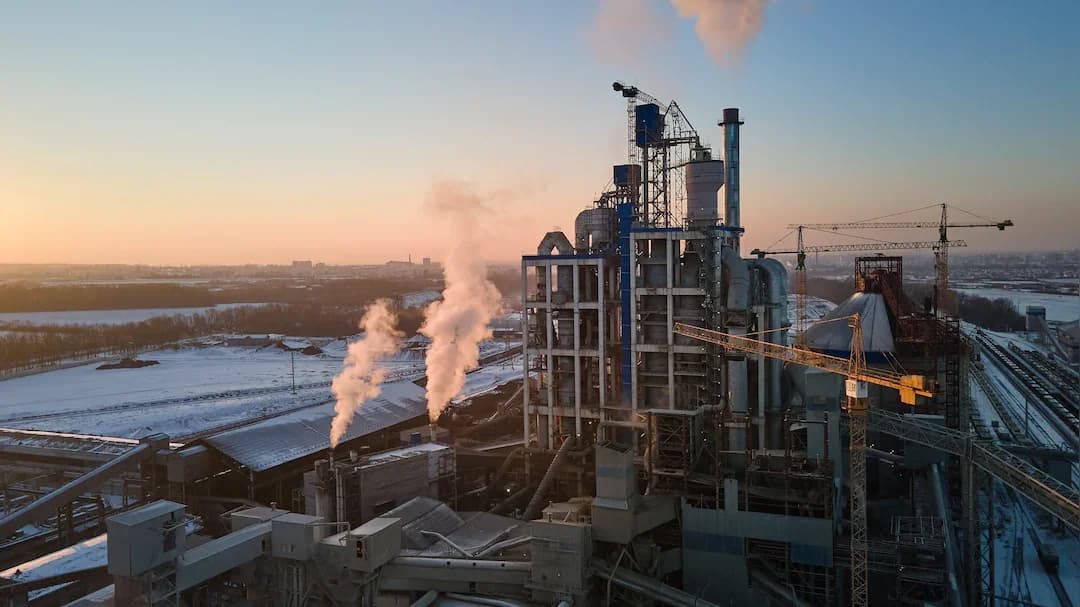
Industrial production growth moderated to a five-month low of 4.1% in March, according to latest official data from the National Statistics Office (NSO), marking the lowest level in five months. This represents a significant slowdown from the 5.1% growth recorded in February and is also slower than the 3.9% growth recorded in March of the previous year. The March reading marks the weakest pace since October 2025, when industrial growth had slipped to just 0.5%, indicating a loss of momentum toward the end of the financial year. The National Statistics Office revised the industrial production growth for February 2026 to 5.1% from the provisional estimate of 5.2% released last month. The decline was primarily attributed to the ongoing West Asia conflict, which has created uncertainty in the industrial sector. As per The Economic Times, the moderation also reflects the impact of the Iran conflict, which has disrupted supplies and raised input costs. Despite the slowdown, March's growth outperformed economists' expectations of 1-2%, after the core sector output contracted 0.4%, its weakest reading in 19 months. According to India Ratings and Research, the deceleration could be gauged from the eight-core sector production (accounts for over 40% of IIP) that contracted 0.4% in March 2026, hitting a 19-month low.
The manufacturing sector, which accounts for nearly a fourth of the index, grew 4.3% in March compared with 5.9% in February, only marginally higher than 4% a year ago, suggesting a continued lack of strong acceleration in factory activity. Within the manufacturing sector, 14 out of 23 industry groups posted positive growth, with key contributors including motor vehicles and related equipment (18.1%) from auto components, commercial vehicles and axles, and machinery and equipment (11.2%) driven by tractors, engines and material-handling systems. As per KNN, growth in basic metals was supported by products such as MS slabs and alloy steel items, while the motor vehicles segment saw gains from auto components, commercial vehicles and axles. However, segments such as beverages, textiles, apparel and chemicals saw output decline compared with a year earlier. As per Fortune India, Dipti Deshpande, principal economist at Crisil, noted that the moderation reflects the early impact of global disruptions, with the March data capturing only a part of the shock, while the deeper impact is expected to show up down the road, particularly in the first quarter of this fiscal. She highlighted that domestic manufacturing is already feeling the pressure of costlier and tighter supplies of petroleum products and natural gas. According to India Ratings and Research, key sectors such as textiles, chemicals, electronics, leather products and wood products reported a decline in output on-year, while refining, food products, paper products, non-metallic mineral products, basic metals and electrical equipment saw slower output growth on-year.
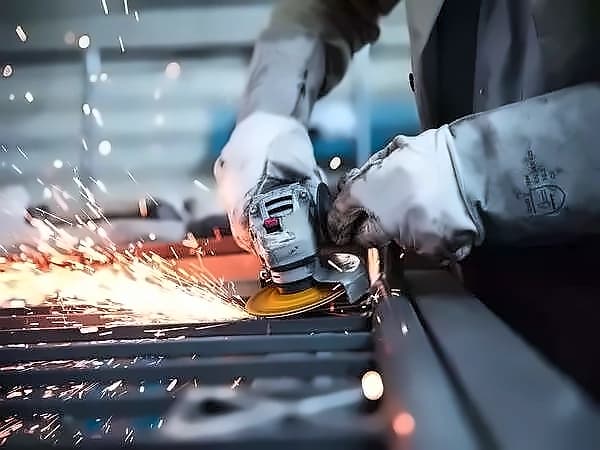
The electricity sector output decelerated to 0.8% in March from 2.3% in February, while the mining sector output accelerated to 5.5% in March from 3.1% in February. Among use-based categories, capital goods recorded the highest growth at 14.6%, followed by infrastructure/construction goods at 6.7% and primary goods at 2.2%. Consumer durables output stood at 5.3%, lower than the 7.1% recorded the month before, while consumer non-durables growth was up 1.1% after contracting 0.5% in February. According to India Ratings and Research, the upside to IIP growth was lent by high growth in motor vehicles, trailers and semi-trailers (18.1%) and machinery and equipment (11.2%). However, downward pressure was exerted by textiles, chemicals and chemical products (fertilizer production declined 24.6% in March 2026 due to gas shortage) and other manufacturing. As per KNN, infrastructure/construction goods, capital goods and primary goods emerged as the top contributors to overall IIP growth. Infrastructure/construction goods output slowed to 6.7% from 11.1%, reflecting softer expansion in steel and cement output, though capital goods output expanded by double digits for the second consecutive month in March 2026. As per Fortune India, the use-based classification highlighted persistent weakness in consumption demand, with FMCG output lagging at 1.1%, pointing to subdued demand in essential goods.
Power generation emerged as the biggest drag on industrial growth, expanding just 0.8% compared with a robust 7.5% growth in March last year, reflecting softer demand and possible supply-side disruptions. This marked a significant deceleration from the previous year's strong performance. In contrast, mining output showed stronger momentum, rising 5.5% against a low base of 1.2% in the corresponding period last year, demonstrating the sector's resilience despite overall industrial challenges. As per India Ratings and Research, energy intensive sectors faced the brunt of high input costs, mainly on account of deceleration in electricity and marginal growth in manufacturing on YoY basis. Together, these sectors account for more than 85% of IIP, while mining, which accounts for a little over 14% of IIP, provided upward support with its growth of 5.5%.
For the full financial year 2025–26, industrial growth remained broadly flat at 4.1%, compared with 4% in the previous year, underscoring a steady but uneven recovery in the sector. Looking ahead, economists remain cautious about the industrial sector's recovery prospects amid mounting pressures. According to Bank of Baroda's Madan Sabnavis, the headline number was stronger than expected at 4.1%, higher than their expectations of 1-2%, given that the core sector growth was negative for the month. He noted that manufacturing growth at 4.3% was comforting, supported by strong performance in capital goods and infrastructure-linked industries. However, Rajani Sinha, chief economist at CareEdge Ratings, said consumption trends remain fragile, with urban consumption facing risks from uptick in inflation and rural demand challenged by risks of below normal rainfall. As per India Ratings and Research, the impact on a sector's output will occur when an input becomes more expensive or less available, with the government gradually restoring supply of energy and other critical inputs to industry. The Purchasing Managers' Index also slipped in March from February but remained in the expansion zone, indicating the likely uneven impact of the conflict across sectors. India Ratings expects IIP growth in April 2026 to improve to around 5% as base effect will help in maintaining the growth momentum (April 2025: 2.6%). Government's continued capex is likely to keep capital goods (FY26: 8.2%) and infrastructure/construction goods (FY26: 9.8%) growth momentum in FY27 as well. As per Fortune India, PHDCCI noted that the manufacturing sector could continue facing headwinds from the uncertain external scenario, though the continued strength in infrastructure-related segments remains positive.