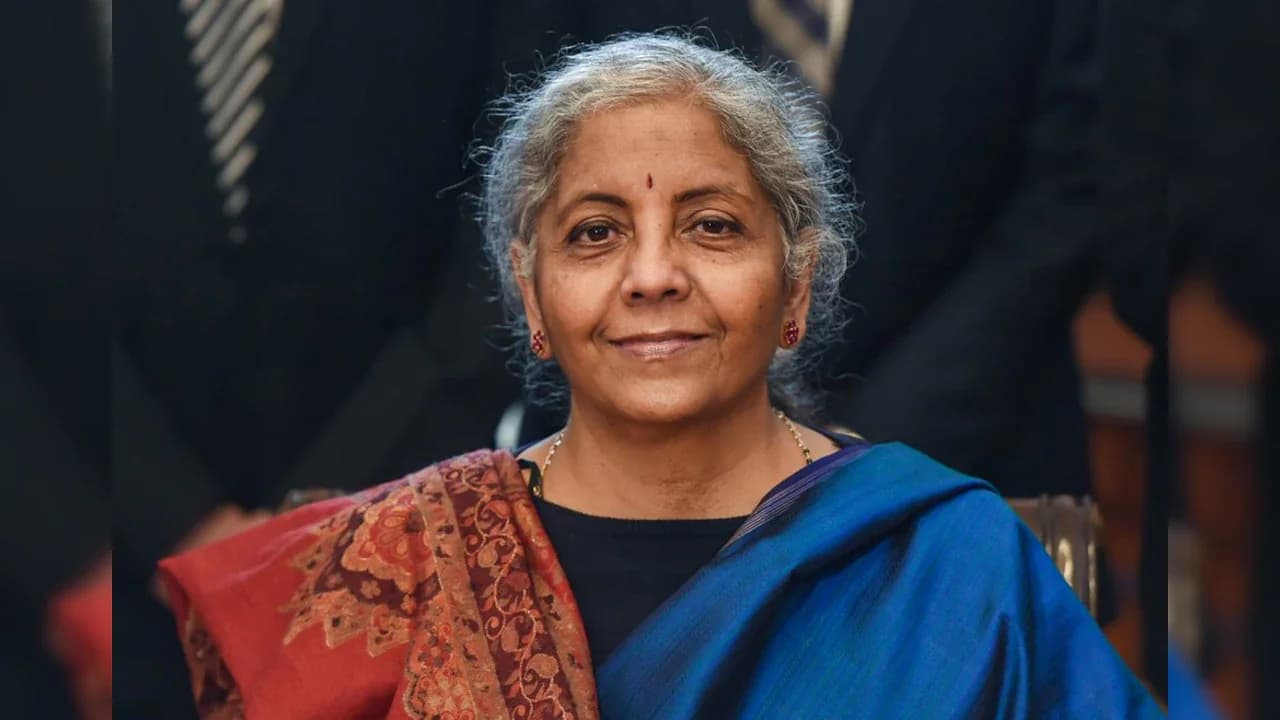
Finance Minister Nirmala Sitharaman on Friday described the middle class as the growth engine of India, highlighting its significant economic impact. Participating in a panel discussion on 'How to promote the rise of a new middle class' at the Rencontres Economiques d'Aix-en-Provence economic forum in France, Sitharaman revealed that 31 per cent of India's population is middle class as of today, with this segment growing at an annual rate of 6.3 per cent since India opened its economy. She emphasized that the middle class is not concentrated in metropolitan cities but distributed across tier two and tier three cities, with 93 per cent of all spending in India attributed to the middle class or slightly affluent consumers. As per The Times of India, Sitharaman noted that "India's model has resulted in the development in such a way that the middle class is present not just in big cities but they are on the contrary in these tier two, tier three cities," with the distribution of wealth automatically spreading to cities beyond the metropolitan.
As reported by The Times of India, quoting an OECD study, Sitharaman projected that India will surpass China in absolute terms in its middle-class population size between 2030 and 2035 on the back of several government measures. She stressed that India remains the fastest-growing large economy after Covid-19, primarily driven by consumption triggered by the middle class. The finance minister announced that nearly 500 cities are poised to emerge as the new centres of economic activity, indicating a broad-based economic expansion beyond traditional metropolitan hubs. Sitharaman explained that "we see the middle class not just as a beneficiary of growth, but actually as the engines of growth. It is their consumption, which is happening, which is making the economy grow," highlighting their transformative role in India's economic development.
According to The Times of India, Sitharaman outlined several government initiatives to grow the middle class, including financial inclusion, recent GST rate rationalisation, providing collateral-free loans, and Pradhan Mantri Awas Yojana. She highlighted that the government has taken extensive measures to support AI adoption, with AI skilling camps being organised in partnership with the private sector at the district level. For those who fear AI may displace jobs, there is extensive government support through AI-focused skilling programmes being conducted across the country. The finance minister noted that nearly 40 per cent of India's exports come from micro, small and medium enterprises (MSMEs), which are rapidly adopting AI-driven business models and seeking skilled professionals for AI-based solutions.
As reported by The Times of India, Sitharaman emphasized that the middle class is increasingly benefiting from AI adoption, with people continuously upgrading their technical skills to stay ahead. She noted that India has emerged as the leading destination for Global Capability Centres (GCCs) and data centres, with companies continuing to expand their presence in the country due to India's large pool of skilled talent capable of supporting AI-led growth and digital transformation. This positions India as a key player in the global AI ecosystem, with the middle class playing a crucial role in driving this technological advancement. The transformation is evident as nearly 40 per cent of India's exports come from micro, small and medium enterprises (MSMEs), which are rapidly adopting AI-driven business models and seeking skilled professionals for AI-based solutions, enabling the middle class to increasingly take advantage of emerging opportunities in India's evolving economy.