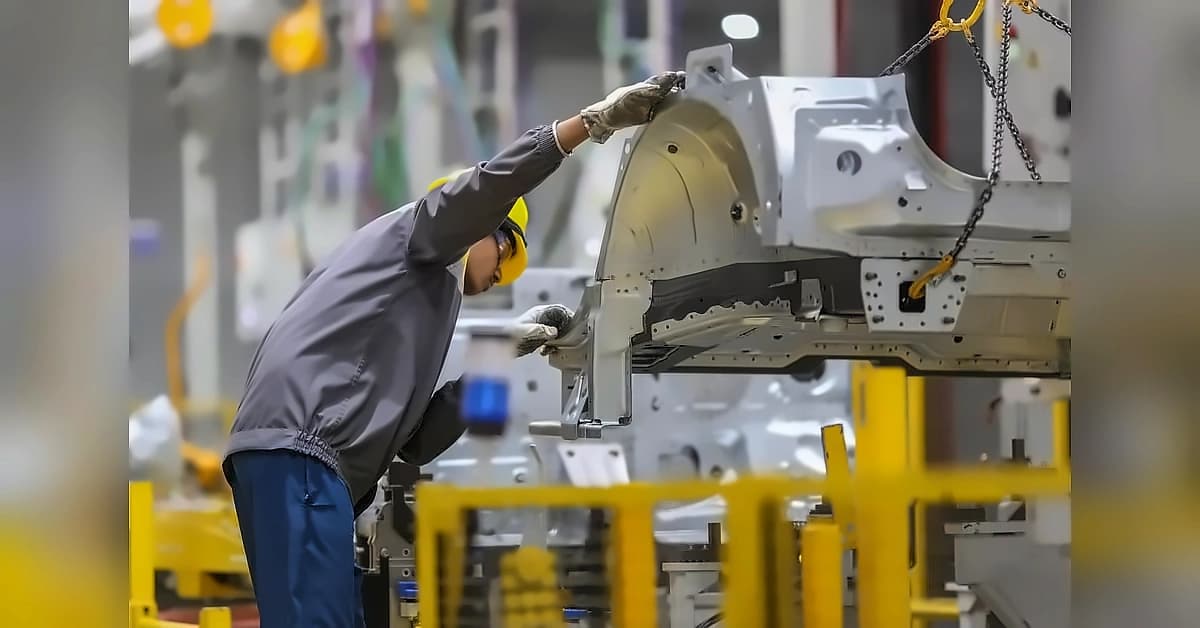
India's manufacturing sector could almost triple in size over the next decade, with Morgan Stanley projecting it will grow 2.8-fold to reach $1.5 trillion by 2035. According to the global investment bank's report, this expansion will be driven by policy reforms, stronger infrastructure, rising domestic demand, and India's growing role in global supply chains. The forecast aligns with the government's renewed push to strengthen manufacturing through deregulation and targeted support for priority industries.
The report estimates that manufacturing will grow from its current 15 per cent share of India's GDP to nearly 20 per cent by 2035. This projected rise would add almost $930 billion to India's manufacturing output and further cement the sector's role in driving economic growth. Morgan Stanley expects manufacturing gross domestic product (GDP) to grow at an average annual pace of around 9 per cent, compared with 6.5 per cent over the previous five years, which will support the sector's expansion.
According to Morgan Stanley, the projected expansion is attributed to three key factors. The first is the government's industrial policy, including targeted incentives and higher public capital expenditure that has been in place since 2019. Second, efforts to increase India's share of global exports while deepening its integration into global supply chains. Third, multinational companies diversifying their manufacturing bases, creating new opportunities for investment and production in India. The report noted that supportive demographics, rapid urbanisation, and improving infrastructure are expected to reinforce these trends.
While Morgan Stanley expects manufacturing to expand significantly over the next decade, it also highlighted several risks that could affect its projections. These include weaker domestic demand, political uncertainty, slow implementation of reforms and industrial policies, and geopolitical developments that dampen global demand and investor confidence. The report emphasizes that expanding manufacturing will be critical for sustaining India's medium-term growth and creating more jobs as the economy continues to develop.
The Morgan Stanley projection comes as the Centre is intensifying efforts to make manufacturing a bigger pillar of the economy. According to a Reuters report from January, the government is focusing on 15 priority sectors, including semiconductors, metals, leather, and other strategic industries. Rather than relying primarily on subsidies, the plan emphasises deregulation, reducing compliance burdens, simplifying approvals, improving access to land and finance, and developing manufacturing hubs. Through the National Manufacturing Mission, the government is working with states to streamline regulations and encourage greater manufacturing investment.