India's 6-7.5% GDP growth rate may be strong compared to major economies, but it masks underlying structural vulnerabilities, according to Nomura India Economist Dr Aurodeep Nandi and HDFC Bank's Principal Economist Sakshi Gupta. Speaking at the ET Alpha Wealth Summit's panel on India's growth story, both economists assessed that India scores 6-7 out of 10 on growth durability today. Gupta emphasized that India's growth story is resilient but incomplete, with room to move higher only if the country does the hard structural work ahead. The panel discussion included Garima Kapoor from Elara Securities, Sakshi Gupta from HDFC Bank, and Dharmakirti Joshi from CRISIL, with Deepak Ajwani moderating. Nandi's first intervention was a corrective, noting that when people talk about the "India story," they assume a single, coherent growth engine. The reality is more uneven, with current growth being driven primarily by consumption in the top half of the income distribution, and services exports and remittances serving as the two pillars holding up the balance of payments.

Gupta highlighted that the private investment picture is more complex than it looks for an economy of India's size and ambition. She noted that sectors like steel and cement have been hit by a wave of Chinese overproduction that has depressed prices and squeezed profitability across Asia. "China is exporting deflation to the rest of Asia," Gupta observed, explaining that this global constraint no amount of domestic policy can fully offset. Nandi had previously highlighted that manufacturing and private investment continue to lag in India's growth story, with investors unlikely to invest until domestic demand recovers. The conventional economic logic, that government infrastructure spending crowds in private investment, has simply not worked as advertised. Private investment has not responded meaningfully to either the corporate tax cuts of recent years or the massive public capex push.
Gupta acknowledged two headwinds facing India: the country lacks a compelling AI narrative for global capital allocators, and the rotation trade that boosted India's MSCI weighting has now partially reversed. However, she believes a significant amount of bad news is already priced into Indian equities. Once geopolitical anxieties around West Asia begin to ease, she expects some capital to return. Her larger point emphasizes that India obsesses over portfolio equity flows, but consistent foreign direct investment and other longer-duration capital remain more stable than the daily headlines suggest. Nandi previously warned that when ₹21,000 crore of FII money exited Indian markets in a single day, the reflexive explanation pointed to better returns elsewhere — South Korea's AI rally, higher US yields. Higher US 10-year yields around 4.5% give global investors a clean, low-risk alternative to emerging market exposure.
India faces significant challenges in the AI value chain, with Nandi identifying no presence in frontier AI model development and no dominant position in semiconductor manufacturing. The country's main AI roles in data centres and adoption do not excite global capital allocators compared to chip design or model training. Nandi emphasized that India's chronic underinvestment in research and development must rapidly change, warning that even services export strength faces long-term pressure from AI restructuring and tightening H-1B visa policies. At the core of all these challenges is India's chronic underinvestment in R&D, which Nandi argues must rapidly change. Asked where investors are being too pessimistic, Nandi pointed to two areas: premium consumption catering to the upper end of India's income pyramid remains structurally well-placed, and fears about El Niño derailing the rural economy and spiking food inflation may be overdone.
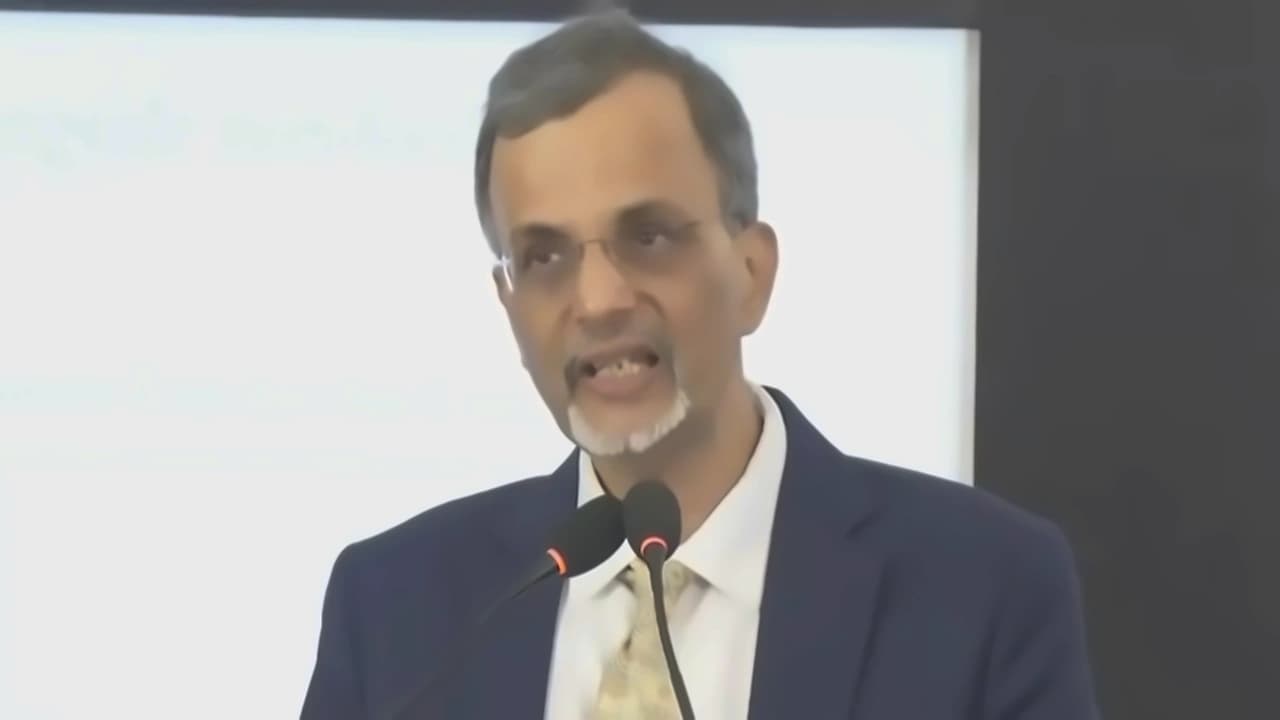
Despite these challenges, both economists acknowledge that India's long-term story is not broken but building something durable demands harder choices than the headline growth rate suggests. Gupta's warning to investors is particularly stark: India at 6 out of 10 is a solid foundation. But turning it into an 8 requires clearer thinking — about investment, about AI, and about which consumer bets actually hold up under pressure. The economists' assessments suggest that while India's growth appears strong on paper, the underlying structural issues require immediate attention for sustainable prosperity. Looking ahead, Chief Economic Advisor V. Anantha Nageswaran backed the RBI's FY27 GDP growth projection of 6.6%, stating that India's macroeconomic situation is now much more under control despite global uncertainties. However, he noted that India would need to sustain growth of around 8% over the long term to achieve the goal of becoming a developed nation under the Viksit Bharat vision, though prolonged geopolitical tensions in West Asia or sustained crude oil prices above USD 100 per barrel could weigh on growth and potentially lower the expansion rate to around 6%.