Fitch Ratings has confirmed India's GDP growth forecast for FY27 at 6.4%, maintaining its earlier downward revision from the previous estimate of 6.7%. As reported by Zee News, Fitch expects GDP growth to ease to 6.4% in FY27, a downward revision of 0.3pp from March, citing the US-Iran conflict as a key factor that will slow down the economy in the September and December quarters. Fitch Chief Economist Brian Coulton noted that "the oil price shock is hitting world growth prospects and increasing downside risks," but "we are also amid a very pronounced boom in global spending on IT and that is cushioning the impact on activity in the near term, particularly in Asia." Domestic demand will be the main driver of growth, but lower imports in real terms imply positive contributions to growth from net external demand, according to Fitch's June Global Economic Outlook. The closure of the Strait of Hormuz has now lasted 14 weeks and we assume it will not start to reopen until July. Fitch has revised its 2026 average price assumption for Brent crude oil to USD 87 per barrel (bbl), up from the USD 70/bbl estimated in March, with petrol and diesel prices rising by 4-5% in recent weeks. Fitch expects the impact to be most visible during the second and third quarters of FY27, with the conflict denting consumer spending as households feel the pinch of rising costs.
SBI Research's latest report suggests that Q1 FY27 growth may surpass the Reserve Bank of India's 6.6% estimate if the current momentum continues, citing above-average acceleration in April and May high-frequency indicators. The report forecasts that GDP growth could reach 12.5-13% in Q1 FY27, significantly higher than the budgeted estimate of 10%, with the deflator potentially increasing to 6.5-7% from the earlier estimate of 4.5-5%. SBI Research noted that despite external headwinds, the Indian economy is poised to remain the fastest-growing major economy in FY27 by leveraging sound macroeconomic fundamentals and robust financial sector performance. The report highlights formalisation and digitisation as drivers of labour productivity and improved institutional credit access, with PLFS data suggesting that training reduces informality in employment. With more digitisation and skill development initiatives by the government, SBI Research believes that the growth momentum will continue.
Multiple research agencies have revised their FY27 growth forecasts downward following the latest GDP data, with Fitch Ratings being the most bearish at 6.4%, while QuantEco Research expects the economy to expand by 6.2%, IDFC First Bank expects the economy to expand by 6.8%, and CareEdge Ratings projects FY27 growth at 6.7%. As reported by Business Standard, CareEdge Ratings projects FY27 growth at 6.7% assuming crude oil averages $90 per barrel, but warns growth could slip to 6.5% if prices remain around $100 per barrel. ICRA projects GDP growth to moderate to below 6.5% in FY27, with higher energy costs expected to weigh on corporate profitability, dampen investment sentiment and erode consumer purchasing power. Bank of Baroda's Chief Economist Madan Sabnavis revised his FY27 growth forecast downward to a range of 6.4-6.6% from an earlier projection of 6.5-6.8%, citing weaker agricultural output as El Niño conditions threaten a below-normal monsoon and potential compression in government spending. Last week, the RBI had cut its growth forecast for the current fiscal to 6.6% and upped its inflation projection to 5.1%. Despite the expected slowdown, Fitch said investment activity remains resilient, with lower imports, in real terms, could result in net external demand contributing positively to overall growth.
India's Q4 FY26 GDP growth of 7.8% has once again exceeded market expectations, with the full-year growth accelerating to 7.7% from 7.1% in FY25. As reported by The Times of India, the growth was broad-based and driven by strong domestic demand, with investment growth at 10.8% and consumption growth at above 7% reflecting broad-based strength in the economy. The National Statistics Office confirmed the full-year growth at 7.7%, compared with an earlier estimate of 7.6% from February. Growth in the secondary and tertiary sectors remained the key driver, recording increases of 8.8% and 9.3% respectively at constant prices, while the primary sector grew by 3.2%, supported largely by strong performance in agriculture and fisheries segments. Bank of Baroda Chief Economist Madan Sabnavis noted that capital formation rate was up marginally to 31.9%, which does indicate that it was well spread out across public and private sectors, with Dharmakirti Joshi, chief economist at Crisil Ltd, stating that healthy private consumption and fixed investments pushed the Q4 GDP print to higher than expected.
While India's economy continues to defy growth projections, the manufacturing sector's Q4 growth moderated to 7.3% from the impressive 10.7% growth recorded in FY26, as reported by The Times of India. However, this moderation remains within the context of sustained expansion, with the sector's performance particularly important because manufacturing remains one of India's largest potential generators of mass employment, with sustained expansion helping absorb the country's growing workforce and create semi-skilled jobs. The importance of manufacturing extends beyond production alone, as rising employment in the sector has a multiplier effect on the broader economy, with household incomes increasing consumption and creating a larger domestic consumer base. However, a key impediment remains the inadequate flow of capital to MSMEs engaged in manufacturing activities, which contribute more than 45% of India's exports and generate employment for a substantial share of the workforce, yet their share of formal bank credit remains disproportionately low.
A significant share of India's economic expansion continues to be driven by select service industries, including financial services, real estate, information technology, trade and hospitality, which account for nearly 43% of India's GDP. These sectors are among the most productive segments of the economy, despite employing only about 15% of the workforce, providing a crucial buffer against both domestic and global challenges. As reported by Business Standard, the services sector has been the primary driver of India's economic transformation, increasing the share of high-value-added activities in national output and enhancing the sophistication of the economy. However, construction activity emerged as a relative drag on economic activity during FY26, with the sector's slowdown signaling potential moderation ahead, as public capital expenditure gradually normalizes and commercial real estate development pauses after rapid inventory additions during the post-pandemic upcycle.
Fitch has lowered its 2026 forecast for global growth by 0.2pp to 2.4% as world growth prospects have been hurt by the oil crisis prompted by the US-Iran war. Fitch expects India's consumer price inflation to rise steadily over the months ahead, reaching 5.3% by the end of the calendar year, reflecting a combination of base effects and higher energy prices. Wholesale prices rose by 8.3% year-on-year in April and CPI inflation reached 3.5%. Fitch expects the Reserve Bank of India to change course and increase rates once this year to 5.5% to address the rising price pressures from the adverse supply shock. The RBI had kept its policy rate unchanged at 5.25% in April, but Fitch expects the central bank to raise rates once this year to 5.5% to tackle rising inflationary pressures. Fitch said consumer prices in India have not yet risen sharply, although pressure is building, with forecasts for below-average monsoon rains and the current heatwave in parts of India raise the risk of even stronger price rises. On the Indian rupee, Fitch said "we do not expect a further, significant depreciation in the Indian rupee over the rest of the year."
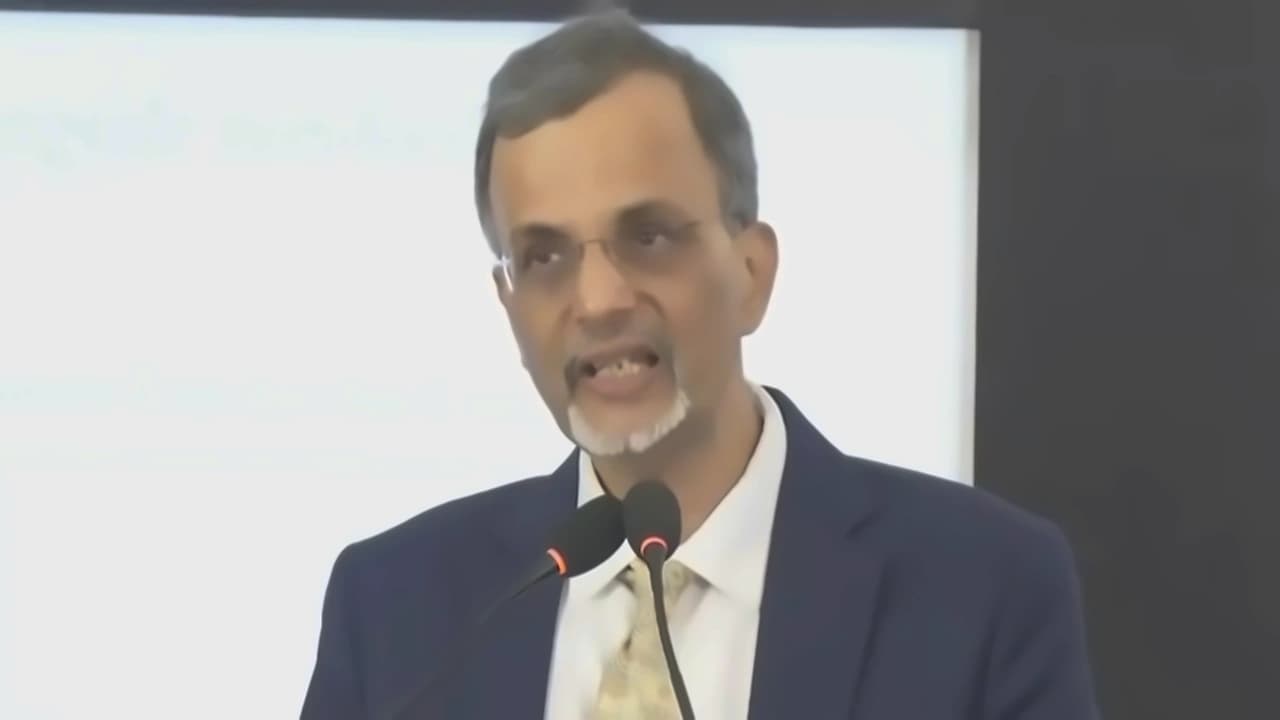
The strong GDP performance comes as India continues to navigate economic challenges while maintaining its position as a key global growth driver. Finance Minister Nirmala Sitharaman said the government is committed to further drive the 'Reform Express' with decisive policy measures to ensure positive economic momentum amidst the global challenges. CEA V Anantha Nageswaran outlined comprehensive policy measures including Customs duty waivers on 40 petrochemical products, emergency credit guarantee scheme for micro, small, and medium enterprises, fertiliser availability secured for over 50% of kharif season requirements, and logistics support for exporters. However, he cautioned that external and domestic risks continued to cloud the outlook, with the overall trade deficit widened in FY26, and a similar trend with potentially wider deficits is possible in FY27. Bank of Baroda's Chief Economist Madan Sabnavis identified three key drags on growth: weaker agricultural output as El Niño conditions threaten a below-normal monsoon, prompting a reduction in the agriculture growth forecast to 2-2.5% from 2.5-3% earlier; a likely compression in government spending; and a potential slowdown in bank credit growth as supply-chain disruptions and war-related uncertainty weigh on both investment and consumption. Fitch expects GDP growth to pick up as the energy shock unwinds, with stronger consumer spending and investment translating to a growth rate of 6.7% for FY28, and ease towards trend growth of 6.4% in FY29. Fitch also downgraded its outlook for the global economy, cutting its 2026 growth forecast by 0.2 percentage points to 2.4%, with the oil price shock hitting world growth prospects and increasing downside risks.