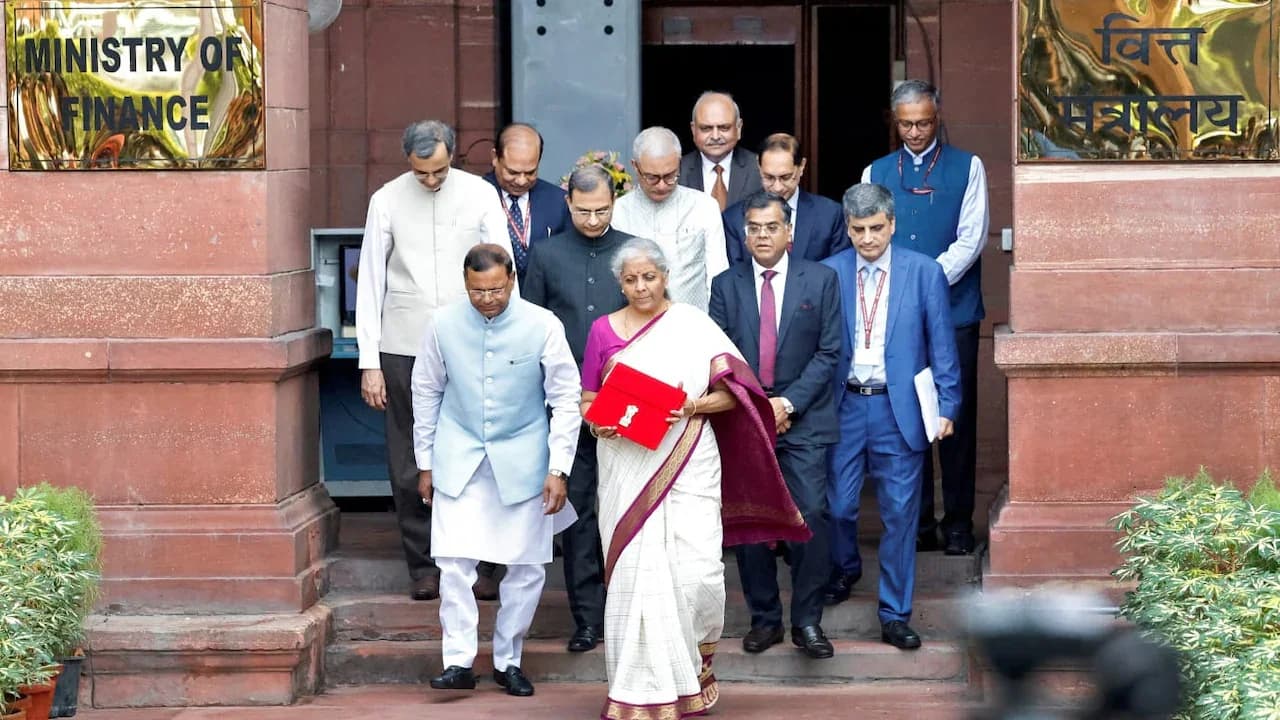
India's fiscal deficit reached ₹7.10 lakh crore during April-August, accounting for 42% of the full-year FY27 target, according to Controller General of Accounts (CGA) data released on Wednesday. This represents an increase from the ₹7.10 lakh crore recorded during the corresponding period of the previous financial year and marks a deterioration from the 41.9% of Budget Estimates (BE) achieved in April-August 2025. The Centre has budgeted a fiscal deficit of ₹16.96 lakh crore for FY27, with the government continuing its fiscal consolidation path as Finance Minister Nirmala Sitharaman had pegged the fiscal deficit target at 4.3% of GDP during the Union Budget presentation. As per Times Now Digital, Business Economist Sanchita Mukherji noted that the April-August fiscal metrics underscore a delicate balancing act for macroeconomic management, with the trajectory being reassuring rather than alarming from a capital markets perspective.
Total expenditure during April-August stood at ₹20.78 lakh crore, representing 38.9% of Budget Estimates (BE) of 2026-27, while total receipts were ₹13.67 lakh crore, accounting for 37.5% of the full-year Budget Estimate of ₹36.52 lakh crore. Revenue expenditure reached ₹15.68 lakh crore, or 38% of the full-year estimate, while capital expenditure stood at ₹5.10 lakh crore, equivalent to 41.7% of the ₹12.22 lakh crore budgeted for FY27. Gross tax revenue was ₹14.32 lakh crore during April-August, while non-tax revenue stood at ₹4.55 lakh crore. The government also transferred ₹5.9 lakh crore to states as their share of tax devolution during the April-August period. As per Reuters, total government expenditure increased to ₹20.8 trillion rupees compared with ₹18.8 trillion rupees a year earlier, reflecting higher spending levels. On the expenditure side, the Centre's capital expenditure declined around 30% year-on-year in August after rising about 60% during June-July, though capex growth remained robust at 18% during the first five months of FY27. Revenue expenditure grew 8% during the period, driven by a 24% increase in subsidy payouts, while interest payments declined around 3%.
According to CGA data, the Centre's net tax revenue up to August 2026 was about ₹8.38 lakh crore, representing 29.2% of the corresponding BE of 2026-27 of total receipts. This compares favorably to the 28.6% of BE achieved in the corresponding period of the previous fiscal year. Revenue receipts stood at ₹12.92 lakh crore, or 36.6% of the Budget Estimate, with net tax revenue reaching 29.2% of the full-year estimate, compared with 28.6% during the corresponding period last year. Non-tax revenue stood at ₹4.55 lakh crore, representing 68.2% of the annual target, lower than 75.5% in the year-ago period. During the April-June quarter, net tax revenue rose to ₹6.36 lakh crore, or 22.2% of the FY27 Budget Estimate, from around ₹5.4 lakh crore a year earlier. As per Reuters, net tax receipts for April to August stood at ₹8.4 trillion rupees, compared with ₹8.1 trillion rupees a year ago, showing improved tax collection performance. However, gross tax collections showed modest growth of 6.5% year-on-year to ₹14.32 trillion, while excise duty collections contracted nearly 23% year-on-year to ₹86,687 crore due to cuts in special additional excise duty on petrol and diesel in late March.
Major subsidy expenditure reached ₹1.87 lakh crore through August, equivalent to 46% of the ₹4.11 lakh crore budgeted for the year, compared with 39% of the annual target during the corresponding period last year. Food subsidy expenditure stood at ₹83,510 crore, while urea subsidy spending reached ₹77,522 crore. Spending on nutrient-based fertiliser subsidies was ₹25,617 crore, while petroleum subsidies stood at ₹388 crore. Interest payments stood at ₹5.15 lakh crore during April-August, accounting for 36.7% of the full-year Budget Estimate. The revenue deficit widened to ₹2.76 lakh crore, or 46.5% of the annual target, compared with 37.9% in the corresponding period last year. Excluding interest payments and subsidies, revenue expenditure grew 12.5% during the April-August period, according to ICRA. Spending on major subsidies shot up nearly 25% year-on-year to ₹1.87 trillion in April-August, driven by a sharp surge of nearly 21% in fertiliser subsidies.
During the April-June quarter of FY27, India's fiscal deficit stood at ₹3.08 lakh crore, accounting for 18.2% of the full-year Budget Estimate, compared with 17.9% in the corresponding period last year. The August fiscal deficit stood at ₹2.5 lakh crore, nearly double the ₹1.29 lakh crore recorded in the same month last year, indicating increased fiscal pressure in recent months. The Centre's finances in the first quarter were supported by higher tax collections, with net tax revenue rising to ₹6.36 lakh crore from around ₹5.4 lakh crore a year earlier. Non-tax revenue also increased to ₹3.8 lakh crore from ₹3.7 lakh crore, while government expenditure during April-August stood at ₹20.78 lakh crore, up from ₹18.80 lakh crore in the year-ago period. Capital expenditure rose to ₹5.10 lakh crore from ₹4.31 lakh crore last year, reflecting the government's continued focus on productive spending. As per Times Now Digital, economists emphasize that while the fiscal deficit trajectory is reassuring, the bigger challenge lies in managing external shocks, with tax buoyancy and resilient corporate earnings being crucial to meet the 4.3% deficit-to-GDP anchor. ICRA Chief Economist Aditi Nayar noted that the government's fiscal deficit is expected to overshoot the FY27 BE by around ₹1.3-1.4 trillion, with revenue shortfall anticipated on the tax side and additional subsidy requirements on fuel and fertiliser fronts.