India's core sector production growth decelerated to 5.4% in July 2026, down from the 6% growth achieved in June 2026, according to provisional data released by the Ministry of Commerce and Industry. The growth was supported by higher production of coal, refinery products, cement, electricity and iron ore, but was primarily driven by a sharp deceleration in oil, natural gas and fertiliser sectors. This represents a significant improvement from the 3.2% growth recorded in July 2025 and the 6% growth achieved in June 2026. The eight core sectors account for 40.27% of the weight in the Index of Industrial Production (IIP), making their performance crucial for overall industrial growth. The ministry has revised the base year for Index of Industrial Production (IIP) from 2011-12 to 2022-23, with this being the third set of data under the revised base year. Despite the slowdown, July's growth was still the second-fastest in seven months, as reported by the Ministry of Commerce and Industry. Aditi Nayar, Chief Economist at ICRA, noted that the growth in iron ore output moderated sharply to 29.5% in July 2026 from 44.5% in June 2026, owing to an unfavourable base, while remaining quite strong. This alone exerted a downward pressure to the tune of 95 basis points on the core output print in July relative to the previous month.
Six of the nine core sectors recorded positive growth during July, with iron ore, electricity, cement, steel, refinery products and coal in positive territory, while natural gas, crude oil and fertilisers contracted. The overall index rose further to 121.2 in July from 120.7 in the previous month. Among the eight core sectors, cement production recorded the strongest growth at 13.1% year-on-year in July, up from 9.9% in June and representing a seven-month high. Electricity output decreased to 9% from 11.4% in the preceding month, while coal production rose 7.6% from 1.4% in June. Fertiliser output declined to degrowth of 8% during the month from a degrowth of 3.3% in June, with the sector contracting 8% compared to a 1.9% growth in July of the previous year. This performance is likely due to the deficient and patchy ongoing monsoon, and the resultant lower levels of sowing taking place. Iron ore, which carries a weight of 4.9% in the nine-sector index, remained the single largest driver of the slowdown, with growth more than halving to 29.5% in July from 44.5% in June. Steel output rose at a more modest pace of 2.9%, down from 5.6% in June, marking the lowest growth in 14 months for which data is available. Petroleum refinery products output increased 2.7% after a degrowth of 4% in June, snapping a three-month streak of contractions and marking the sector's best performance in nine months. Electricity, which has the highest weight of 30.9% in the revised index, recorded growth of 9% in July, slowing from 11.4% in June, while coal production also contributed to the improvement in overall core sector growth. On a cumulative basis, April-July growth was led by iron ore at 25.2%, cement at 9.9% and electricity at 9.3%, while several energy-related segments continued to contract.
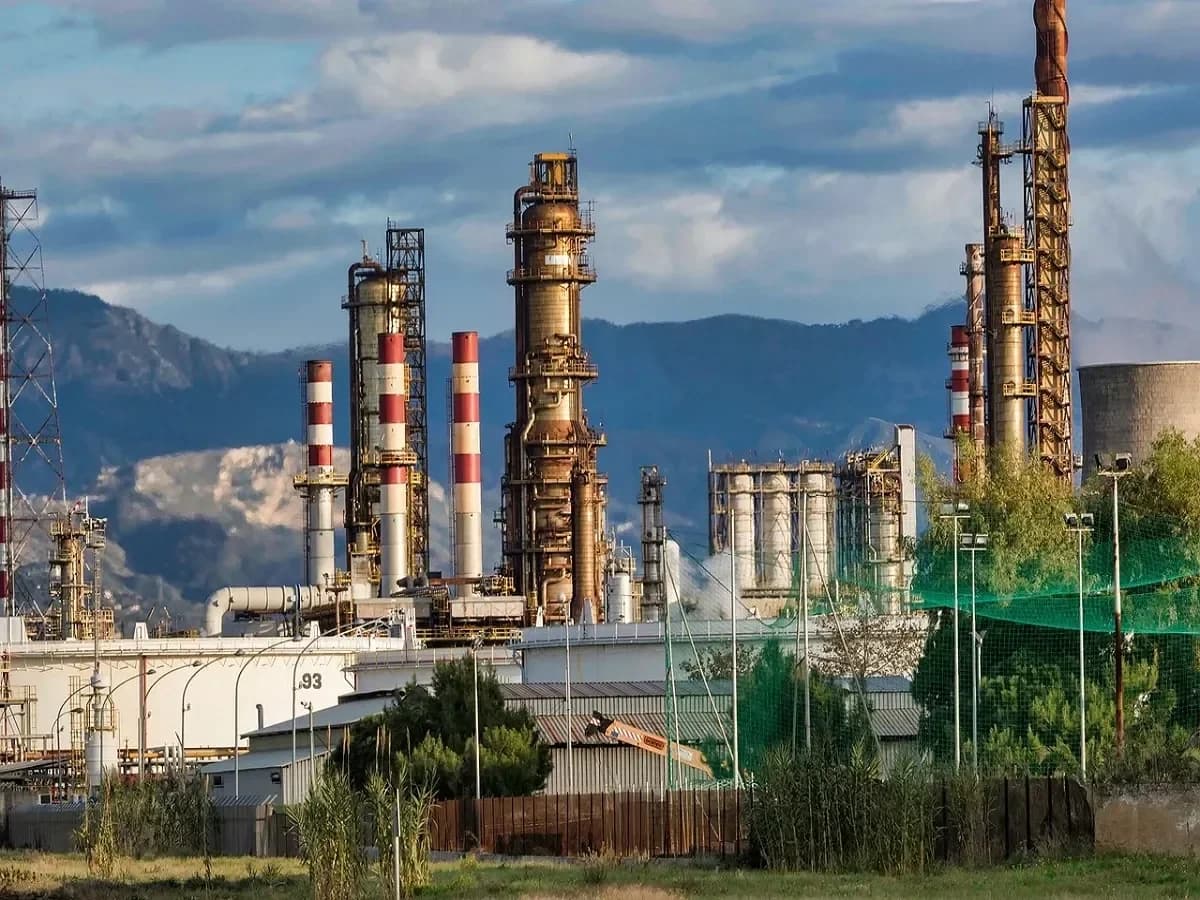
Notably, refinery products reversed their trajectory, moving out of the red after three consecutive months of contraction. The sector registered 2.7% growth in July compared with -4% in June, marking a significant turnaround in performance. This recovery was a key factor in offsetting some of the decline in other sectors and contributed to the overall positive growth performance, helping to support the broader core sector performance despite the challenges in other key segments. The refinery products sector's 2.7% growth in July 2026 represents the sector's best performance in nine months, snapping a three-month streak of contractions and providing a relative bright spot among the core sectors. Aditi Nayar from ICRA highlighted that the refinery products sector's recovery was a key factor in offsetting some of the decline in other sectors.
During the April-July 2026-27 period, the key sectors expanded by 4.3%, marking a substantial improvement compared to the 1.5% growth recorded in the same period of the previous year. This demonstrates the sustained momentum in India's core infrastructure sectors over the first four months of the current financial year, despite the recent deceleration in July growth. The strong year-on-year performance indicates underlying strength in the industrial base, even as month-on-month growth shows some moderation. Natural gas production saw degrowth of 3.7% year-on-year in July, better than the degrowth of 4.8% in June, while crude oil output declined 5.3% from a degrowth of 4.2% in the preceding month. The natural gas and crude oil sectors have contracted continuously for the last 14 months for which data is available, with both sectors showing degrowth of 3.7% and 5.3% respectively in July 2026. The June number has also been revised upwards, with the final index revised to 120.7 from the earlier provisional estimate of 119.6, taking the year-on-year growth rate to 6% from the earlier provisional estimate of 5%. Aditi Nayar from ICRA expects the IIP growth to moderate to 6.0-6.5% in July 2026 from 7.3% in June 2026, given the trends in core output. The fertiliser sector has contracted for the fifth consecutive month, reflecting the impact of the West Asia conflict, with the sector's performance closely watched because fluctuations in domestic production can influence import dependence and input costs across the broader economy.