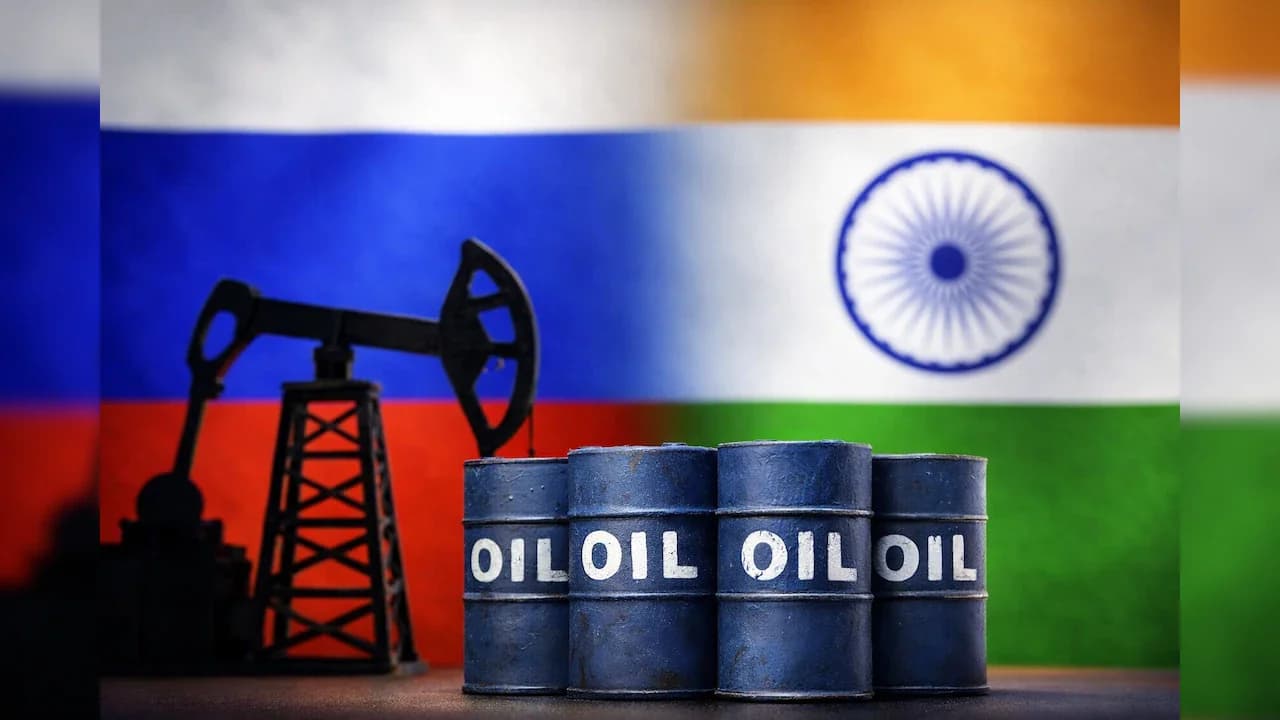
Crude oil prices retreated on Tuesday May 5, 2026, after surging 5.8-6% to $114.44 on Monday following Iran's cruise missile attack on UAE's Fujairah oil hub. Brent futures have since slipped 1.26% to around $113.85 per barrel while WTI crude fell 2.12% to $105.03, as traders reassess immediate supply disruption risks after Iran sent an updated peace proposal through Pakistani mediators. However, the retreat is being treated as fragile and temporary because Trump explicitly rejected the proposal, saying he was 'not satisfied' with Iran's offer. The crude oil prices have now surged more than 55% since the US-Iran war began on February 28, 2026, rising from $72 per barrel to a wartime high of $126 before pulling back to the current $113-114 range. On Tuesday, Trump announced 'Project Freedom,' an initiative aimed at enabling civilian vessels from non-aligned nations to safely exit the Strait of Hormuz and resume normal operations, which directly benefits India's crude import costs and reduces pressure on the rupee.
India has emerged as the world's largest remittance recipient, receiving $137.67 billion in 2024, significantly surpassing China's $48 billion and Mexico's $68 billion, according to the International Organization for Migration (IOM) World Migration Report 2026. The country's diaspora of approximately 19 million people, with significant numbers living in UAE, US and Saudi Arabia, has been the driving force behind this remarkable growth. Remittance inflows into India have risen sharply from around $53 billion in 2010 to over $137 billion in 2024, driven by strong earnings by Indian workers and professionals in the US, UAE, UK, Canada and Australia. The India-UAE corridor ranks as the fifth largest globally with 3.57 million Indians, followed by the India-USA corridor with 2.90 million Indians and India-Saudi Arabia with 2.59 million Indians. This migration pattern provides crucial support for India's economy amid elevated crude oil prices, as remittances serve as a key buffer against external shocks.

For Indian investors, every $10 move in crude oil prices above $85 adds approximately ₹1 to 1.2 lakh crore to India's annualised crude import bill. At $113 Brent, the import bill premium over budget assumptions is approximately ₹3 lakh crore on a full-year basis, directly affecting the current account deficit, rupee stability, and RBI's rate cut headroom. Goldman Sachs specifically flagged India among four countries facing higher risk of diesel and product scarcity if crude oil price disruptions persist, making the India macro exposure to elevated crude oil prices more severe than the headline Brent number alone suggests. The sectors most hurt by elevated crude oil prices include oil marketing companies facing marketing margin pressure, aviation companies with direct jet fuel cost exposure, paint companies with crude-linked raw material costs, and FMCG companies with packaging cost inflation. Conversely, IT exporters benefit from rupee depreciation, oil exploration companies like ONGC and Oil India through higher realisation, and defence companies through geopolitical urgency.
The India Meteorological Department (IMD) has projected a sub-normal monsoon, with rainfall during the June–September period expected at 92% of the long-period average — the lowest first long-range forecast in at least 26 years. The weather agency has assigned a 35% probability to a 'deficient' monsoon, higher than the likelihood of 'sub-normal' rainfall, underscoring elevated downside risks. UBS now expects headline CPI inflation to average 5.2% year-on-year in FY27, revised up from its earlier estimate of 4.6%, and significantly higher than the 2.1% level seen in FY26. The brokerage outlined two alternative scenarios, with growth potentially recovering to around 6.5% year-on-year under an upside scenario, but slowing more sharply to 5%–5.5% under a downside scenario, both assuming weak monsoon conditions. With no sign of a formal peace deal in place, the pass through of higher input prices from producers to consumers cannot be ruled out, thus increasing risks of imported inflation compared to previous months.
According to Mint reports, Sanjeev Prasad, managing director and co-head of Kotak Institutional Equities, emphasizes that India's exposure to the West Asia conflict remains manageable if a final peace deal is reached by mid-May 2026. The current scenario presents significant challenges as crude oil prices have risen to $85 per barrel from earlier assumptions, with no signs of peace framework emerging. Prasad notes that the war has been dragging longer than expected, initially hoped to end by early April, then mid-April, and now extended to mid-May. Goldman Sachs estimates Hormuz exports have fallen to just 4% of normal levels, a disruption that cannot be priced away by a rejected peace proposal. Even in the most optimistic scenario of a full ceasefire and Hormuz reopening, crude oil prices would settle in the $80-90 range rather than reverting to pre-war levels of $72, due to supply chain damage and infrastructure repairs that take weeks to resolve.