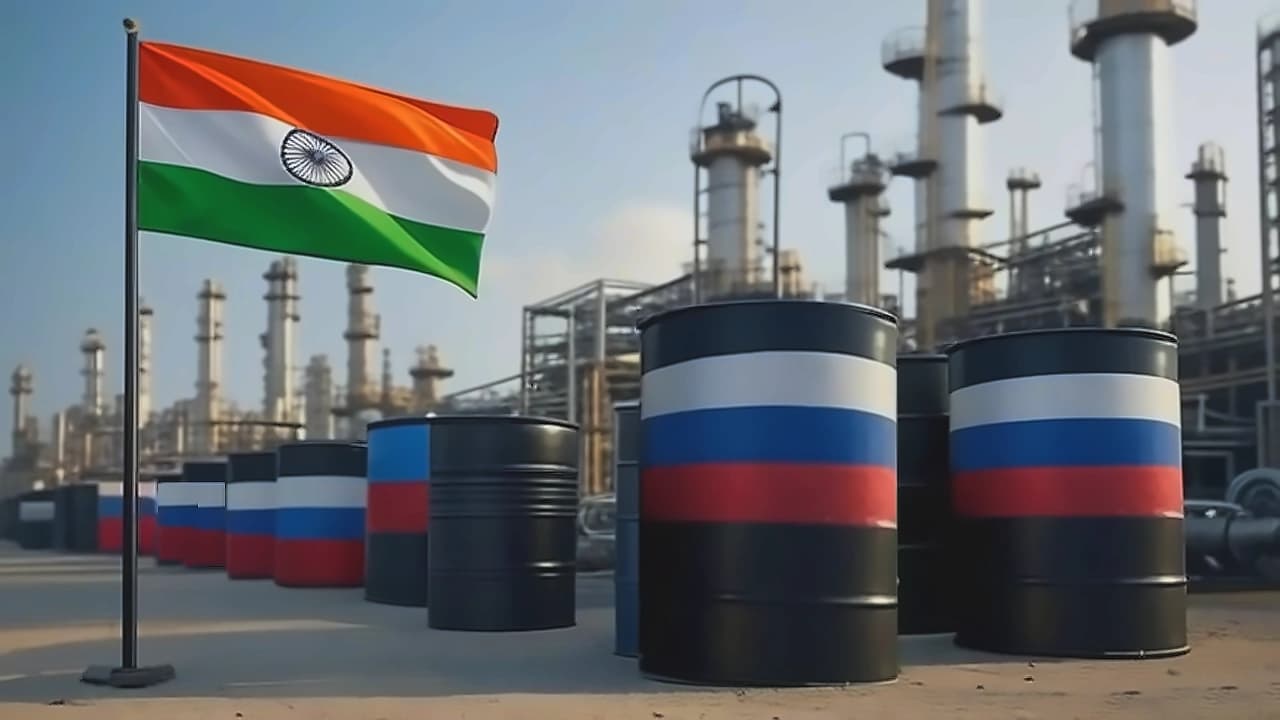
India's crude oil imports from Russia are facing potential pressure after the Trump administration indicated that waivers allowing such purchases may not continue indefinitely as global oil markets stabilise. Speaking during a visit to Bahrain, US Secretary of State Marco Rubio said the option of ending Russian oil waivers remains on the table, although the final decision rests with President Donald Trump. Rubio said Trump would take prevailing market conditions into account before deciding whether to extend or terminate the waivers, with crude oil prices easing from recent highs potentially providing greater room to tighten restrictions without significantly disrupting global energy markets.
India's crude oil imports from Russia surged to 2.73 million barrels per day in June through June 20, accounting for nearly 50% of India's total crude oil imports in the month, according to data from maritime intelligence firm Kpler. This represents a significant increase from 2.66 million bpd in May and 1.91 million bpd in April, as reported by Business Standard. The surge occurred as refiners increased purchases amid discounts of around $2-$5 per barrel, compared to a premium of around $13-$15 per barrel paid by Indian refiners from March to May during the conflict's early stages. As per Business Standard, India's crude oil imports from Russia are expected to average around 2.3-2.4 million bpd by the end of June, with the recent discounts providing major relief to India amid the ongoing crisis.
India's crude oil imports from the United Arab Emirates stood at 572,000 bpd and Saudi Arabia at 358,000 bpd in June so far, making them the only two West Asian countries meaningfully contributing to India's energy supplies during the ongoing conflict, according to Business Standard. These supplies are backed by energy infrastructure bypassing the Strait of Hormuz. Non-traditional crude oil suppliers such as Venezuela and Brazil supplied 291,000 bpd and 105,000 bpd respectively in June. The sharp increase in Russian oil purchases helped stabilise India's monthly crude oil imports to pre-conflict levels of over 5 million bpd, which had dropped to 4.4-4.5 million bpd in March and April due to supply constraints. India is the world's third-largest crude oil importer, after China and the US, and depends on imports to meet around 90% of its domestic requirements.
India is building strategic oil reserves to enhance energy security amid global disruptions. Oil and Natural Gas Corp (ONGC) has been tasked with developing and stocking India's next strategic petroleum reserve, a government-backed initiative that could involve an investment of roughly $1.6 billion (₹15,000 crore). The planned facility will consist of a 1.75 million metric tonne (MMT) underground crude storage cavern at Mangaluru, which will increase India's existing emergency crude storage capacity of 5.33 MMT by nearly one-third. This would mark the first instance of a state-owned oil company being entrusted with the development of a strategic petroleum reserve facility. India's current SPR infrastructure comprises facilities at Visakhapatnam with a capacity of 1.33 MMT, and at Mangaluru and Padur in Karnataka with capacities of 1.5 MMT and 2.5 MMT respectively. India's oil consumption stands at around 5 million barrels a day.
Petroleum minister Hardeep Singh Puri on Saturday said petrol and diesel prices in India had seen a limited rise despite sharp fluctuations in global crude oil markets. When asked whether domestic fuel prices could be cut in light of softer global crude oil prices, Puri said that among the 193 member countries of the United Nations, only Japan had seen a smaller increase in petroleum prices than India. He said the cumulative rise in petrol and diesel prices had been restricted to ₹7.60 and added that, when compared with price levels during the Russia-Ukraine conflict that began in 2022, there had effectively been no increase. Commenting on developments around the Strait of Hormuz, Puri said oil marketing companies were suffering losses of nearly ₹1,000 crore every day. He said there was scope for fuel prices to decline once refiners started processing crude purchased at lower rates, noting that companies are currently carrying stocks bought at elevated prices.