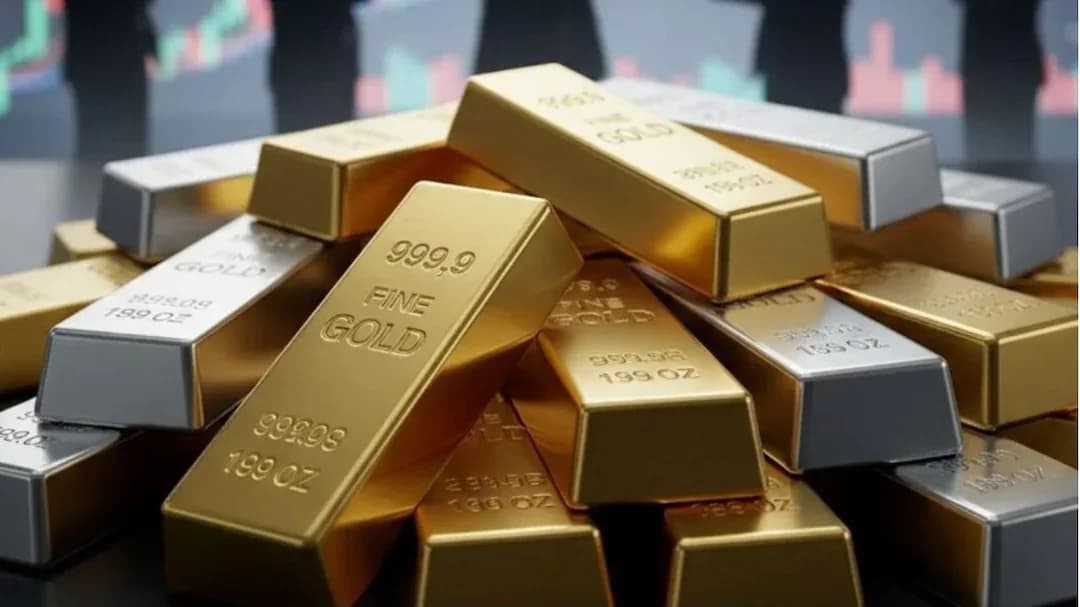
The government's sudden late-night increase in import duty on gold and silver from 6% to 15% has sparked serious questions about transparency and fairness among citizens and market observers. As reported by Learning Markets with Manish, the announcement made around 1 AM, when most government offices, banks, and public institutions remain closed, has raised concerns that ordinary citizens wake up to higher prices while large investors and traders may already be prepared for the impact before markets reopen. Gold prices immediately surged after the announcement, making jewellery and investment purchases more expensive for common families. Critics are questioning whether advance information benefits financially powerful groups who can act quickly, while salaried and middle-class people have no opportunity to respond before prices rise nationwide. The controversy has reignited debate over transparency in economic policymaking, with citizens demanding clearer communication from authorities regarding why such announcements are made during late-night hours instead of regular working hours.
Prime Minister Narendra Modi has led by example in advocating fuel conservation and austerity measures during the West Asia crisis. As reported by The Sentinel, Modi has reduced his motorcade to two vehicles and encouraged judicious use of government resources, sending a clear signal that conservation begins at the top. The Prime Minister's appeal to citizens to conserve fuel, reduce unnecessary travel, avoid wasteful expenditure and defer non-essential imports is aimed at shielding the country from cascading effects of a prolonged geopolitical crisis. This voluntary approach involves practical steps including using public transport, carpooling, switching off unnecessary lights, and limiting discretionary spending, with the objective of fostering collective responsibility rather than creating panic. Recent reports show that his appeal is now being echoed across public life and industry, with Rajya Sabha MPs to business leaders and companies adopting hybrid work models stepping up to reduce fuel consumption and support India's economic stability. As per bjpsc_morcha, people across sectors are responding with responsibility, resilience and unity while many nations struggle with uncertainty.
The government implemented significant policy measures to address mounting external pressures from the West Asia crisis, with customs duty on gold imports increased from 6% to 15% to curb imports and narrow the trade deficit. As reported by The Times of Ahmedabad, this move has sparked debate in financial and funding circles, with questions about effectiveness given India's cultural affinity for gold. India is the world's second-largest client of gold, with practically 90% of its demand met via imports, making gold a crucial factor in India's external stability. In FY26, gold imports surged to just about $72 billion, despite lower import volumes, largely due to rising international costs. The Prime Minister's appeal to residents to voluntarily reduce gold consumption for one year is aimed at easing the burden on overseas reserves and stabilizing the rupee, though the effectiveness remains questionable given India's cultural preferences. According to India Bullion and Jewellers Association (IBJA) updates, 22k gold prices stood at ₹15,441 per gram on May 15, 2026, representing a ₹766 per gram increase from ₹14,675 on May 14.

The government implemented significant policy measures to address mounting external pressures from the West Asia crisis. According to reports from Business Standard, the government raised import tariffs on gold and silver to 15 per cent to curb imports, narrow the trade deficit and support the currency. This action came as the rupee hit a fresh low of 95.75 per dollar, pressured by crude oil prices, foreign portfolio outflows and dollar demand. However, forex reserves offered some cushion, rising $6.29 billion to $696.99 billion in the week ended May 8, led by higher gold reserves. The measures are part of a precautionary response to rising oil prices and uncertainty in West Asia, with the government's appeal extending to postponing non-essential imports such as gold and luxury goods, along with reducing avoidable overseas travel.
Inflation pressures intensified significantly as retail inflation rose to 3.48 per cent in April due to food price increases, while wholesale inflation jumped to a 42-month high of 8.3 per cent on fuel and energy costs. As reported by Business Standard, the pressure reached consumers directly after oil marketing companies raised petrol and diesel prices by around ₹3 per litre across the four metros. To protect domestic supplies, India prohibited exports of raw, white and refined sugar till September 30, with exemptions for tariff-rate quota shipments to the US and EU. The impact of higher oil prices becomes more severe when the rupee weakens against the US dollar, as India must spend more to import the same quantity of oil, placing additional pressure on foreign exchange reserves.
India's trade performance showed mixed signals with exports rising 13.78 per cent to $43.56 billion in April, while imports grew 10 per cent to $71.94 billion, leaving a $28.38 billion trade deficit. According to Business Standard, Crisil cut India's FY27 growth forecast to 6.6 per cent from 7.1 per cent, citing higher crude prices, softer global growth and monsoon risks. Moody's lowered its 2026 India growth estimate to 6 per cent, noting the country remains vulnerable due to its dependence on imported crude and LNG. The government's austerity drive aims to conserve fuel and protect the economy from potential shocks, with every litre of fuel saved helping reduce the nation's import burden and conserve valuable foreign exchange.
India took several steps to secure energy supplies amid supply concerns. As reported by Business Standard, India declined sanctioned Russian LNG but sought an extension of the US waiver on Russian oil. To reduce import dependence, the Cabinet approved a ₹37,500 crore coal gasification scheme. Prime Minister Narendra Modi's visit to the UAE secured $5 billion in investment commitments and energy, defence and AI pacts, including strategic petroleum reserve cooperation. Petroleum Minister Hardeep Singh Puri stated that India had 60 days of crude and LNG stocks with no fuel shortage. India has built strategic petroleum reserves and maintains adequate stocks of crude oil and LPG to cushion against short-term disruptions, providing an important safety net during periods of global uncertainty.