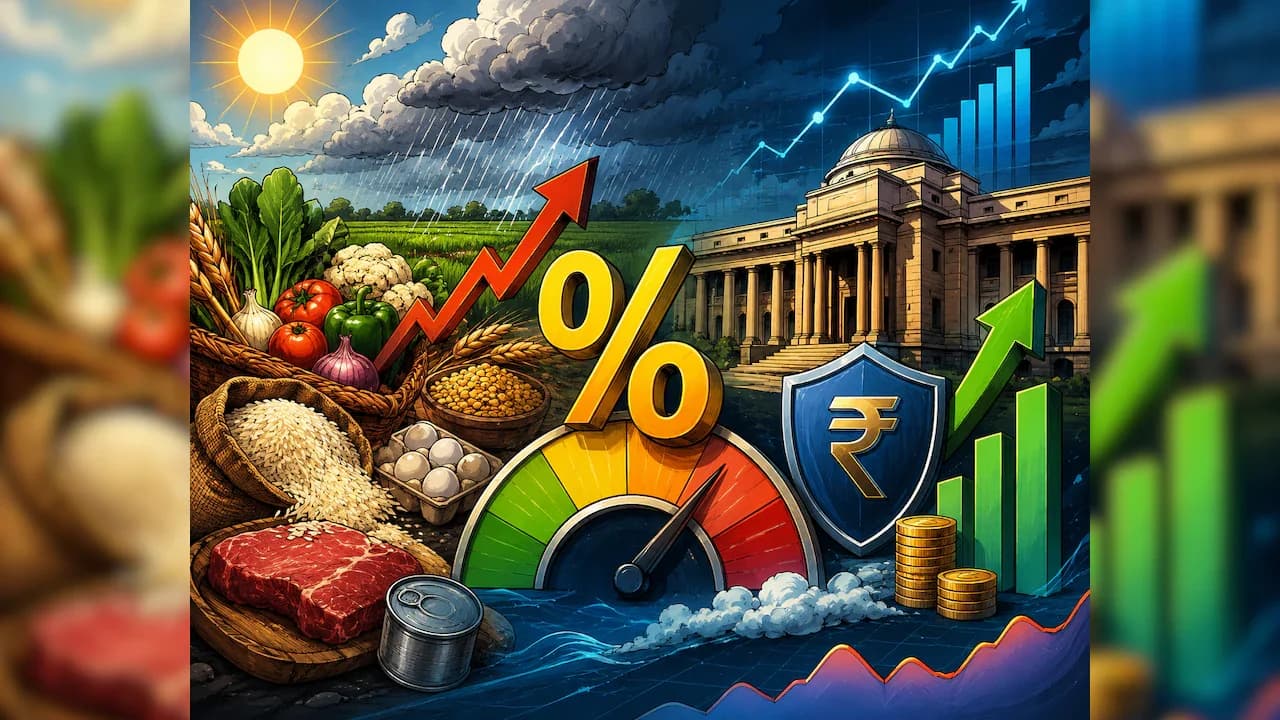
Retail inflation surged to 4.38% in June 2026 from 3.93% in May, marking a significant acceleration that pushed inflation above the RBI's 4% target for the first time in 17 months. Food inflation reached 5.32% in June, up from 4.78% in May, according to provisional data from the revised consumer food price index. The all-India Consumer Food Price Index (CFPI) increased by 1.7% on a sequential basis in June compared with the previous month. This represents a notable turnaround from India's prolonged spell of food deflation, which had persisted for seven months through December 2025. As per Dr Manoranjan Sharma, Chief Economist at Infomerics Ratings, the inflation rise reflects both domestic supply issues and global developments, driven mainly by higher food prices, particularly cereals, pulses, vegetables, spices and dairy, plus firmer fuel and energy costs. The June reading marks the fifth straight month of accelerating inflation under the new CPI series, which uses a revised base year of 2024.
The primary drivers of June's food inflation were dramatic price increases in specific commodities. Tomato inflation surged 31.92% while ginger prices recorded an even steeper increase of 50.41%, as reported by the statistics ministry. However, not all food items became more expensive, with potato prices declining 20.34% on a year-on-year basis in June 2026, while peas became 9.67% cheaper. These three commodities have a combined weightage of 1.24% in the CPI basket. The latest data shows that food prices remain the biggest reason behind inflation moving above the RBI's target, with food inflation fuelled by supply disruptions in perishables, spices and dairy, exacerbated by erratic monsoon conditions and heat-related crop damage. According to Sharma, food prices remain the principal driver of inflation, with overshooting 4% inflation being overwhelmingly food-led.
India's inflation outlook has become more uncertain due to President Trump's decision to reinstate a blockade of Iranian ships transiting the Strait of Hormuz, reviving concerns over energy supplies for the world's third-largest oil importer. As per ICICI Bank's Sameer Narang and Jyoti Sharma, oil prices have started to increase once again, adding an element of uncertainty to both inflation and growth prospects. However, economists report some relief as crude oil trading closer to the mid-$80s a barrel from above $100 earlier this year. Kotak Mahindra Bank's Upasna Bhardwaj remains cautious about geopolitical tensions and plausible upside risks on oil prices, forecasting half a percentage point of rate hikes in the second half of the fiscal year. Despite these concerns, many economists expect the RBI to maintain rates at 5.25% in 2026, arguing policymakers have room to wait given current oil price levels.
An intensifying El Niño has raised concerns that below-normal rainfall could hurt crop production and lift food prices later this year. Seasonal monsoon rainfall is running 18% below the long-term average, with farmers having planted only about one-third of the normal area for kharif, or summer-sown, crops as of July 3, down 20.8% from a year earlier, according to Barclays Plc's Aastha Gudwani. This represents a significant deterioration from the previous year's planting levels. Gudwani expects inflation to accelerate toward the upper end of the RBI's tolerance band in the December quarter due to unfavorable base effects and weaker rains. However, she believes policymakers will remain on hold, noting that slower sowing yields could lead to lower output, prompting the government to dip into buffer stocks if necessary.
The inflation rise was compounded by higher fuel and energy costs, with Brent crude trading at $85.41 per barrel as of Tuesday morning, while US West Texas Intermediate (WTI) crude stood at $80.09 per barrel. However, economists report some relief as the Indian basket of crude oil, which averaged US$114 a barrel in April, has eased to about US$71 in July, providing some relief from imported cost pressures. As per Bajaj Broking, India's wholesale inflation trajectory remains persistently elevated, with the June 2026 WPI reading accelerating to 9.87% year-on-year from 9.68% in May, driven by a sharp sequential spike in food and primary articles. The WPI Food Index surged to 6.14%, while manufactured products inflation has plateaued at a sticky 7.48%. Economists do not expect a rate hike by the Monetary Policy Committee of the RBI at its upcoming meeting on August 5, with ICRA Chief Economist Aditi Nayar stating she expects the MPC to maintain the status quo on the policy rate.