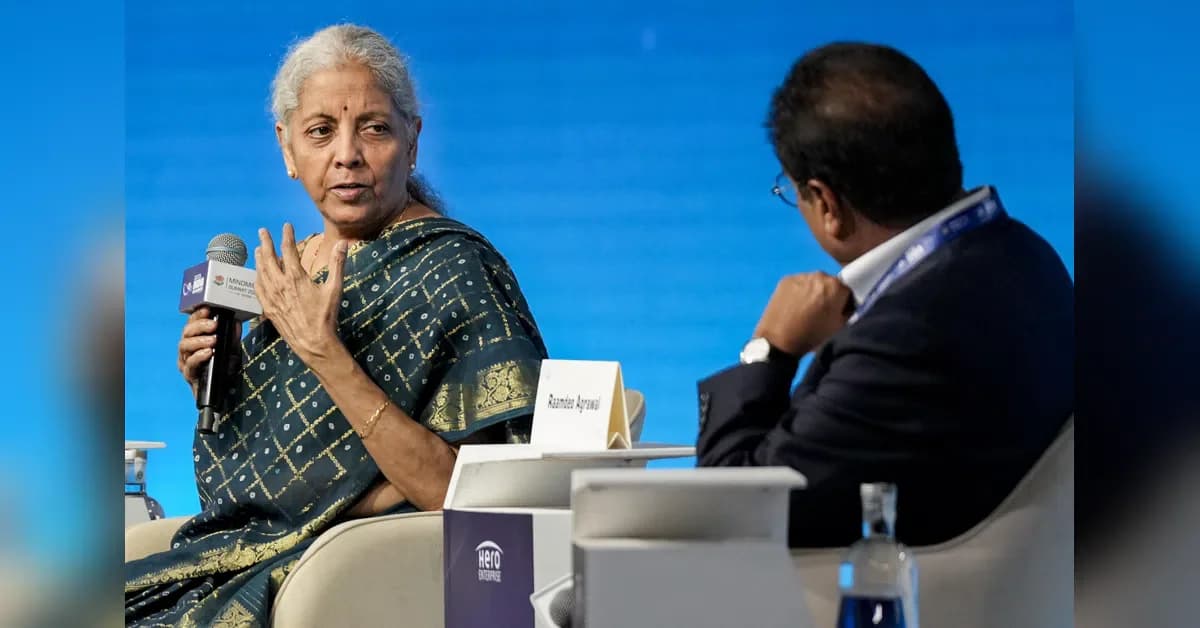
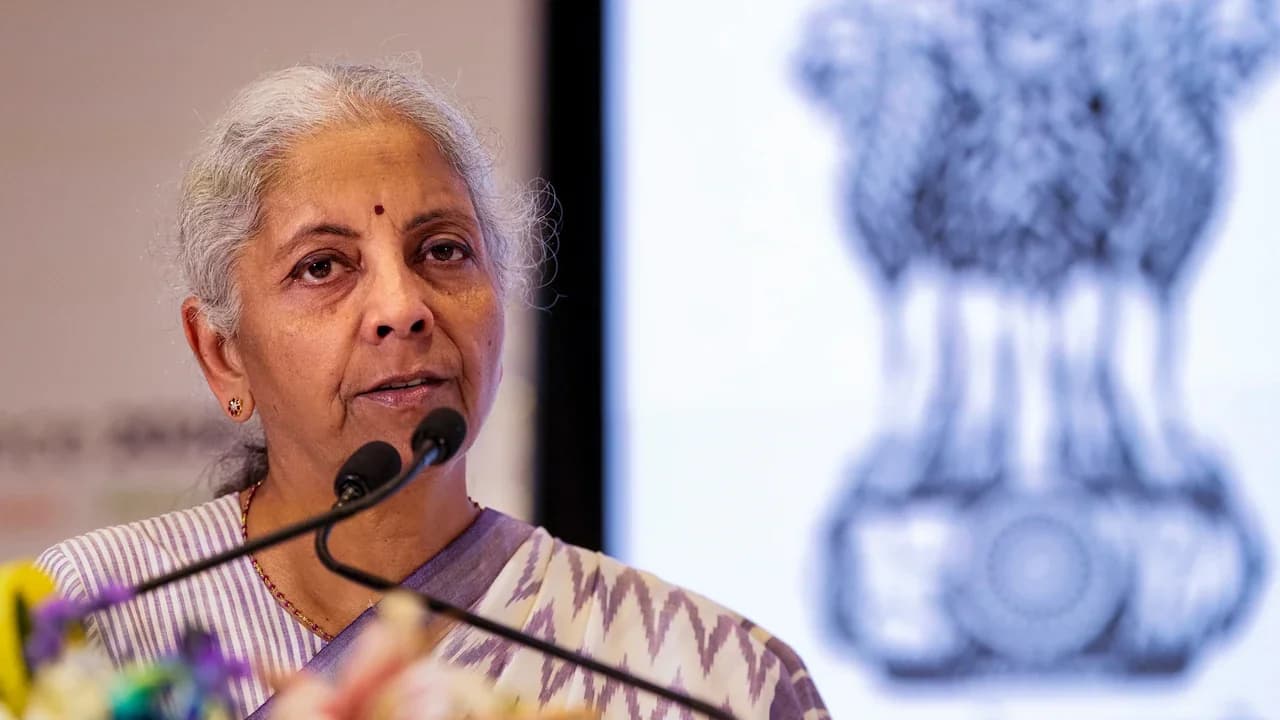
Finance Minister Nirmala Sitharaman on Monday indicated that there will be more steps to attract foreign capital into the Indian market. Speaking at the Hero Mindmine Summit 2026, Sitharaman said measures taken by the government to exempt withholding tax on interest and capital gains tax made by foreign investors in G-secs will be the first step towards drawing foreign capital back. According to reports from The Times of India, she emphasized that 'Certainly, that's not the end of story, there will be more. We recognise we need more foreign capital to come in.' The finance minister noted that recent measures announced for the bond market were only the beginning of a broader effort to draw overseas investments, with the government undertaking analysis to make bonds more attractive to foreign investors through the Fully Accessible Route (FAR) and a favourable withholding tax regime. As per PTI, assessments conducted by the RBI and the government indicated that the domestic bond market has the potential to serve as an effective channel for attracting foreign investment.
The Reserve Bank of India (RBI) on June 5 had allowed banks to access the RBI's swap facility for Foreign Currency Non-Resident (Bank) (FCNR(B)), deposits with maturities ranging from 3-5 years till September 30. As reported by The Times of India, this facility would allow banks to swap US dollar deposits with the RBI, and manage currency risks. Additionally, the RBI announced a concessional forex swap facility to encourage PSUs to raise external commercial borrowings (ECBs) until September 30. According to Sitharaman, the RBI had also created a framework under which public sector undertakings and banks could raise funds overseas, with the central bank bearing the currency hedging risks. The finance minister explained that under this framework, currency hedging will be at the expense of the RBI, allowing banks to go unfettered in raising their own funds without currency risk concerns.
The finance minister highlighted that the Indian economy is facing 'severe strain' from import of key raw materials, as well crude oil and fertilisers. As reported by The Times of India, she noted that 'the global situation is changing almost every week with newer challenges emerging and the country has to be ready for every such 'exigency'. The closure of the Strait of Hormuz amid West Asia tensions is expected to increase India's fertiliser import costs, with the country importing roughly 87% of its crude oil requirements, of which about 46% moves through or close to the Strait of Hormuz. India's dependence on the Strait extends to cooking gas as well, with around 60% of the country's LPG consumption met through imports, and nearly 90% of those supplies passing through the Strait. These economic pressures underscore the government's need to attract more foreign capital to strengthen the domestic economy and prepare for uncertainties arising from the rapidly changing global environment.
Separately, Sitharaman highlighted that India is witnessing rapid growth in investments in data centres and Global Capability Centres (GCCs), with state governments actively competing to attract such projects. According to The Times of India, she said the country had been engaging with states to have a policy on data centres and GCCs, with these investments expected to generate jobs and support economic activity over the coming decade. The growth of the sector is no longer limited to traditional technology hubs such as Bengaluru, Hyderabad and the National Capital Region, with tier-II cities also emerging as destinations for investment. 'Cities like Mangaluru are also becoming hosts to data centres, and it is just spreading so quietly,' she said, adding that states had not only framed policies but were also proactively engaging with investors to attract GCC and data centre projects.