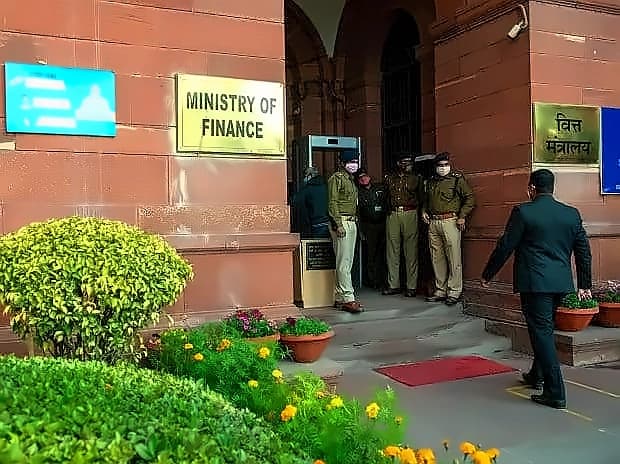
The government has called a two-day meeting with state-owned lenders to brainstorm measures to attract foreign investments, a move aimed at stabilising the rupee and bridging the current-account gap that has widened largely because of the high energy import bill. According to reports from The Economic Times, the finance ministry has scheduled the annual PSB Manthan with all public sector lenders on August 17 and 18 in New Delhi. Finance minister Nirmala Sitharaman will meet bankers and review their proposals on August 18, senior bankers confirmed. The meeting will focus on improving deposit mobilisation, encouraging investors to set up global capability centres in India, strengthening the flow of funds to medium and small enterprises, and helping scale the agriculture and horticulture sector. As reported by The Economic Times, the meeting will be attended by the chiefs of all PSU banks, led by State Bank of India chairman CS Setty. The heads of the National Bank for Financing Infrastructure and Development, Power Finance Corporation, National Housing Bank and Small Industries Development Bank of India, among others, will also attend.
Latest data released by the Reserve Bank of India for July 15 show bank deposits rose 12.7% while credit grew 17.7% from a year earlier. According to The Economic Times, economists noted that foreign capital is essential as India runs a current-account deficit (CAD), which implies that gross domestic savings are not enough to fund domestic investment. In FY26, CAD was 0.6% of GDP which is expected to widen to 1.5% to 1.7% of GDP in FY27 due to elevated crude oil prices, said IDFC First Bank chief economist Gaura Sengupta. A growth cycle which is led by investment tends to last longer as it creates capacity and jobs, Sengupta added, emphasizing the importance of foreign capital for long-term economic growth. Even China in its initial high-growth phase was critically dependent on FDI to build its domestic manufacturing, she noted.
To encourage foreign currency inflows, the RBI on June 5 announced a dollar-swap facility at concessional rates on foreign currency deposits and external commercial borrowings raised by state-run lenders. As reported by The Economic Times, India attracted $40 billion in foreign currency inflows, with FCNR deposits alone contributing $36 billion under this programme until July 30. However, FCNR deposits can only help slow the pace of depreciation of the rupee, which fell 11% in FY26. The RBI's deposit scheme is expected to mobilize up to $100 billion by its closing date, significantly boosting foreign currency reserves and helping stabilize the Indian rupee after a period of weakness. FCNR deposits can't be used frequently to attract capital. Hence, it's important to build other more stable forms of foreign capital such as foreign direct investments, said Sengupta, noting that moreover, the FCNR deposit inflows will mature after three to five years. India will need to build forex reserves to pay dollars when these deposits mature.
The Department of Financial Services (DFS) under the Ministry of Finance is set to organise a two-day PSB Confluence in New Delhi on August 17-18, bringing together the leadership of public sector banks and public financial institutions. According to the DFS, the conclave will bring together around 125 participants, including chairpersons, managing directors and executive directors of PSBs, along with senior representatives of institutions such as NABARD, EXIM Bank, SIDBI, National Housing Bank, IIFCL, IFCI and NaBFID. Finance minister Nirmala Sitharaman, along with Minister of State for Finance Pankaj Chaudhary, will address the conclave aimed at facilitating discussions on key issues facing the banking sector and identifying practical, time-bound measures that can improve people-centric outcomes. The discussions will be organised across several thematic tracks, including deposit mobilisation, banking for youth, supporting the investment cycle, facilitating Global Capability Centres, agriculture and horticulture value-chain infrastructure, reimagining the credit card business and priority sector lending. As reported by the Ministry of Finance, the conclave will examine banking products and services tailored to younger customers and ways to strengthen financial institutions' role in supporting India's broader economic and investment cycle.