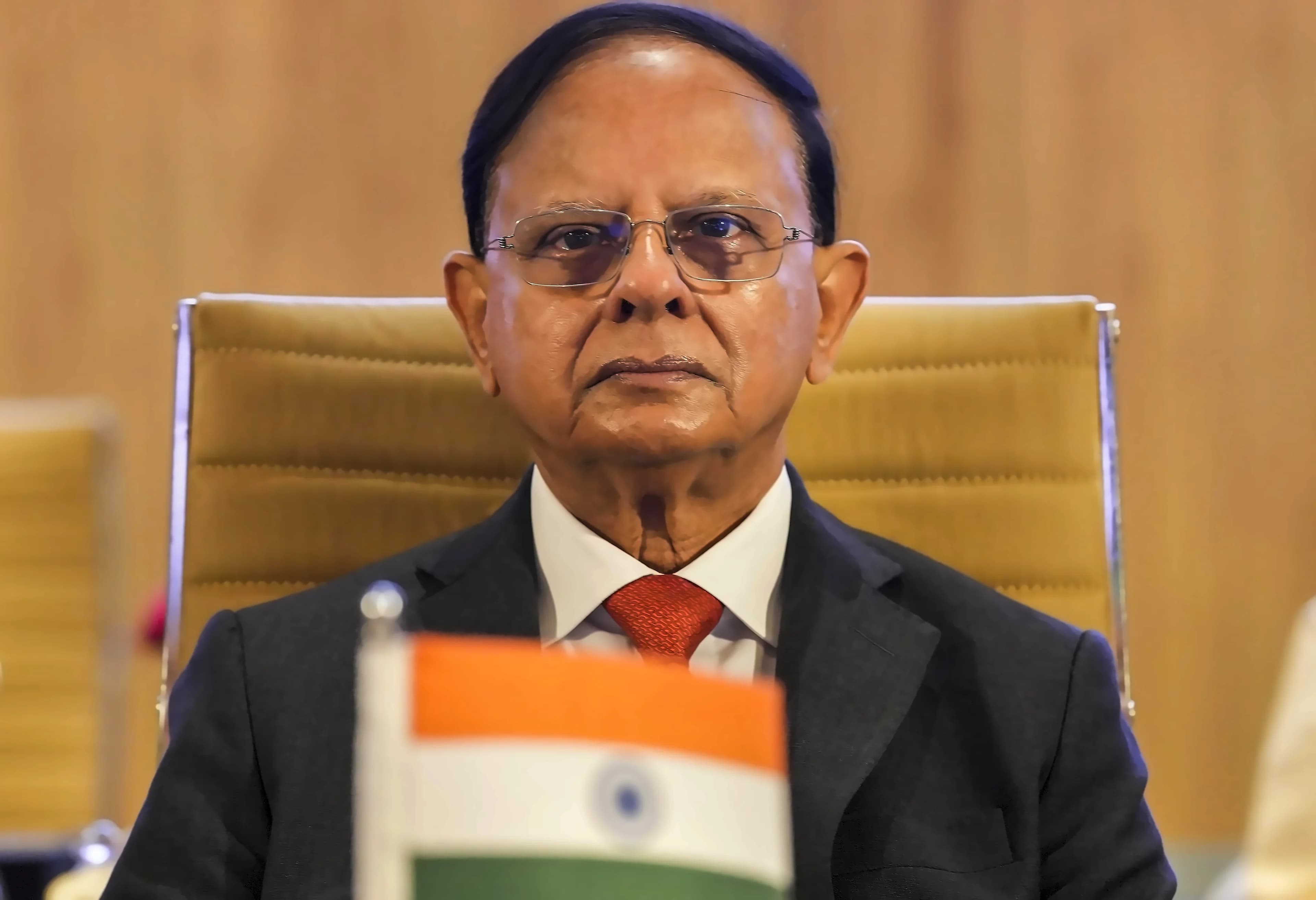
Confederation of Indian Industry (CII) President R Mukundan has highlighted how comprehensive reforms have fundamentally transformed India's business landscape. According to Economic Times, Mukundan emphasized that reforms in taxation, digital infrastructure, manufacturing, insolvency and public infrastructure have improved India's competitiveness, lowered logistics and transaction costs, and strengthened the economy's resilience. He noted that India's real GDP grew 7.8% in Q1 FY27, despite a challenging global environment, supply chain disruptions and a crisis in West Asia, demonstrating the resilience built through years of enabling reforms. The GST and JAM trinity integrated millions into the formal financial system, with the JAM architecture creating the foundation for UPI, which now processes nearly ₹30 lakh crore monthly. As per Economic Times, Mukundan stated that "This resilience that India has demonstrated has been built over years of enabling reforms, supply chain diversification and policy interventions."
Confederation of Indian Industry (CII) President R Mukundan has called for India to move beyond traditional ease and cost of doing business metrics to focus on 'speed of doing business' as the next phase of economic reforms. According to reports from Business Standard, Mukundan, who is also managing director and CEO of Tata Chemicals, emphasized that reducing approval and project timelines could significantly lower capital costs for companies. He stated that policy stability and predictability would remain critical, but faster execution could address conventional investor constraints. The government's infrastructure push has fundamentally changed the economics of doing business in India, with highways, dedicated freight corridors, port modernisation and rail electrification collectively lowering logistics costs and improving supply-chain reliability. As per Economic Times, Mukundan noted that "The Insolvency & Bankruptcy Code (IBC), RERA, labour codes and the numerous sectoral reforms all have helped unlock the growth potential of the Indian economy and enhanced its resilience."
India's manufacturing capabilities have shown remarkable growth across multiple sectors. As reported by Economic Times, electronics production rose to ₹13.1 lakh crore in 2025-26 from ₹1.9 lakh crore in 2014-15, with India now being the world's second-largest mobile phone manufacturer. The pharmaceutical sector has emerged as a global leader, with India accounting for 20% of global generic drug volumes while pharmaceutical exports crossed $30.5 billion last year. Defence manufacturing has seen exceptional growth, with indigenous defence production increasing from ₹46,000 crore in 2014-15 to ₹1.78 lakh crore in 2025-26, while defence exports grew more than 5,500% over 12 years. Toys exports have also surged 152%, with Indian toys reaching 153 countries. According to Economic Times, Mukundan highlighted that "The transformation is also visible in manufacturing, with electronics production rising to ₹13.1 lakh crore in 2025-26 from ₹1.9 lakh crore in 2014-15."
Mukundan provided specific examples of how faster execution could substantially reduce costs for companies. As reported by Business Standard, he noted that reducing project execution time from 36 months to 24 months would save a significant amount of interest cost. Similarly, cutting the time required to obtain and convert land for industrial use from nine months to three months could substantially lower costs before a plant begins production. Some states are already using technology to accelerate investment approvals, including conducting investor presentations and resolving land-related issues online. The reforms have created a common national market through GST, improving compliance and reducing transaction costs across sectors. According to Economic Times, Mukundan emphasized that "The reforms have created a common national market through GST, improving compliance and reducing transaction costs across sectors."
Looking ahead, Mukundan identified semiconductors, renewable energy, data centres and shipbuilding as sectors that could see the next wave of investment and manufacturing growth. For India to achieve its manufacturing and export ambitions, the country would need greater domestic value-chain depth, moving beyond assembly to components, capital goods and design. According to Economic Times, he highlighted that "The next phase of growth will require the baton to pass from public to private investment, with private investment rising and capacity utilisation moving towards 80%." Domestic consumption remains robust, with 61% of businesses in CII's latest survey expecting demand to rise in the second quarter of 2026-27. The task now involves deepening long-term financing, removing regulatory friction that discourages firms from scaling, and ensuring that growth generates more productive, better-paying jobs. As per Economic Times, Mukundan also highlighted that "For India to achieve its manufacturing and export ambitions, the country would need greater domestic value-chain depth, moving beyond assembly to components, capital goods and design."