Global equity markets are facing a fundamental challenge as US consumer inflation accelerated to 4.2% in May, the highest level in three years, according to latest data. This development has called into question the market's defining assumption for 2026 - that inflation was moving steadily lower and interest rates would eventually follow. The European Central Bank is preparing to raise interest rates for the first time since 2023 as policymakers respond to mounting price pressures linked to elevated energy costs. These developments represent more than disappointing inflation prints - they raise the critical question of whether the market's defining trade of 2026 remains intact. A growing number of economists now expect the Federal Reserve to remain on hold through the remainder of the year, with markets beginning to reflect the possibility that further tightening cannot be completely ruled out.
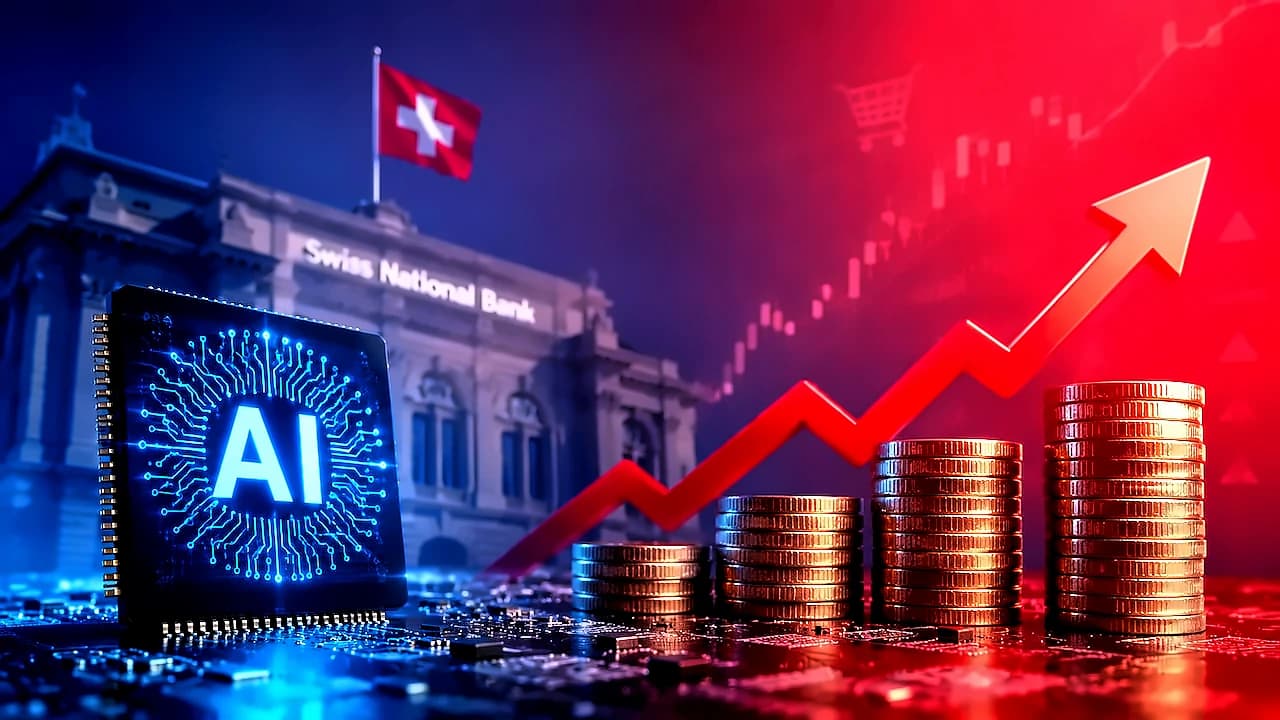
Global equity markets are experiencing unprecedented volatility as they navigate dual pressures from AI inflation risks and oil price shocks from the U.S.-Iran conflict. According to CNBC TV18, world markets teeter as AI optimism clashes with U.S.-Iran war oil shocks, driving volatility in stocks, bonds, and energy linked assets worldwide. The market outlook has become precarious, with equal odds of an AI boom lifting growth or oil shocks from the U.S.-Iran war pushing stocks and bonds into a tailspin. This volatility reflects the narrow line investors are walking between AI-driven growth opportunities and geopolitical supply disruptions that could trigger stagflationary conditions. The Iran conflict has contributed to a sustained rise in energy prices, pushing inflation higher across major economies and creating problems that monetary policymakers are poorly equipped to solve. As Lombard Odier Investment Managers' Florian Ielpo notes, "If we move to expecting oil prices of $95 or more for many more months, that would be a complete change of view and a stagflation outlook."
Oil markets are displaying mixed signals as WTI crude fell back to support around $86 on Thursday, despite earlier gains from Middle East conflict headlines. According to Investing.com, December WTI continues to trade around $80 and was down on the day, but not by as much as the front-month contracts. This suggests that while near-term supply concerns may be easing, the market continues to price in relatively elevated oil prices further out on the curve. Gasoline prices barely fell, indicating that oil and gasoline prices remain choppy with neither breaking support nor resistance in any meaningful way. As Investing.com notes, even if the war is over and the Strait reopens, oil may still be priced at a higher overall price level. To achieve the disinflation needed to bring CPI all the way back down below 3%, oil and gasoline prices will need to fall significantly.
Global equity markets face a new challenge as AI could become the next inflation shock, according to SPI Asset Management's Stephen Innes. In an exclusive interview with ET Now, Innes warns that AI-related costs such as computing power, token usage, data centres and infrastructure spending are not being adequately reflected in traditional inflation measures. The unquantifiable risk lies in the impact of AI on the economy, with most price pressures from AI not picked up correctly by current indexes. While AI could eventually become deflationary through productivity gains, the massive investment required to build AI infrastructure is creating inflationary pressures in the near term. This development adds to existing concerns about market concentration risks, as global earnings growth has become increasingly dependent on a relatively small set of companies tied to AI capital spending. As Invesco's global head of research Ben Jones explains, "If you think that the Strait stays closed for a long period of time and that we will get demand destruction and inflation, that's the time for stagflation positioning in your portfolio."
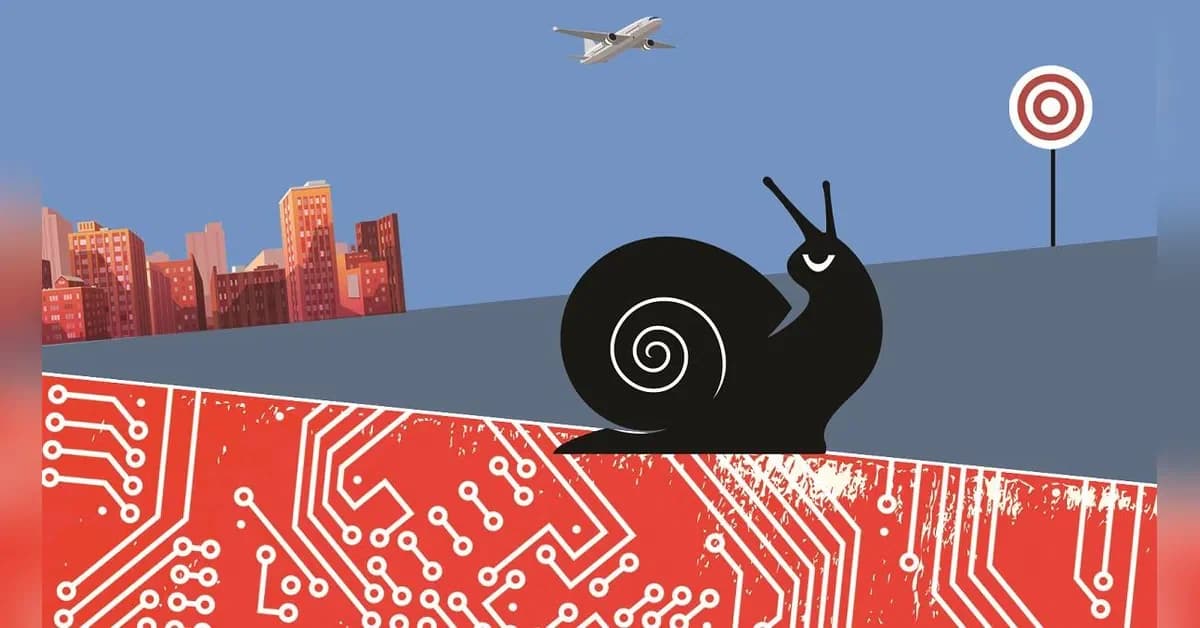
Market experts are warning of stagflationary risks if the Strait of Hormuz remains closed for an extended period, with energy supply scares already biting into economies like Germany and India. According to CNBC TV18, a repricing of interest rate policy along with higher oil prices and shortages will mean stagflationary risks, and some countries are already getting into a recessionary outlook. However, the nature of the inflation threat now emerging is different - it is a story about geopolitics, energy security and supply-side pressures feeding directly into prices across the global economy. Such inflation is often more difficult to address because raising interest rates does little to increase oil production or reduce geopolitical tensions. The volatility is evident in bond markets, with German Bund yields close to 15-year highs and 10-year Japanese yields touching three-decade highs. A measure of bond market volatility is around 5% above its level prior to the start of the war, while stock market volatility is close to its long-run average, but 35% higher year-to-date. Neither outcome was widely anticipated at the beginning of 2026 - the path towards lower rates may be longer, slower and considerably less certain than investors assumed only a few weeks ago.
Global equity markets are positioned for continued strength through 2026, driven by strong earnings growth and capital investment trends, particularly in AI infrastructure. According to Charles Schwab's mid-year outlook, first quarter earnings for the MSCI All Country World Index grew 24% year-over-year, more than double the prior four-quarter average of 11%. The powerful AI capital expenditure cycle is supporting earnings growth, with Bloomberg consensus forward earnings expectations implying 24% growth over the next 12 months. However, this concentration risk is becoming a concern as global earnings growth has become increasingly dependent on a relatively small set of companies tied to AI capital spending. As Carmignac's Kevin Thozet notes, "Data centre construction would be capital intensive and drive up energy prices." Markets rarely reward consensus thinking indefinitely - the most widely accepted investment narratives often face their greatest vulnerability when confidence in them becomes universal. Today, few narratives have been more widely accepted than the belief that inflation has been defeated and lower rates are inevitable, but recent developments suggest investors should be far less certain.