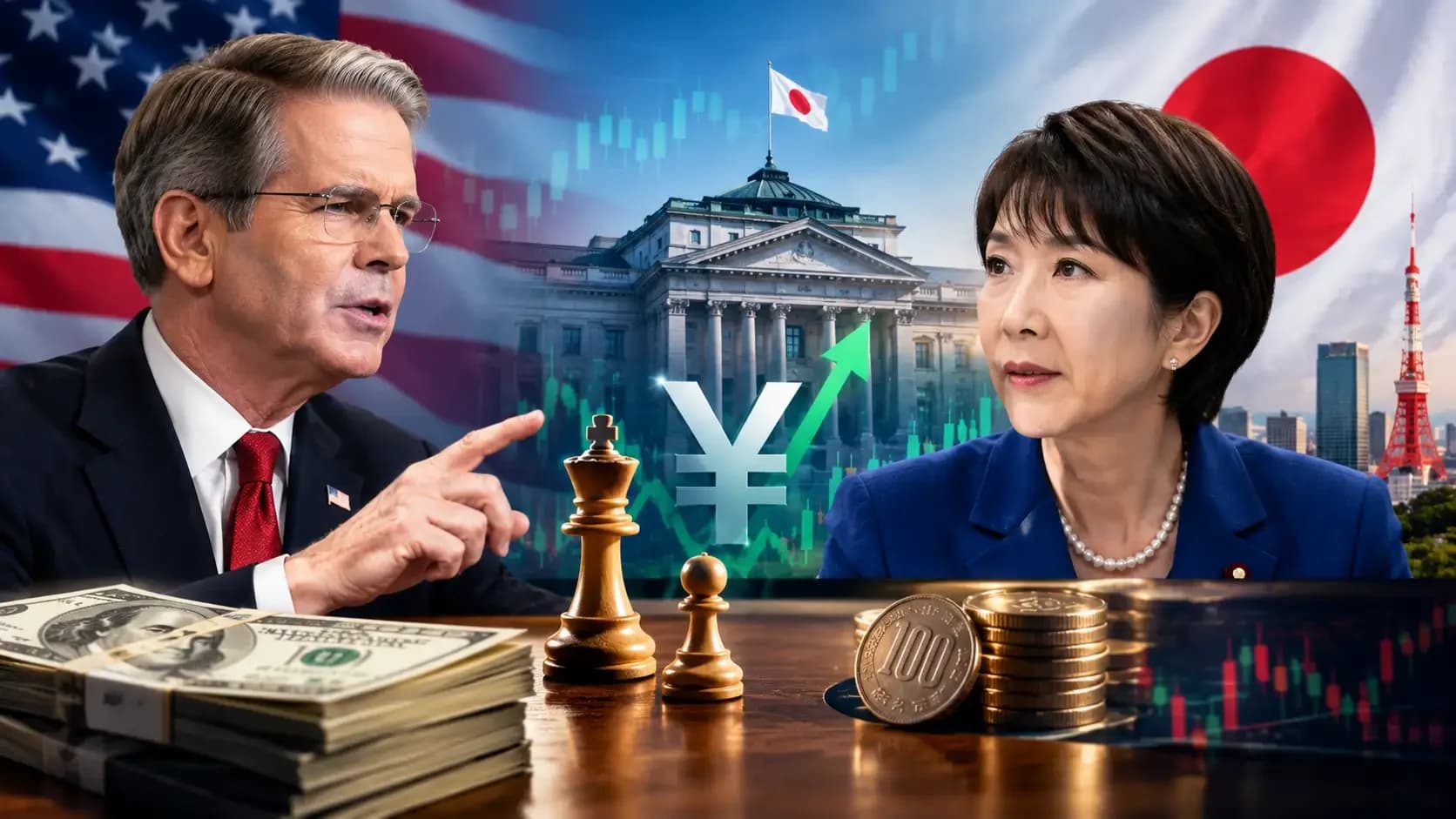
Treasury Secretary Scott Bessent has escalated his campaign to strengthen the yen by directly challenging traders to bet against his coordinated efforts with Japanese officials. Speaking at a Southern Methodist University event in Texas on Tuesday, Bessent declared: 'I am the house now, so when we intervene with the Japanese yen, I have pretty good insight into what the Japanese, what the Bank of Japan is going to do, what Japanese policymakers are going to do,' adding 'And you can bet against me if you want.' According to Bloomberg, these remarks add to an unusually direct effort by Bessent to prop up the currency, following his work with Japan's finance minister Satsuki Katayama on currency intervention and his push for the Bank of Japan to raise interest rates. The dollar-yen pair has already fallen toward its strongest level of the year, trading near ¥152 on Wednesday, down from levels above ¥155 in recent weeks. As reported by The Economic Times, these comments represent Bessent's most strident statements yet in an extraordinary campaign to bend markets to his will, even in the face of investor skepticism.
Bessent's challenge comes as he oversaw the first purchases of yen by US authorities in three decades, marking a historic shift in U.S. currency policy toward Japan. The Treasury Secretary has also surprised market participants last month with plans to ramp up buybacks of US Treasuries to restrain a surge in yields, showcasing a deep commitment to Japanese economic affairs. According to The Economic Times, Bessent's remarks underscore his unusual level of engagement on economic policymaking in Japan, which is among the world's largest holders of US debt. The yen's strength comes as Japan spent a massive $96.4 billion between July 30 and Aug 26 to defend the yen, which had slid to a four-decade low, with the U.S. joining in with yen purchases of its own. Bessent has also expanded a Treasury buyback program for older government securities, saying the move was meant to calm a 'fever' in the bond market.
The Bank of Japan is widely expected to raise interest rates by 25 basis points this week, with the decision being a critical factor in determining the yen's trajectory. According to Bloomberg, while the common view appears to be that America is strong-arming a cautious BOJ, the reality may be more nuanced. Governor Kazuo Ueda flubbed an attempt to signal a more hawkish stance six weeks ago, but things have changed since then. Bessent's hints have spooked yen bears, with markets now primed for a hawkish message rather than having to search for it. The yen has enjoyed a notable rally, encouraged by Bessent's move in late July to join Tokyo in rare intervention, with the currency nearing ¥152 to the dollar, the strongest since February. However, with the yen up by around 4% this month alone, further gains will likely be more modest as the currency has room to appreciate after dropping to the weakest in decades at almost 164 in July.
Hedge funds are now betting the dollar-yen pair falls below ¥150 by year-end, with some options trades targeting a move as low as ¥140, representing a bet on further yen strength rather than a reversal. As reported by Bloomberg, Tadashi Matsukawa, head of bond investments at PineBridge Investments Japan, noted that 'Bessent's remarks carry immense weight. The message is clear: do not defy the Treasury Secretary.' The yen's strength comes as Japan spent a massive $96.4 billion between July 30 and Aug 26 to defend the yen, which had slid to a four-decade low, with the U.S. joining in with yen purchases of its own. Bessent has also expanded a Treasury buyback program for older government securities, saying the move was meant to calm a 'fever' in the bond market. The BOJ may hike rates a quarter point at its September 18 meeting, with the dollar-yen pair already trading near its strongest level of the year.
Citi analysts noted that near-term currency movements remain heavily dependent on the U.S. Federal Reserve's decision next week. While ongoing downward momentum could temporarily push the greenback down toward 152 yen, a surprise rate hike by the Fed would make it difficult for the dollar to remain entrenched below 155 yen, provided U.S. equity markets remain resilient. According to Citi Research, even if the Fed holds rates steady, a positive response from stock markets could limit the yen's appreciation, keeping the dollar-yen pair supported above the 150 level. In the longer run, however, Citi projects that the gradual narrowing of interest rate differentials between the United States and Japan will spur a broader unwinding of yen carry trades, establishing a clearer downward trend for the dollar against the Japanese currency.