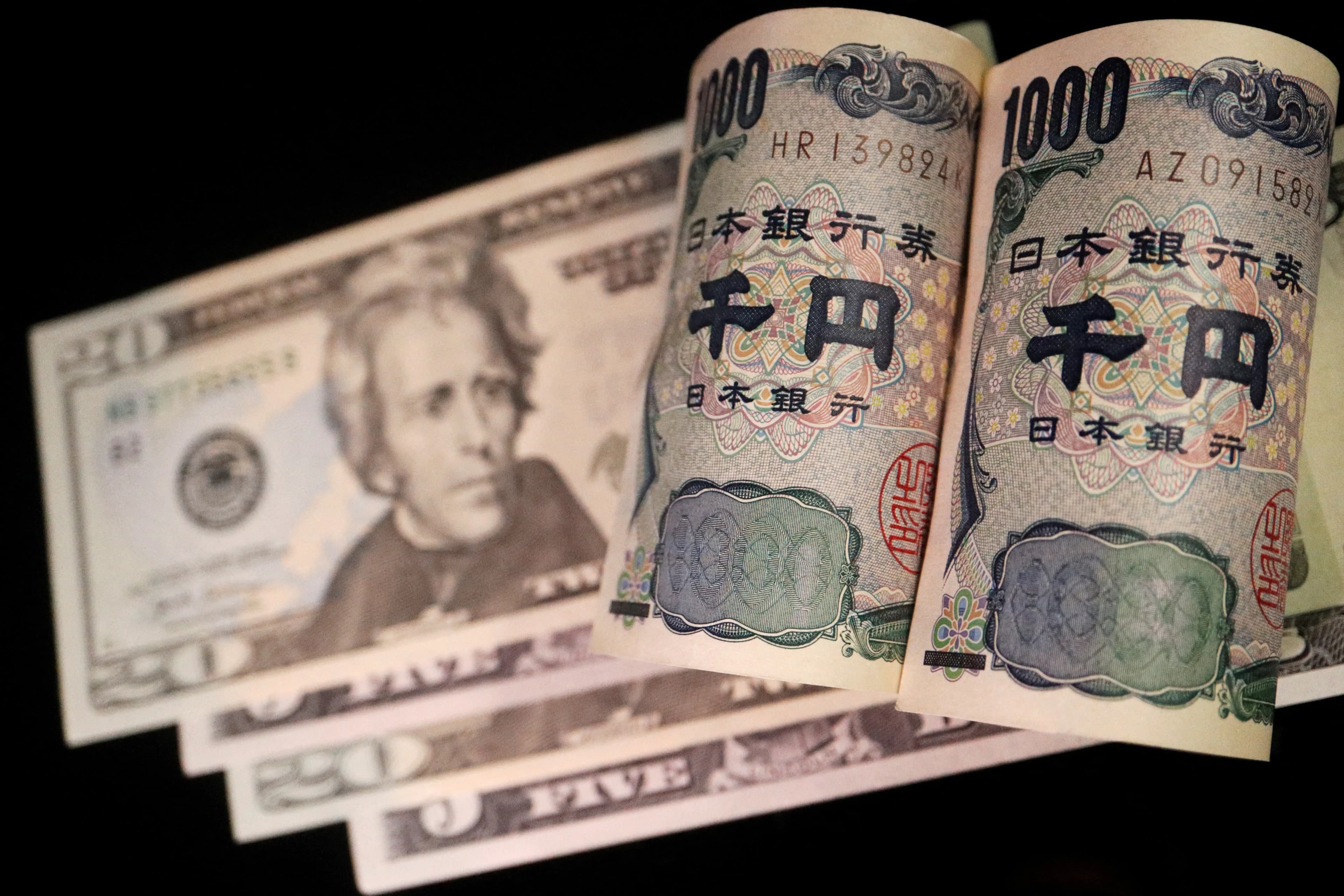
The Bank of Japan raised its policy rate to 31-year high at its September 17-18 meeting, marking the shortest interval between hikes since 1990 - just three months after the previous increase in June. According to the latest BOJ summary of opinions, the central bank has shifted its policy focus to preventing inflation from overshooting its 2% target, entering a new phase of policymaking after 13 years of gradually lifting price growth toward that level. Governor Kazuo Ueda's board voted 7-2 to approve the rate hike, with the summary revealing consistently hawkish comments from members who noted the neutral rate could deviate above estimates and it's desirable to bring the benchmark rate higher at an early stage. However, the summary disappointed investors looking for stronger signals of consecutive rate hikes, with swap contracts pricing for a rate hike by October 30 slipping to just under 20% from more than 30% at one point yesterday. A move is now fully priced in by the December gathering.
Bank of Japan policymakers are now seeing scope for faster interest rate hikes as persistent inflationary pressures raise concerns about price growth exceeding the central bank's 2% target. According to a summary of opinions from its September meeting released on Thursday, most policymakers supported further interest rate increases following the BOJ's September rate hike. One policymaker said the BOJ may need to accelerate rate hikes if signs emerge that inflation is deviating upward from expectations, while another opinion suggested that bringing the policy rate closer to its approximate neutral or desired level relatively soon would give the central bank greater flexibility to respond to unexpected economic developments. Several policymakers also noted that underlying inflation had already reached, or was approaching, the BOJ's 2% target, reinforcing expectations that monetary policy could be tightened further. However, some policymakers argued that the central bank did not need to act hastily, saying rates should eventually be raised to prevent excessive and prolonged price increases.
Japan's top currency diplomat Atsushi Mimura issued a stark warning to markets on Monday, stating that Tokyo and Washington's message on yen weakness should be taken 'at face value' by investors. Speaking to Reuters, Mimura emphasized his resolve to act against excessive falls in the currency, saying 'I will be watching closely whether markets will continue to take (the message) at face value.' While declining to comment directly on potential intervention methods, Mimura made clear that 'I have absolutely no such concern' regarding funding constraints that some market players have cited as limiting Japan's ability to intervene again. The yen responded positively to Mimura's remarks, spiking to trade around 156.75, breaking through the 157 line from previous levels, but has since weakened as much as 0.5% to 158.21 against the dollar after the BOJ summary disappointed investors. As Takuya Kanda, senior FX analyst at Gaitame.com Research Institute noted, 'While there were many hawkish opinions, they were not hawkish enough to strengthen expectations for a consecutive rate hike.'
Expectations are building that the Bank of Japan could raise interest rates again in October following Trump's yen concerns, with the U.S. midterm elections set for November 3. According to Japanese media including the Nikkei, Prime Minister Takaichi told a news conference that 'at the Japan-U.S. summit held on the 23rd, President Trump made remarks to the effect that the weak yen is making trade difficult for the United States.' Japanese Finance Minister Satsuki Katayama also confirmed that Trump had expressed concern about the weak yen. With the approaching midterm elections, analysts say Washington's political pressure on Tokyo to stabilize the currency is likely to intensify as worries grow that a weak yen could hurt the U.S. trade balance and push up long-term interest rates. A weaker yen can strengthen the price competitiveness of Japanese goods, working to widen the U.S. trade deficit with Japan.
The weak yen has contributed to Japan's bond market volatility, with Japan's 10-year yield hitting a 30-year high of 3.115% on Friday and the two-year yield reaching a 31-year high of 1.975% on Monday. According to Bloomberg, rate-hike bets drove the yield increases. The Bank of Japan lifted its key rate to 31-year high on September 18, its highest since 1995. Japanese government bond yields rose across most maturities on Thursday, with the benchmark 10-year JGB yield climbing 5 basis points to 3.11%, the 20-year yield rising 4.5 basis points to 3.945%, the 30-year yield increasing 6 basis points to 4.2%, and the five-year yield adding 1 basis point to 2.385%. However, the two-year JGB yield, which is particularly sensitive to Bank of Japan policy expectations, fell 1 basis point to 1.94% following a relatively firm auction of two-year debt that eased investor concerns. Domestic economic data continued to reinforce expectations for further BOJ policy tightening, with the central bank's quarterly Tankan survey showing Japanese business confidence reaching an eight-year high in the July-September quarter, while inflation expectations remained elevated.

Finance minister Satsuki Katayama has indicated that future interventions would tap a Fed lending line instead of selling Treasuries, according to OMFIF reports. Mimura described the Japan-US coordinated intervention on July 31 as the culmination of the two countries' 'currency alliance,' extending beyond exchange rates to encompass cooperation on economic security, critical minerals and global supply chains. 'Even in areas aside from exchange rates, there's a very good relationship between Japan and the US,' Mimura told Reuters, adding that such strong ties likely led to the joint yen intervention. The diplomat noted that 'the gap between Japanese and US policy rates has been narrowing as a trend' as the BOJ pursues rate hikes while the Fed only began raising rates in September, though he warned that 'the huge US-Japan rate gap will not narrow quickly' due to the Fed's hawkish stance. A Cabinet Office representative, likely Minoru Kiuchi, economic policy minister, cautioned about the potential economic impact of higher borrowing costs and urged caution over further rate increases, which markets could interpret as suggesting the BOJ may move slowly in responding to persistent inflation pressures.