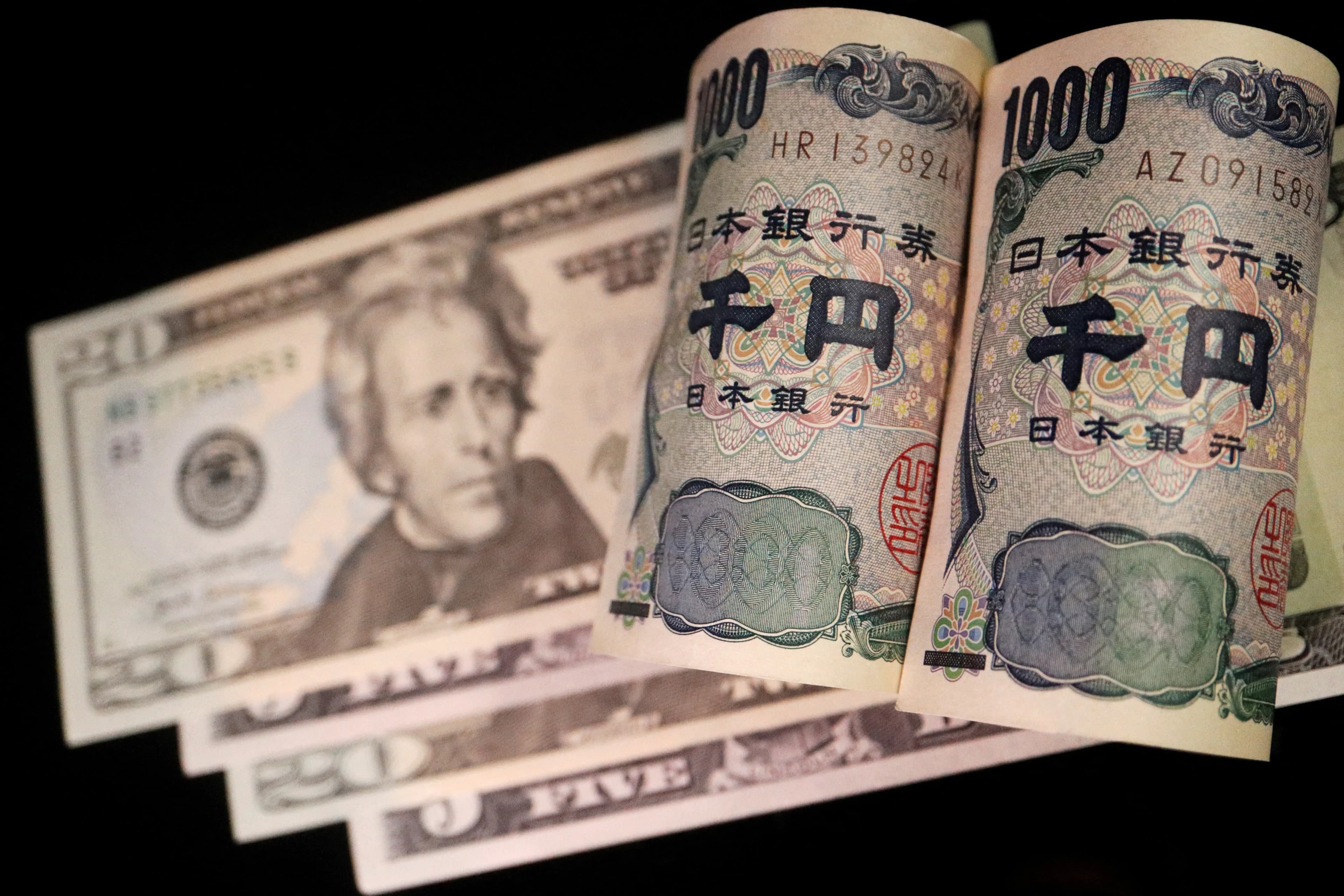
The Japanese yen strengthened 1.06% to 157.13 per dollar on Friday, heading for its biggest daily gain in more than two weeks after Finance Minister Satsuki Katayama's latest comments on the currency kept traders on alert for the risk of intervention. According to Reuters, the yen outperformed all of its Group-of-10 peers as the currency recovered from earlier weakness that had pushed it near the 160 threshold. Katayama said US President Donald Trump raised concerns about the weak yen directly with Japanese Prime Minister Sanae Takaichi during a meeting in New York this week, a detail that adds unusual weight to Tokyo's usual verbal warnings. The finance minister also said she would continue to coordinate with her US counterpart Scott Bessent, with the comments likely to make traders more cautious about betting against the yen and reinforcing the threat that authorities could step into the market again should its weakness persist. As per Oversea-Chinese Banking Corp strategist Moh Siong Sim, "Intervention risk should put a ceiling on further JPY weakness. More importantly, the JPY may be nearing a turning point as Trump's concerns over its weakness point to deeper US-Japan coordination to support the currency."
The dollar index fell 0.3% to 100.95, on track for its biggest daily percentage drop in about three weeks, as oil prices eased more than 2% amid potential US-Iran truce talks. According to Reuters, expectations for a rate hike from the Fed at its October meeting stood at about 66%, up from about 58% a week earlier, with Federal Reserve Bank of Cleveland President Beth Hammack expressing concerns about inflation overshooting the central bank's 2% target. The euro was up 0.15% at $1.1396 but on pace for a third straight weekly decline, while sterling strengthened 0.23% to $1.3246 supported by hawkish Bank of England comments. Global oil prices have eased as the potential for a truce between the US and Iran outweighed supply concerns from increasing attacks by Houthi fighters against Saudi Arabia, though they remain above $100 a barrel. As per Economic Times, "We've had a pretty aggressive rally in the dollar over the last couple of days and maybe it's a little stretched, just taking a little breather."
The Bank of Japan could raise interest rates every three months and take its policy rate to 2% by June 2027 as inflation pressures build, former BOJ board member Makoto Sakurai said on Thursday. According to Reuters, Sakurai expects the BOJ to raise its inflation forecasts in its quarterly outlook report due in October, with another rate increase most likely in December, though a larger-than-expected upward revision could prompt action as early as October. Under his projected path, the BOJ could raise rates to 1.5% by the end of this year, followed by increases to 1.75% in the first quarter of 2027 and 2% by June. The comments come after the central bank raised its policy rate to 1.25% on September 18 in a 7-2 vote, marking the highest level since 1995 and a further shift away from its long-standing ultra-loose monetary policy. BOJ Governor Kazuo Ueda signaled he was open to further tightening, saying he wouldn't rule out a back-to-back hike in October or a larger move at some point, though these signals paled in comparison with hawkish rhetoric surrounding the Fed.
Intervention risks have come back into focus with reports that the Bank of Japan conducted a rate check with market participants last Friday, as reported by Business Standard. This development adds another layer to the policy divergence facing the yen, with the central bank's intervention signals potentially reinforcing the currency's recent recovery. The yen had moved back within range of the closely watched 160-per-dollar level following a five-day holiday period in Japan, continuing to weaken after both the Federal Reserve and the Bank of Japan raised interest rates last week. The currency's vulnerability to intervention risks reflects the ongoing tension between Japan's monetary policy stance and market expectations for further tightening. Japan and the US carried out their first coordinated yen-buying intervention since 1998 this summer after the currency weakened beyond 160, with Japan spending a record ¥15.4 trillion ($97.4 billion) intervening in the month through Aug. 26, according to Finance Ministry data. Officials have stopped short of naming a trigger level, framing their concern instead around how fast and chaotic the yen's swings become, but the market treats 160 as the threshold where intervention becomes likely again.
Japanese investors are gradually shifting funds back into domestic assets as rising Japanese government bond yields improve their appeal, though uncertainty over the BOJ's rate path is delaying larger repatriation flows. According to Reuters, Japanese investors purchased 4.8 trillion yen of sovereign debt in August, the largest net purchase in three months, with banks and insurers among the buyers. Japanese banks have also been reducing their foreign bond holdings, with HSBC estimating they have sold about $70 billion of overseas bonds this year, compared with purchases of $35 billion last year. However, major investors remain cautious about increasing allocations to Japanese bonds while yields continue to rise and policymakers provide limited guidance on eventual interest rate levels. Deutsche Bank's Shoki Omori noted that once currency-hedging costs are taken into account, US Treasury investments offer Japanese investors less attractive returns than domestic bonds, while State Street's Aaron Hurd said Japanese repatriation remained at an early stage and could accelerate once investors gain greater confidence that domestic bond yields have reached their peak.
Japan's finance minister has encouraged the $1.8 trillion Government Pension Investment Fund (GPIF) to increase its allocation to domestic markets, with analysts suggesting a formal move by the fund could prompt other Japanese institutional investors to reassess their portfolios. According to Reuters, Pioneer Investments' Paresh Upadhyaya said a confirmed increase in the GPIF's domestic Japanese government bond allocation could pressure other domestic investors to follow suit. However, rising US Treasury yields and expectations of further Federal Reserve tightening could make it difficult for the BOJ to narrow the interest-rate gap sufficiently to drive a sustained yen rally. Nomura Securities' Naka Matsuzawa said greater clarity from Japanese life insurers on the end of the BOJ's rate-normalisation cycle would be important for stronger repatriation flows. For now, Japanese investors appear to be waiting for clearer evidence that domestic yields have peaked before making a much larger shift from overseas assets back into Japan, with the hesitation slowing the return of Japanese capital from overseas markets and leaving one of the world's largest pools of foreign assets largely invested abroad.