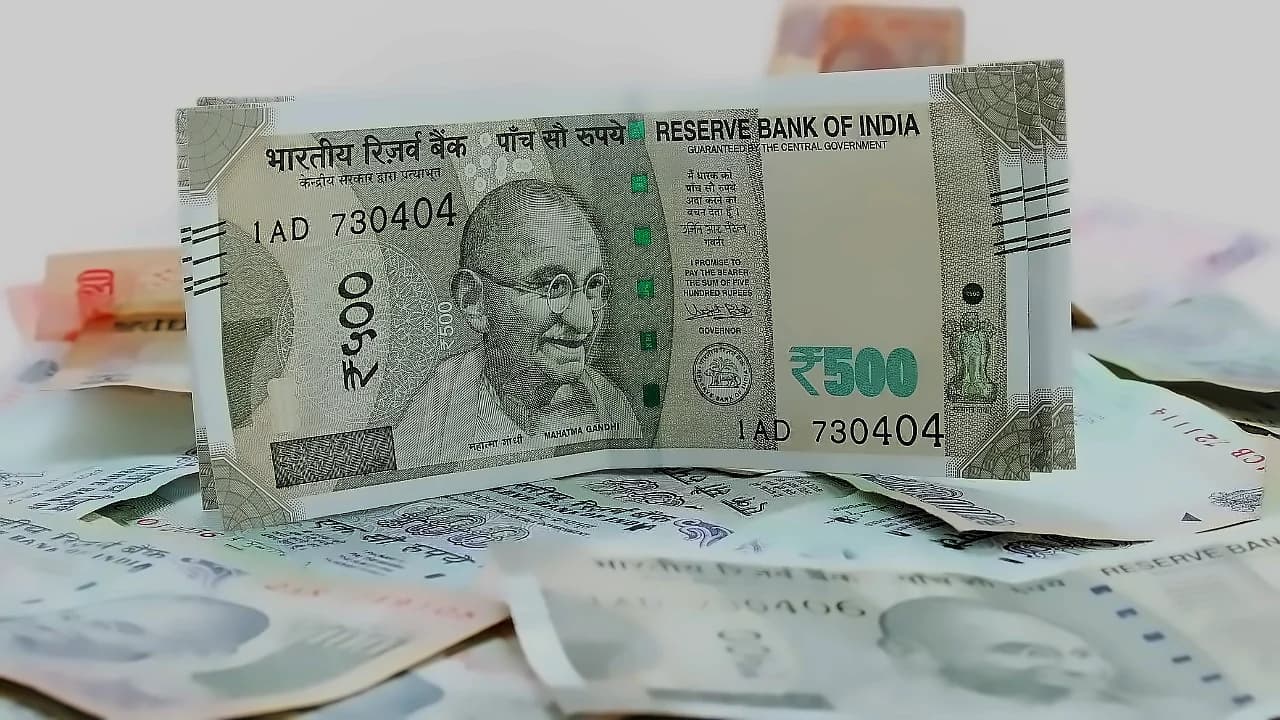
The Reserve Bank of India reportedly sold dollars through state-run banks on Tuesday to stabilize the rupee, which was hovering near its all-time low. As reported by The Hindu BusinessLine, the rupee was quoted at 96.32 per dollar on Tuesday, off a low of 96.3850 and near its all-time low of 96.3875 reached on Monday. Three traders confirmed that the RBI has been regularly intervening in the FX market in recent days to support the rupee, which has come under pressure from a pick-up in importer hedging and a persistent mismatch in daily flows. The central bank's intervention comes as the currency has declined around 2.2% during this period while repeatedly touching fresh record lows, with the rupee having declined more than 5% since the Iran conflict escalated in late February. According to Dynamite News, the domestic currency has now weakened by more than 5% since the Iran conflict escalated in late February, with nearly 2.2% of the decline coming in the past week alone. Reuters reports that the RBI has been buying units of dollars in the forex market through state-run banks to bring down volatility and has issued stern warnings to people engaging in speculative activity to curb panic-induced market swings. The ultimate aim is to prevent the rupee from slipping further into potential record-low territory amid double-edged demand for dollars at a time of turmoil and uncertainty.
Market sentiment remained cautious despite US President Donald Trump saying he had paused a planned attack on Iran to allow negotiations, with US equity futures and Asian markets trading lower, weighing further on regional currencies. As reported by Upstox Securities, Asian currencies also came under pressure from rising US Treasury yields, as investors priced in the possibility that persistently high oil prices could keep inflation elevated for longer. A currency trader noted that "Another day, another new high on dollar/rupee," adding that the current cycle of rupee weakness is unlikely to reverse without either a meaningful correction in crude oil prices or stronger dollar inflows into India. According to Moneycontrol, weakness in Asian peers amid subdued risk appetite and high US yields have been adding to the pressure on the currency. Amit Pabari, managing director at CR Forex Advisory, noted that "The market's biggest challenge right now is not just direction, it's confidence. Until there is visible cooling in global tensions and stability in foreign flows, the rupee may continue trading under pressure with volatility staying elevated." He further added that technically, 94.80–95.10 is expected to act as an important support zone for USD-INR, however, with no meaningful signs of easing in global risk factors, the pair now appears to be gradually shifting its focus toward the 97 mark. The dollar may have slightly slipped from its recent highs, but globally, it's still the financial world's favourite safe-zone celebrity, with investors sprinting toward the dollar, gold, and US Treasuries like bargain hunters rushing into a flash sale when markets smell uncertainty.

The government raised fuel prices again, the second time in the last seven days, with petrol price increased by 87 paise per litre and diesel by 91 paise. Earlier, fuel prices were hiked by ₹3 per litre. Despite the currency weakness, Indian stock indices ended little changed on Monday, with the Sensex closing 0.1% higher at 75,315.04 and Nifty at 23,649.95, up 0.03%, according to The Indian Express. However, markets had slumped 1.4% intraday before recovering. Nifty IT emerged as the top outperformer, rallying 2.43% amid strong buying interest in technology stocks, while pharma and private banking stocks provided mild positive support. On the other hand, Nifty Media, Auto, PSU Banks, and Consumer Durables ended as major laggards, with the broader market under pressure as Nifty Midcap 100 declined 0.15% and Nifty Smallcap 100 slipped 1.26%. Foreign Institutional Investors remained net buyers for the third straight session, purchasing equities worth ₹2,813.69 crore on Monday, according to exchange data.
According to The Indian Express, Brent crude oil prices surged above $110 per barrel following the drone attack on the UAE nuclear power plant, with the attack setting fire to the facility on Sunday. Prashant Pimple, chief investment officer - fixed income at Baroda BNP Paribas Mutual Fund, noted that India largely depends on imported crude for its oil needs, along with recent impact of gold imports, leading to rapid widening of the country's trade deficit. As reported by The Hindu, Brent crude, the global oil benchmark, was trading down 1.91% at $109.96 per barrel in futures trade. As reported by Moneycontrol, Brent crude eased slightly overnight after US President Donald Trump said he would pause a attack on Iran to allow for negotiations for the war in West Asia to come to an end. Although Trump indicated that there is a good chance of both the US and Iran reaching an agreement, traders remained cautious. Forex traders are caught in a cat-and-mouse cycle: oil rises, dollar demand spikes, and the rupee suffers. The interest rate-sensitive Indian economy imports so much crude oil that whenever prices climb, businesses have to buy increasingly more dollars to pay for imports. Currently, crude oil prices are not only hurting fuel bills, but they are also contributing to a further slide into record-low territory for the rupee. Foreign Portfolio Investors (FPIs) have sold $22.4 billion of Indian shares and bonds so far in 2026 on a net basis, as fears mount over the size of India's Balance of Payments deficit in 2026-27, which would be the third year in a row that the metric has been in negative territory.
Traders said a section of the market has started pricing in the possibility of a rate hike by the RBI's Monetary Policy Committee earlier than previously anticipated, according to The Indian Express. The six-member Monetary Policy Committee will next meet from June 3-5 to review policy, with overnight indexed swap rates already discounting the possibility of a rate hike in the next policy itself. Wholesale inflation in April skyrocketed to 8.3% — the highest in 42 months, while headline retail inflation has stayed below the RBI's 4% target. The RBI has held the policy repo rate unchanged at 5.25% so far in 2026, with higher bond yields indicative of a higher cost of borrowing for the government. The government has also tightened precious metal import rules in recent times and capped net open currency positions to counter structural dollar outflows and control market sentiment.
The rupee opened with a negative bias amid a strong dollar and rising US treasury yields and depreciated 18 paise to 96.38 against the US dollar as market sentiments continue to dampen amid simmering tensions between the US and Iran. As reported by The Hindu BusinessLine, forex traders said rupee remains vulnerable to the rise in crude oil prices as also the closure of the Strait of Hormuz hampering its exports and imports to the Gulf countries. On Monday, the Indian rupee weakened further and closed at a record low of 96.20 against the US dollar. On the domestic equity market front, Sensex climbed 366.71 points to 75,706.88 in early trade, while the Nifty advanced 107.45 points to 23,760. Forex markets right now are basically operating on a single equation: nervous world = stronger dollar = weaker rupee. Traders' eyes are glued to oil prices, US-Iran talks, RBI decisions, and upcoming macroeconomic data- in short, they are fixated on the global drama board. Unless crude oil prices cool and geopolitical tensions ease before the end of the trading day, the rupee will likely discover another fresh record low the next morning. A senior petroleum ministry official said India has been purchasing Russian oil irrespective of US sanctions waivers and will continue to do so based on commercial viability and energy security needs. Sujata Sharma, joint secretary in the petroleum ministry, told reporters that India has been purchasing from Russia earlier, during waiver periods, and now also, emphasizing that the country will continue based on commercial viability and energy security needs.