The Indian rupee appreciated 14 paise to close at 95.27 against the US dollar on Wednesday, recovering from earlier losses amid likely intervention from the Reserve Bank of India (RBI) to curb excessive volatility and prevent further slide in the domestic unit. According to forex traders, the rupee opened at 95.52, touched an intraday high of 95.07 and a low of 95.56 against the US dollar, before settling on a positive note as Brent crude oil prices and the US dollar index retreated from their elevated levels. As per traders, the Indian rupee remains under severe pressure due to renewed geopolitical tensions in West Asia, with the currency trading with a negative bias and remaining under pressure from escalating US-Iran tensions. This follows Tuesday's recovery when the rupee had appreciated 20 paise to close at 95.41 against the US dollar. The rupee closed at 95.2650 per dollar, marginally stronger than the previous session's close of 95.35, as markets balanced volatility in crude oil prices, increased dollar demand due to maturing non-deliverable forward contracts, and possible central bank intervention.
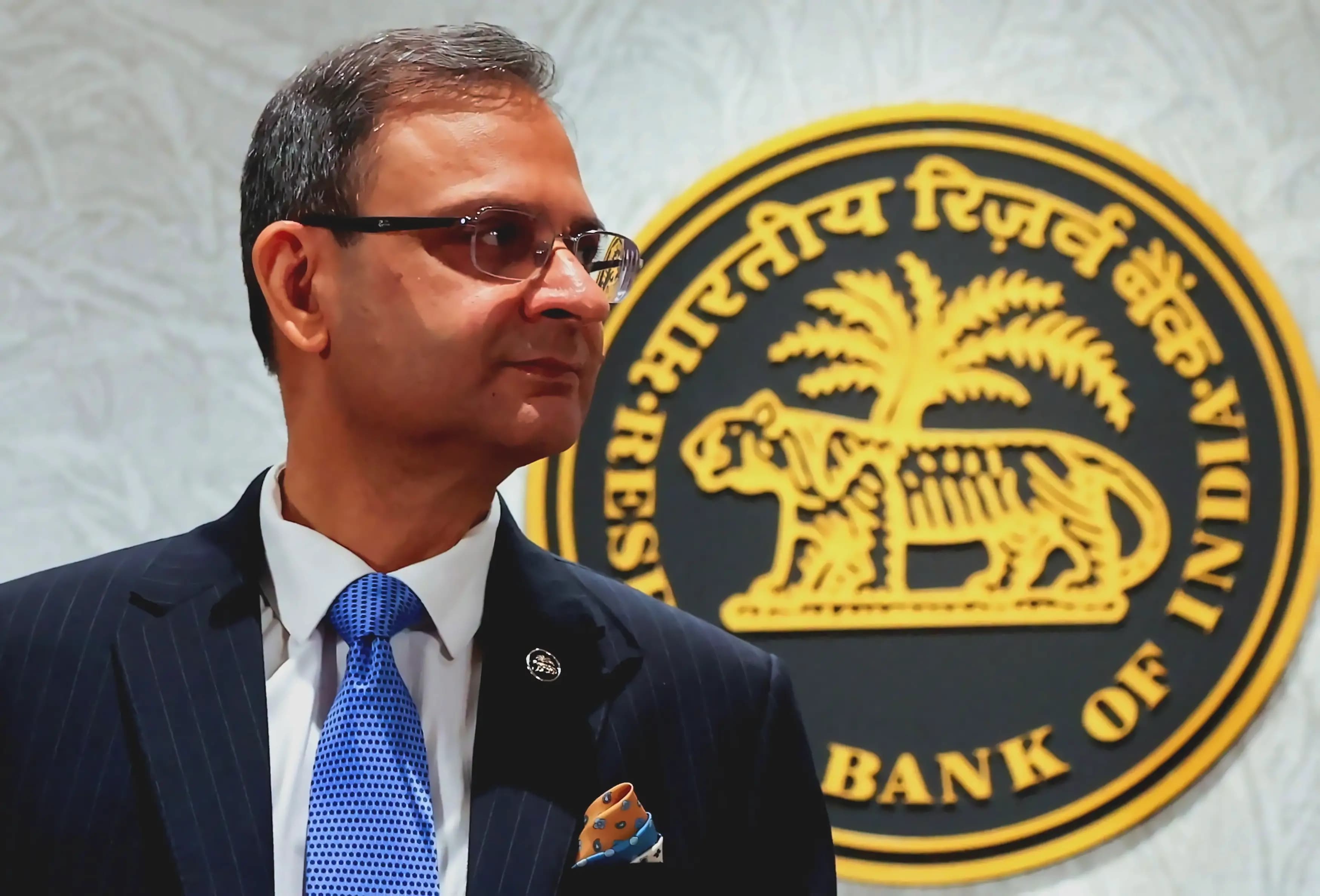
Union Finance Minister Nirmala Sitharaman on Sunday provided official clarification on RBI intervention strategy, emphasizing that currency movements are influenced by global and domestic factors. Addressing reporters at Devanahalli near Bengaluru, Sitharaman stressed that "the Reserve Bank intervenes only to contain excessive volatility and not to defend any specific exchange rate." She explained that "Whenever there is a severe fluctuation or volatility, the Reserve Bank intervenes in the market not to fix a price. Only to stop any kind of fluctuation. The Reserve Bank comes into picture, stabilises it, and comes out, for which it uses foreign exchange from the Reserve." The finance minister noted that decisions by the US Federal Reserve, foreign capital flows and currency movements in other economies all play a role in determining the rupee's trajectory. Sitharaman highlighted that foreign institutional and direct investors booking profits and reallocating funds because of developments in the US can also influence reserves and currency movements, while India's dependence on imports of crude oil, fertilisers and gold requires substantial dollar payments.
Brent crude oil prices declined 0.32 per cent to trade at $91.16 per barrel in futures trade, providing relief to the rupee after earlier spikes. The move marks a shift from recent weeks, when Iran had allowed limited passage of vessels from friendly nations through the critical shipping route. Analysts at ING Bank said the latest developments indicate that "a resolution to the conflict remains distant and energy flows from the Persian Gulf are likely to remain constrained for the foreseeable future." The United States launched retaliatory strikes against Iran after an American Apache helicopter was downed near the Strait of Hormuz, prompting Iran's Islamic Revolutionary Guard Corps (IRGC) to launch retaliatory drone and long-range missile strikes targeting US facilities across the region. At 9.23 am on Wednesday, August Brent oil futures were at $92.05, up by 0.66 per cent, while July crude oil futures on WTI were at $88.71, up by 0.58 per cent.
The currency recovery raises concerns about India's inflation and external balance, with traders noting that sustained stability in the rupee would also require support from other factors, particularly a moderation in crude oil prices. According to traders, as India heavily relies on energy imports, any spike in global crude oil prices directly widens the trade deficit and weakens the domestic currency. The escalating US-Iran tensions and rising crude oil prices continue to create pressure on the Indian rupee in the current market environment, with markets awaiting US CPI data amid the ongoing geopolitical tensions. Gold prices declined sharply by ₹4,300 to ₹1.56 lakh per 10 grams, while silver prices fell by ₹10,000 to ₹2.45 lakh per kg in the national capital, driven by a rise in crude oil prices and a stronger US dollar that weighed on demand for precious metals.
The dollar index, which gauges the greenback's strength against a basket of six currencies, was trading at 99.87, down 0.04 per cent, providing support to the rupee's recovery. Market participants will continue to monitor developments in the West Asia, movements in crude oil prices and RBI actions for further cues on the rupee's trajectory. On the domestic equity market front, Sensex was marginally up 64.42 points to settle at 73,983.18, while the Nifty skidded 27.15 points to close at 23,214.95. Of the 4,369 stocks traded on the BSE, 1,475 advanced, 2,740 declined, and 154 remained unchanged, with 115 stocks touching their 52-week highs and 77 hitting 52-week lows. Additionally, foreign institutional investors offloaded equities worth ₹4,566.03 crore on a net basis on Tuesday, compared to the previous session's outflow of ₹2,124.98 crore.
Indian government bond yields dropped sharply in the last four days, with the benchmark 10-year yield falling 0.10 per cent, as foreign portfolio investor (FPI) inflows picked up after the government's recent tax relief measures for debt investments. Money market experts attributed the easing yields on government securities to heavy inflows of ₹11,026.331 crore in the last four days by foreign investors in these securities under the Fully Accessible Route (FAR). FAR allows non-resident investors to invest in specified Government of India dated securities without any investment ceilings, providing additional support to the domestic currency amid the geopolitical uncertainties. The RBI's decision to hold rates and keep its neutral stance was in line with market expectations, with the highlight being measures to boost capital inflows and support the INR, which came alongside the government's move to scrap taxes to attract overseas capital.