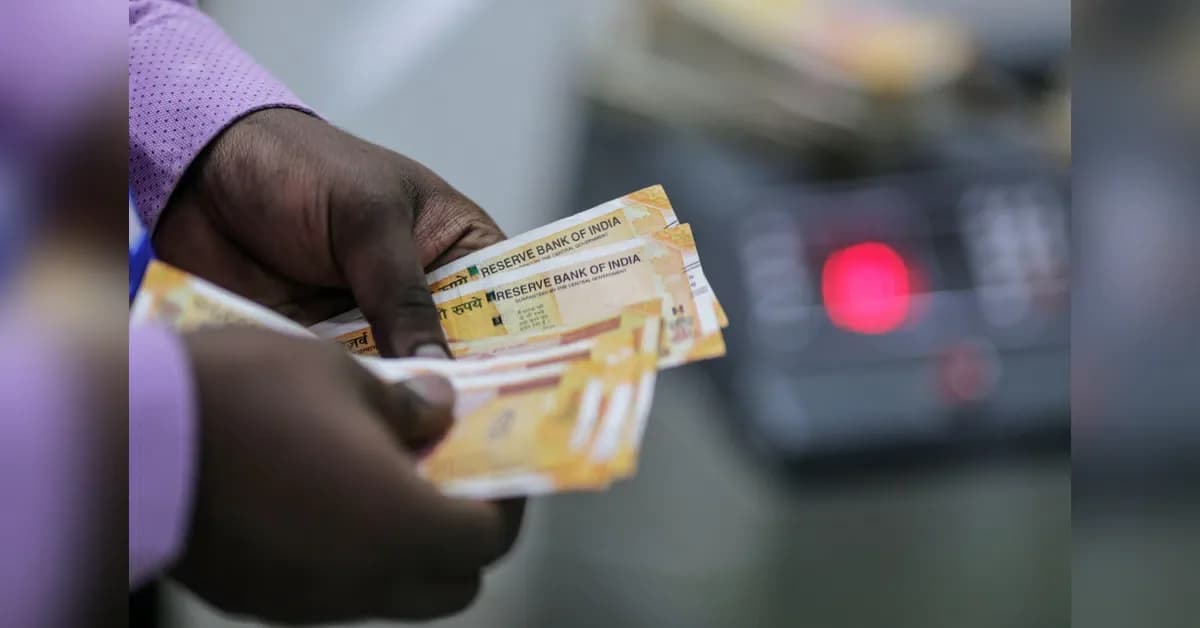
The Indian rupee's latest exchange rate against the euro stands at 0.00911066 EUR/INR as of August 5, 2026, representing a decrease from the previous day's rate of 0.009136 EUR/INR, according to the latest data from Wise. This data shows the rupee's 0.145% decline in a single day, demonstrating continued volatility in the currency market. The rupee appeared on track to open weaker around 95.35-95.40 per dollar on Friday, but central bank intervention right around the time the local spot market opened at 9:00 a.m. IST helped shore up the currency, as reported by Reuters. The currency was last at 95.2650, little changed from the previous session. The weekly performance shows a relatively stable trend with a -0.034% increase compared to the previous week, though the currency has experienced significant fluctuations throughout the period.
The **Reserve Bank of India's Foreign Currency Non-Resident Bank (FCNR-B) deposit scheme has attracted stronger-than-expected inflows, with around USD 41 billion mobilised so far, according to a latest report by Jefferies. The scheme, introduced by the RBI in early June to raise foreign currency deposits from non-residents and support the rupee, has performed better than expected. The total inflows are expected to reach USD 80-100 billion by the time the scheme closes on September 30, as reported by Jefferies. The RBI announced the facility for concessional swaps on fresh FCNR-B deposit inflows on June 5, with the facility remaining available until September 30. The strong response to the scheme is one of the key positives for India's economy and capital inflows, with Jefferies noting that "All this increases the likelihood that the rupee should stabilise." The scheme is the third time India has used such a measure to strengthen the domestic currency, with similar schemes introduced earlier in 1993 and 2013 to support the rupee during periods of pressure.
The latest intervention came as Brent crude oil futures were up 1.3% at $83.6 per barrel, with traders citing risks of escalation in the Middle East as the primary driver of currency pressure, according to Reuters. This oil price surge represents a significant challenge for India's currency, as the country remains structurally import-heavy, relying on foreign sources for 85%+ of its crude oil, electronics, and gold. India's state-run fuel retailers raised petrol and diesel prices four times in May in response to rising costs due to the U.S.-Israeli war with Iran, while a brief pause in the conflict pushed global crude prices lower, but they were still about 20% above pre-war levels. The rupee had bottomed at 96.96 in May and was trading at 95.17 at the time of the report, as noted by Jefferies, making the currency particularly vulnerable to oil price volatility.
India's state-run fuel retailers raised petrol and diesel prices four times in May in response to rising costs due to the U.S.-Israeli war with Iran, while a brief pause in the conflict pushed global crude prices lower, but they were still about 20% above pre-war levels. Wholesale price index-based inflation likely remained elevated at 9.95% in July, roughly unchanged from June levels, according to Reuters polling. Core inflation, which excludes volatile food and fuel components and better reflects underlying demand, is expected to have been 4.08% in July, with India not publishing official core inflation data. The RBI expects inflation in this financial year to average 5.0%, lower than its previous estimate of 5.1%, though that was higher than the 4.8% predicted in a Reuters survey in July. These inflationary pressures, combined with the ongoing oil price volatility, continue to influence the rupee's performance in the current economic environment.

Beyond the FCNR-B scheme, the government made ownership of Indian government bonds tax-free for foreign investors in early June by removing tax on interest income received, according to Jefferies. As a result, there have been net inflows of USD 8.7 billion into Indian government bonds since the start of June, further improving the country's capital inflow outlook. Jefferies noted that "GREED & fear hears that in practice NRIs have been leveraging 9-19 times to generate a dollar return of 11-20 per cent in what is viewed as a risk free investment since it is guaranteed by the Indian government." The report also highlighted improving domestic economic indicators, with bank credit growth accelerating to the 17-18% year-on-year range, the highest in more than a decade, led by 20% growth in corporate lending, 17% growth in agriculture sector lending, and 16% growth in retail loans. These positive developments, combined with the stronger-than-expected FCNR-B inflows, are expected to provide greater stability to the rupee in the coming months.