The British Pound has reached a three-month high amid supportive economic indicators and steady underlying inflation trends. According to reports from Business Standard, the GBP/USD pair is currently trading at 1.3554, up 0.14% on the day, while the GBP/INR pair quotes at 129.81, up 0.21% on the NSE. This represents a significant strengthening in the pound's value against both major currencies. FXStreet analysts note that GBP/USD holds a bullish near-term bias as spot remains comfortably above the major daily simple moving averages clustered between roughly 1.3380 and 1.3440, with the 14-day Relative Strength Index at 62 suggesting buyers still retain control. The pound's recent strength comes as traders assess the impact of energy price swings driven by the Middle East war, with oil prices lifting by roughly 22% following the renewed hostilities.
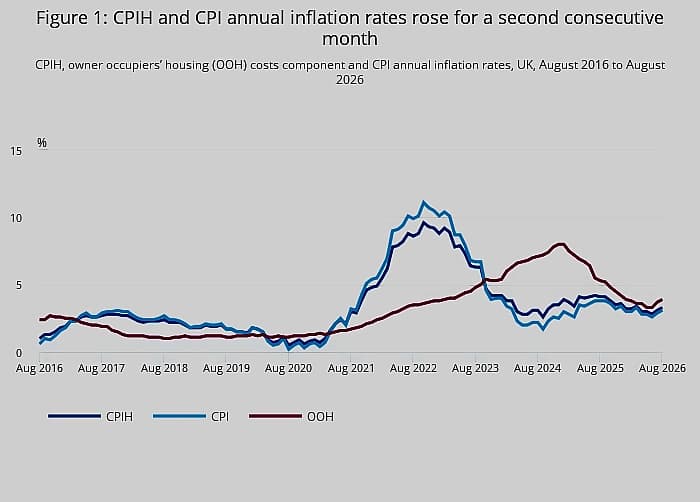
The UK Office for National Statistics will release the high-impact Consumer Price Index (CPI) report for July at 06:00 GMT, which could significantly affect market expectations for a Bank of England interest rate hike in September. According to industry experts, UK CPI is expected to rise 2.9% year-over-year in July, up from 2.5% in June, which would be the highest in four months and surpass the BoE's forecast of 2.8%. Core CPI inflation, which excludes energy, food, alcohol and tobacco, is expected to ease slightly to 2.5% YoY in the reported period. FXStreet analysts highlight that hotter-than-expected annual and monthly core CPI readings could lift the odds of a rate hike in September, potentially driving GBP/USD back above 1.3600, while a surprise cool-off could push back against BoE rate hike bets. The inflation data will be particularly significant as it covers the month of renewed Middle East hostilities, which have driven energy prices higher and could sustain inflation pressures.

UK GDP expanded 0.4% between April and June, as reported by Business Standard, slowing from 0.6% in the first quarter. However, June alone showed a steady 0.3% increase, with services driving second-quarter growth while production remained broadly flat and construction expanded. The data suggests the economy has successfully absorbed the price shocks brought on by the war in Iran. Recent inflation data has provided additional support for the pound's strength, with UK's core inflation - which excludes energy, food, alcohol and tobacco - coming in at 2.6% in the 12 months to July, unchanged from June. According to TD Securities, the inflation outlook may prove less benign than recent data suggests, with several components now posing upside risks to the UK's disinflation narrative. The bank warns that food prices are vulnerable to pickup as fertiliser costs and adverse weather conditions feed through to production costs, while airfare inflation could re-accelerate with airlines seeking to recover higher fuel expenses through post-summer ticket prices.
BoE Governor Andrew Bailey said in his post-monetary policy meeting press conference in July that "if the Mideast conflict persists and we get second-round effects, we will likely need to raise rates." The July Monetary Policy Statement read that "risks to inflation forecasts are tilted to upside," but scope remains for outlook to change materially depending on Iran war developments, adding that "policy could need to react before inflation persistence risks materialise conclusively." Back in July, Bailey and company left rates unchanged at 3.75% for the fifth consecutive meeting, as expected. However, the Monetary Policy Committee voted 6-3 to hold rates, a more divisive vote than the 7-2 split predicted. The upcoming CPI data will be critical to gauging whether the disinflationary trend is reversing and significant enough to nudge the BoE to consider an interest rate hike at its September 17 monetary policy meeting. Markets could view hotter-than-expected inflation as an insurance hike by the British central bank, potentially driving GBP/USD back above 1.3600.
From a technical perspective, FXStreet analysts note that initial support is seen at the confluence zone of the 21-day, 100-day, and 200-day SMAs around 1.3420, forming a dense demand band just below current levels. A deeper pullback would expose the 50-day SMA support at 1.3381, where dip-buying interest would be expected to emerge. Alternatively, recapturing the 1.3600 psychological level is critical to sustaining a meaningful uptrend, with the next topside target seen at the May high of 1.3658. The analysis suggests that while the pound has shown resilience, the upcoming CPI data will be crucial in determining whether the current bullish trend can be sustained or faces correction pressures. The technical outlook reflects a well-supported uptrend rather than mere short-covering bounce, with the 14-day Relative Strength Index at 62 indicating buyers still retain control.