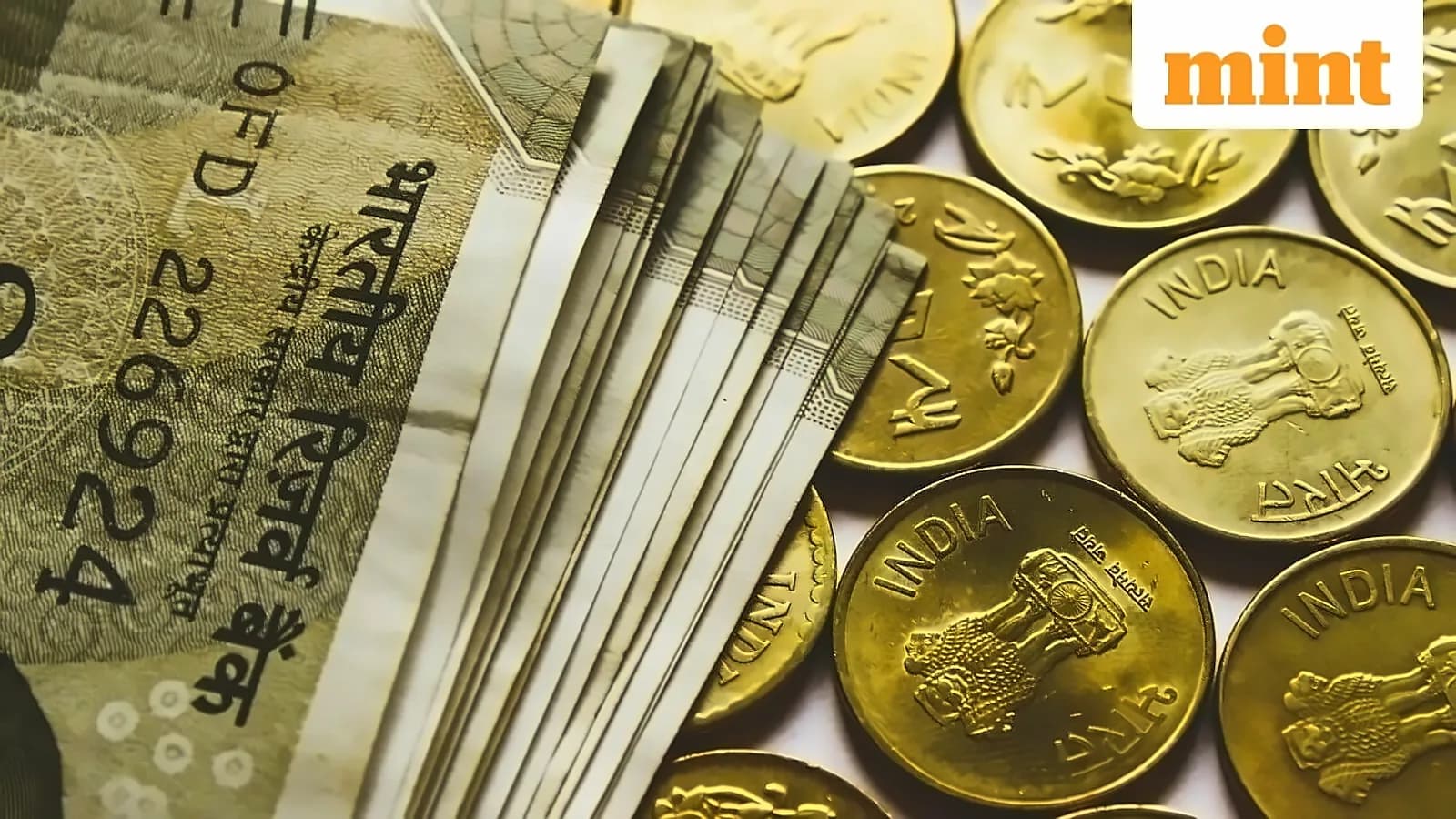
The Indian rupee weakened 32 paise to a record low of 95.30 against the US dollar in latest trading, according to CNBC TV18. This represents a further decline from Wednesday's close of 95.20, continuing the currency's downward trajectory that began with the historic breach below the 95 per dollar mark on March 30. The currency opened at 95.01 and touched an all-time low of 95.30, extending losses from the previous session. The latest fall comes after hawkish signals from policymakers at the Federal Reserve pushed up the dollar and US bond yields, with the decision showing the sharpest division since 1992, with three officials dissenting over guidance that continued to indicate a tilt towards easing. The currency has depreciated approximately 5.8% in 2026 so far, adding to a similar sized drop from last year as India's external sector faced persistent headwinds ranging from trade frictions with the U.S., weakness in capital flows and most recently, one of the most severe energy supply disruptions in history.
Brent crude oil futures climbed to $121.76 per barrel, rising 3.16% in futures trade, significantly contributing to the rupee's weakness. As per The Times of India, global oil prices surged past $120 after briefly touching $122, the highest level since 2022 as fears of prolonged supply disruptions intensified amid a deadlock in talks to end the US conflict with Iran. The currency has been weighed down by oil-related dollar buying in recent sessions, with crude oil and petroleum products being India's largest import items, adding ₹12 billion-$13 billion per month to the country's import bill over the past three months. According to Anil Kumar Bhansali, Head of Treasury and Executive Director at Finrex Treasury Advisors LLP, the main effect on the rupee has been from rising oil prices, which touched $120 per barrel and looked headed for further upside as the US continues with its blockade of Iranian ports, while Iran does not allow any ship/tanker to pass through the Strait of Hormuz. Goldman Sachs this week lifted their oil-price forecasts due to the prolonged closure of the Strait of Hormuz, now seeing Brent averaging $90 a barrel in the fourth quarter, up from a previous outlook for $80. Forex traders said the USD/INR pair may face further downside as elevated oil prices are expected to increase India's import bill, while concerns over a broader conflict in West Asia continue to weigh on investor sentiment.

Crude oil prices continued to surge, extending gains from their highest close in nearly four years, as the US intensified pressure on Iran. Brent crude hovered near $114.10 per barrel on Thursday, up about 3% from the previous close, after jumping more than 6% on Wednesday to its highest level since June 2022. US West Texas Intermediate (WTI) traded above $107 and was last seen at $110.28 per barrel, also higher by around 3%. According to ABP Live, US President Donald Trump said he would not lift the naval blockade of Iran's ports until a nuclear deal is reached, while Iranian officials have shown no indication of stepping back. Washington has signalled no easing of its naval blockade and moved to seize tankers linked to Tehran, raising fears of prolonged supply disruptions. The negative sentiment was also reflected in domestic equity markets, with Sensex and Nifty declining nearly 1% in early trade on Thursday. HSBC estimates that GDP growth would slow to 6.3% from an expected 7% this year if oil prices average $80 per barrel, and to 6% if prices remain closer to $100.
Traders pointed to continued foreign fund outflows and steady dollar demand from importers as key drivers of the rupee's weakness. Data from the National Securities Depository Limited showed foreign investors sold a net $210.7 million worth of Indian equities and $10.9 million of bonds on April 28. According to The Hindu BusinessLine, Foreign Institutional Investors offloaded equities worth ₹2,468.42 crore on Wednesday, adding to the consistent selling pressure. The one-month non-deliverable rupee forward is at 95.32 with 1-month NDF points at 35 paisa. The dollar index stood at 98.96, with ten-year U.S. note yield at 4.42%. State-run refiners have reportedly scaled back the use of a special foreign exchange credit line designed to reduce spot dollar purchases for oil imports, adding to near-term dollar demand in the market. Persistent weakness in the currency can also fuel a negative feedback loop on foreign capital flows by eroding overseas investors' returns while also adding to inflationary pressures by lifting import prices. The rupee's fall has wiped out gains spurred by the central bank's use of rare currency-supportive regulatory measures late last month, prompting traders and analysts to speculate whether fresh measures could be on the cards.
The rupee's weakness has significantly impacted domestic equity markets, with Sensex tumbling 821.79 points to 76,674.57 and Nifty diving 287.3 points to 23,890.35 in early trade on Thursday. As per The Times of India, Foreign Institutional Investors continued to offload Indian equities, selling shares worth ₹2,468.42 crore on Wednesday, according to exchange data. Anil Kumar Bhansali noted that FPIs continue with their sale of Indian Equities and debt (the yield touched 7 per cent on Wednesday) and are also dollar buyers consistently. India's efforts to steady the beleaguered rupee are facing significant challenges as capital inflows stall and replace speculative bets as the main pressure point. According to The Economic Times, foreign investors have offloaded over $20 billion of Indian stocks and bonds over March and April so far, nearly double the $11.8 billion of outflows from the same markets over all of 2025. The combination of Fed policy uncertainty, sustained oil price increases, and persistent foreign outflows continues to pressure the rupee, with forex traders saying the USD/INR pair may face further downside as rising crude oil prices are likely to sharply impact India's import costs.