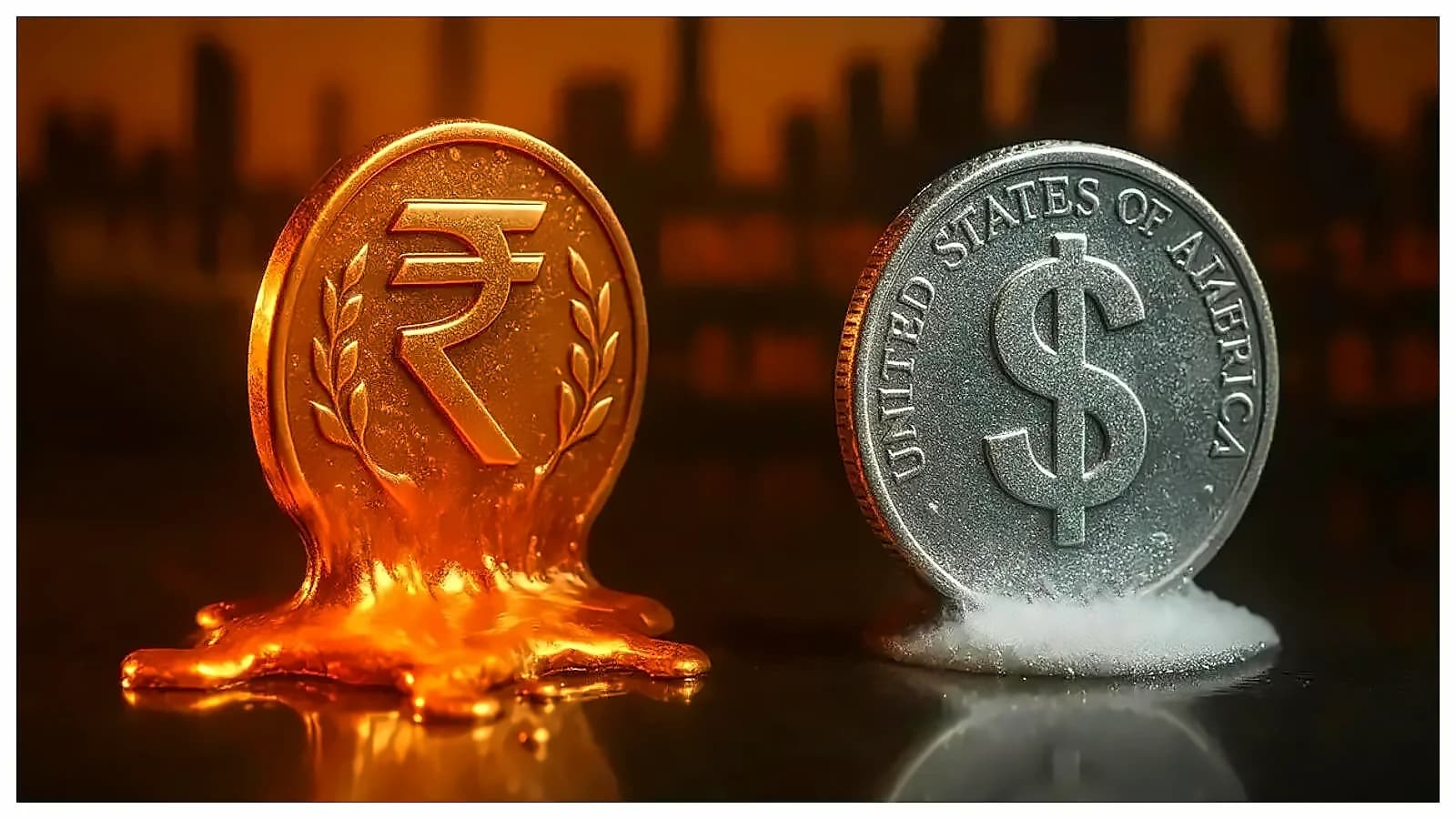
The Reserve Bank of India achieved a historic milestone in FY26 by net selling $53.13 billion in the spot foreign exchange market, marking the highest net dollar sale by the central bank in a financial year, according to latest RBI data. This represents a dramatic increase from the $34.51 billion net sold in FY25, highlighting the unprecedented pressure on the rupee. During March alone, the RBI net sold $9.76 billion - the third-highest monthly sale of FY26 - against a net buy of $7.41 billion in February. The central bank remained a net seller for most of the financial year, with the largest monthly net sale recorded in October at $11.88 billion, followed by December at $10.02 billion. Market participants attributed this sustained intervention to massive foreign portfolio investor outflows and rising crude oil prices that kept the rupee under persistent pressure.
The Indian rupee experienced a 9.9% depreciation during FY26, with the pace of fall becoming rapid after the war in West Asia started in late February. The Real Effective Exchange Rate (REER) of the Indian rupee fell to 88.06 by end-April, down from 89.23 by end-March. The REER adjusts the Nominal Effective Exchange Rate to account for inflation differentials between India and its major trading partners, with a value above 100 indicating rupee appreciation relative to the base year, potentially making Indian exports less competitive. The rupee has emerged as one of the most vulnerable Asian currencies, with MUFG warning that the rupee hitting 100/$ is in sight if the West Asia conflict continues. MUFG expects USD/INR to move towards 98.00 levels and potentially reach 100.00 if the conflict prolongs or escalates.
The RBI's outstanding net short dollar position in the forward market rose sharply to $103.06 billion at the end of March 2026, compared with $77.67 billion at the end of February. During FY26, the central bank's net short dollar position increased by $18.72 billion. By end-March, of the $103 billion net short dollar position, $14.46 billion was in one-month contracts, $16.15 billion in one-three month tenures, $19.66 billion set to mature between three months and a year, and the remaining $52.80 billion in contracts of more than one year. Market participants noted that the RBI increasingly relied on buy-sell swaps and forward market operations during the year to balance foreign exchange intervention with domestic liquidity management, helping smooth volatility without significantly tightening banking system liquidity.
India's foreign exchange reserves experienced a significant decline, dropping by $8.094 billion to $688.894 billion during the week ended May 15, according to the Reserve Bank of India (RBI). The decline represents a reversal from the previous week when reserves had jumped by $6.295 billion to $696.988 billion during the week ended May 8. This latest drop brings the reserves closer to the all-time high of $728.494 billion achieved during the week ended February 27, before the onset of Middle East conflict led to several weeks of decline as the rupee came under pressure and the RBI intervened through dollar sales. Recent analysis from Barclays and MUFG warns that the rupee could face further pressure from elevated crude prices, widening deficits and prolonged conflict in West Asia.
The RBI's elevated forex interventions and forward dollar sales indicate the central bank's preference to manage rupee volatility through the NDF market alongside spot intervention, as outright dollar sales in the spot market would have drained rupee liquidity from the banking system. Additional measures under consideration include tighter restrictions on outward remittances, curbs on overseas direct investment, and foreign-currency bond issuance targeted at non-resident Indians. The central bank may raise the repo rate by at least 50 basis points this fiscal year to 5.75% to support the rupee, with terminal rates potentially reaching 6.25%-6.75% in more adverse scenarios. MUFG projects that the Reserve Bank of India may raise the repo rate by at least 50 basis points this fiscal year to 5.75% to support the rupee, with terminal rates potentially reaching 6.25%-6.75% in more adverse scenarios.