Japan and India are advancing plans for a local-currency settlement framework that would enable direct yen-rupee transactions, significantly reducing reliance on the US dollar for bilateral trade. According to a report in Nikkei Asia, this would mark the first time currency cooperation has been formally incorporated into a leaders' joint statement between the two countries. The framework is specifically designed to reduce transaction costs by avoiding US dollar conversions in bilateral transactions. This development comes amid a broader global trend of countries seeking alternatives to dollar-denominated transactions, with the BRICS alliance working on creating its own currency and submitting proposals at the upcoming August summit in South Africa.
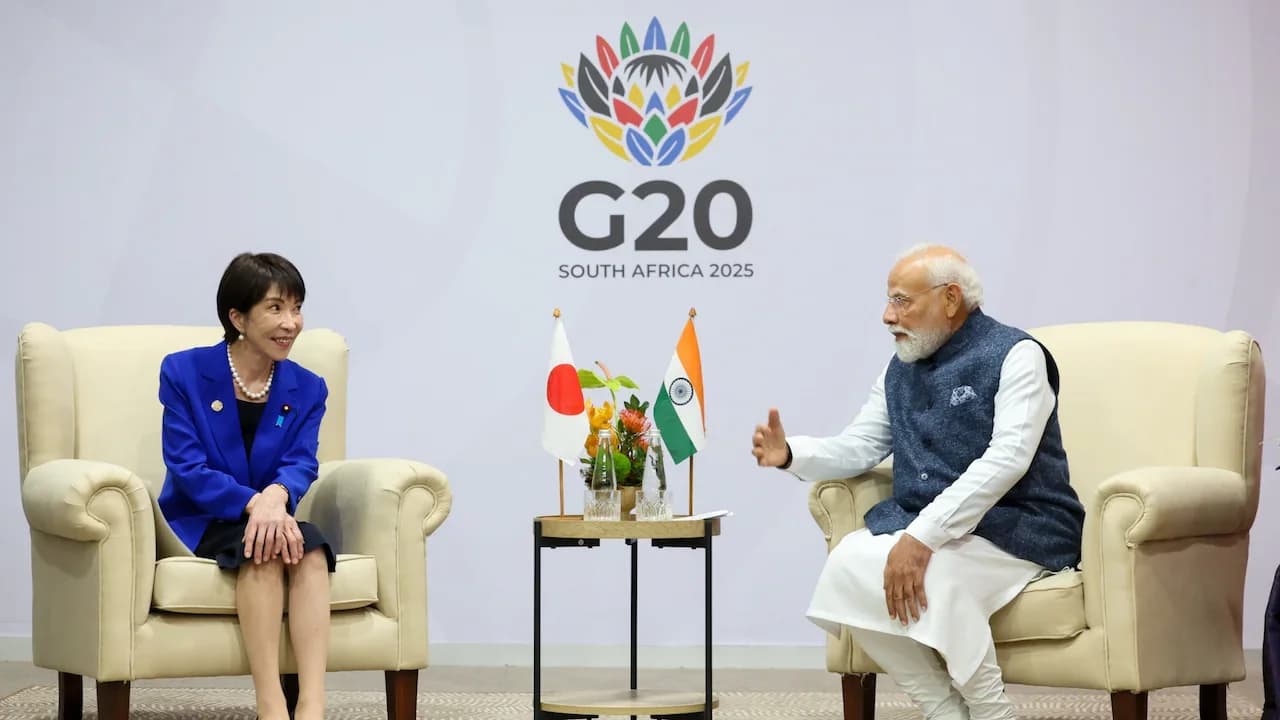
The proposal is expected to be included in the joint statement to be issued after Japanese Prime Minister Sanae Takaichi and Prime Minister Narendra Modi meet in New Delhi later this week. As reported by Nikkei Asia, this represents a significant development in bilateral economic cooperation between the two Asian powers. The framework's inclusion in the joint statement demonstrates the strategic importance both countries place on reducing dollar dependency in their trade relationships. This initiative aligns with broader global efforts, as China and Russia signed a three-year currency swap deal worth 150 billion yuan ($24.5 billion) in 2014, extended for three years in 2017 and again in 2020, allowing central banks to access each other's currency without trading in the US dollar.
Japanese Prime Minister Sanae Takaichi will visit India from July 1 to 3 for the 16th India-Japan Annual Summit, marking her first official visit since taking office in late 2025. According to the report, this visit represents a crucial opportunity for both countries to formalize their currency cooperation plans and advance bilateral economic ties. The timing of the summit coincides with the announcement of the direct settlement framework, highlighting the strategic importance of this initiative for both nations. The visit was shifted from Assam's capital, Guwahati, to New Delhi because of logistical issues, but the country's Northeast region remains a key focus area of the delegation-level talks. A delegation comprising executives from 50 Japanese companies is accompanying the Japanese prime minister, including automobile giant Suzuki Motor's President Toshihiro Suzuki.
Prime Ministers Narendra Modi and Sanae Takaichi are expected to discuss investments, supply chains, semiconductors, energy security and Northeast India during delegation-level talks. Japan is the only country with which India has a dedicated institutional mechanism for the development of the Northeast region: the India-Japan Act East Forum. The two sides are likely to sign investment and supply-chain deals, with several of these investments likely to come to the Northeast region. At the 15th India-Japan Annual Summit in Tokyo, Japan committed to a new target of JPY 10 trillion in private investment from Japan to India. Tokyo Electron and Tata Electronics have signed an agreement to accelerate semiconductor equipment infrastructure for India's first fab being built by Tata Electronics in Dholera, Gujarat, and for its assembly and test facility in Jagiroad, Assam. There is also a proposed Japanese Industrial Township in Nagarbera, Assam, to attract high-value investments from Japanese enterprises seeking to expand in the Indian and Southeast Asian markets.
The India-Japan framework reflects a broader global movement toward local-currency settlement systems, as evidenced by Russia and China's 400 billion US dollar natural gas deal in 2022 and Brazil and China's agreement in March 2023 to abandon the US dollar for trade in goods. However, challenges remain in establishing alternative currencies, with the dollar remaining the dominant currency in practically every aspect of the current global financial system, and market perception of risk being much greater for BRICS countries compared to reserve-currency issuers. The US Clearing House Interbank Payments System (CHIPS) currently settles over 250,000 transactions per day valued at more than $1.5 trillion, making it a critical network for global dollar transactions. Meanwhile, Chainlink has become part of Project Pangea, a banking initiative bringing together 47 financial institutions from Europe and South Korea to develop faster international payment infrastructure using regulated stablecoins. The project focuses on one of the world's busiest trade corridors, where businesses move more than $150 billion in goods each year, with participants hoping to reduce settlement times from traditional two-day processes to near-instant completion.