The US Dollar Index (DXY) has reached a 13-month high of 101.8, marking its strongest position in nearly a year as investors continue positioning for Federal Reserve rate hikes. According to The Hindu BusinessLine, the dollar is heading into the second half of 2026 at 40-year highs, up 3% for the first half of the year, contrasting sharply with a year ago when it was nursing a fall of more than 10% in its biggest first-half dive since the early 1970s. Traders who before the U.S.-Israeli war on Iran had expected the Fed to cut rates this year, now see one hike as soon as October and a 50/50 chance of a second by year-end. This month alone, 2-year U.S. Treasuries, which track short-term rate expectations, have risen 14 basis points to 4.16%, compared with just a 2-bp rise in benchmark German 2-year yields to 2.56% and a near-9 bp fall in UK gilt yields. MUFG currency strategist Lee Hardman said the rates market was clearly reflecting investors' belief that the Fed will "back up tough talk on inflation by hiking rates this year," adding that "If the Fed is serious about restoring price stability, a significant tightening of monetary policy will be required so it makes sense that more hikes have been priced in."
Investors have loaded up on bets on continued dollar strength at their fastest pace on record for the first half of the year, according to The Hindu BusinessLine. Speculators hold a net long position worth around $30 billion, the largest since the start of Donald Trump's second presidency, with the pace at which they have amassed these holdings being the fastest for the first half of the year since CFTC records began in 2012. A net rise of $37 billion in speculative positions demonstrates the unprecedented confidence in dollar strength. "I certainly think in the near term, the risk is that you get a stronger dollar because of this increase to real rates in the U.S.," said Neuberger portfolio manager Joseph Purtell. "Can we break out of this range that we sort of held over (the last) six- to nine-month period? I think it's likely." However, he noted that over the longer term, the dollar would weaken given structural concerns such as the sustainability of U.S. government finances.
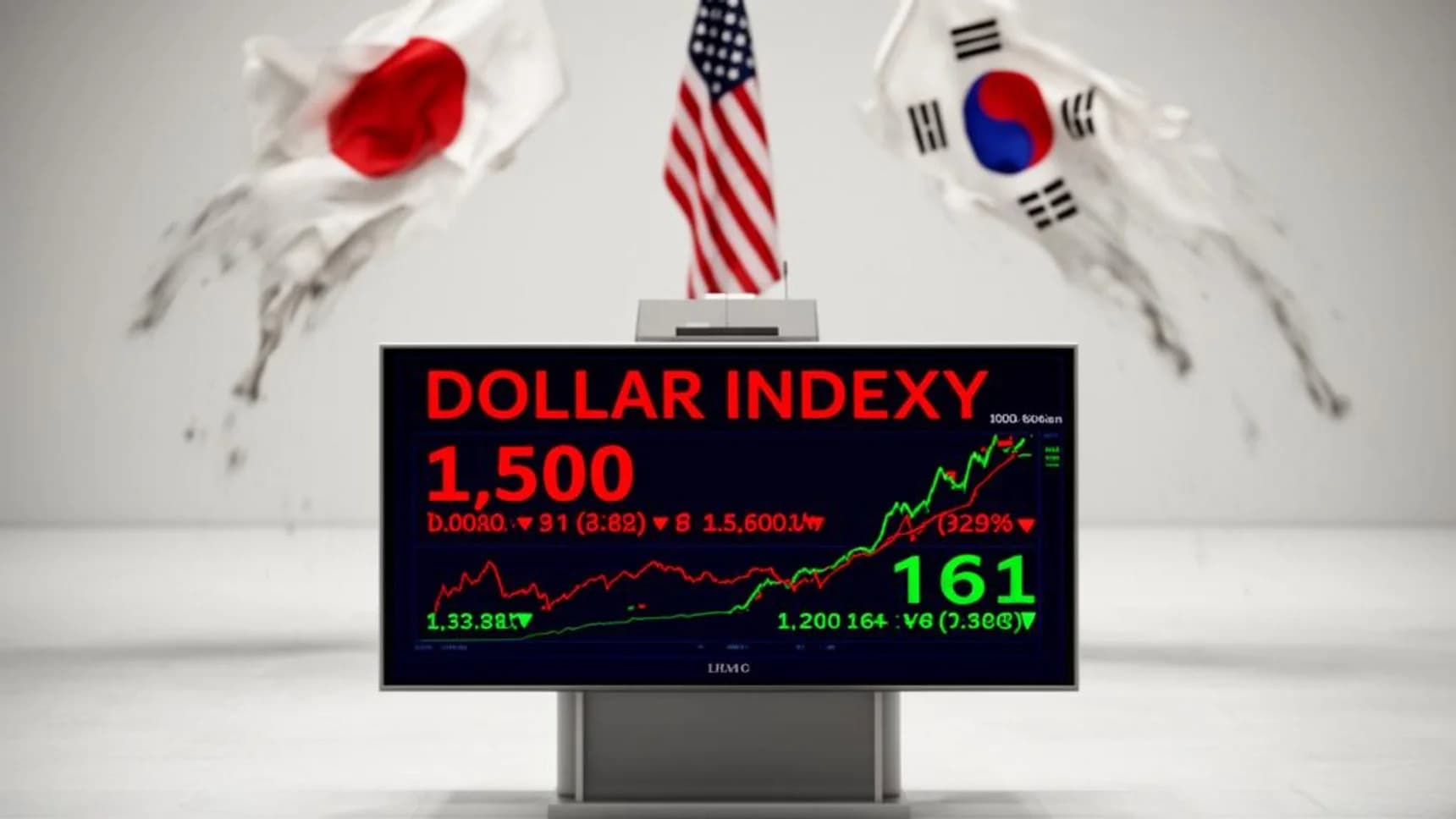
The dollar's strength has triggered widespread weakness across major currencies, with the euro last trading at $1.1363, near a 13-month low, and the British pound weakened to $1.316, having hit its lowest since last November at $1.314 on Wednesday. The risk-sensitive Australian dollar was steady at $0.6918, an 11-week low, as mixed inflation data muddied bets on a rate hike, while the New Zealand dollar weakened roughly 0.3% to $0.5654, a fresh seven-month low. The Japanese yen was around 161.9, keeping the currency at its weakest in 40 years, with the dollar retreated against the Swiss franc to around 0.813 francs, just shy of 11-month peaks. Historically, a rising dollar drains liquidity from global markets and weighs on both equities and cryptocurrencies, and the latest breakout suggests a difficult few months ahead for traders. Dollar strength has pushed gold briefly below $4,000 an ounce for the first time in more than seven months and sent bitcoin under $60,000 for the first time since 2024, reflecting the inverse correlation that has held through much of 2026.
AI mania and trillion-dollar IPOs meanwhile, starting with SpaceX, have pulled in record amounts of cash, as reported by The Hindu BusinessLine. BofA estimates an unprecedented $341 billion has flowed into U.S. equities so far this year, up from a year-to-date total of $134 billion this time last year. The United States is home to the hyperscalers rushing to build data centres for the AI buildout, as well as some of the biggest quantum computing companies, bolstering the case for a stronger dollar for some investors. U.S. economic data has delivered almost non-stop positive surprises since April, while earnings growth has exceeded expectations. Morgan Stanley said in a note the risk of the euro falling to $1.10 near-term could not be ignored, if markets continue to price in a hawkish Fed, with the euro currently trading around $1.135. Buying American goods is more expensive, but that may not deter anyone, said Stephen Jen, chief executive and chief investment officer of Eurizon SLJ Asset Management. "The strong dollar is not welcomed by anyone in the world, including the United States," he said. "But U.S. companies, and being in the U.S., are just too valuable (or) attractive. Foreign companies are investing heavily in the U.S. to have a foothold and that is also holding up the dollar."
Kevin Warsh's early days at the helm of the Federal Reserve are a tough reminder that when it comes to currencies, the US central bank isn't always going to act with the best interests of international markets, according to The Economic Times. Warsh is signaling he will be firmly focused on controlling inflation, with the Fed chief being far more hawkish than anticipated in presiding over his first policy meeting. This poses a significant challenge for Asian economies reliant on exports, forcing nations like Japan, Indonesia, and India to intervene in currency markets and raise borrowing costs. The Japanese yen could weaken to 165 per dollar if the Fed raises interest rates this year, former Bank of Japan policymaker Sayuri Shirai warned. Further gains could also push Japan to make good on its threats to intervene to support the yen, which traders think will come into play at levels around 162 per dollar or beyond. The latest round of verbal warnings from Japanese officials this week has done little to relieve sustained pressure on the currency and the government is now making plans to better manage its $1.3 trillion foreign exchange reserves for yen intervention. South Korea's won has fallen to record lows, boosting its stock market but also raising concerns among regulators, while emerging markets such as India have tried to support their currencies or raise interest rates to limit pressure from a stronger US dollar.