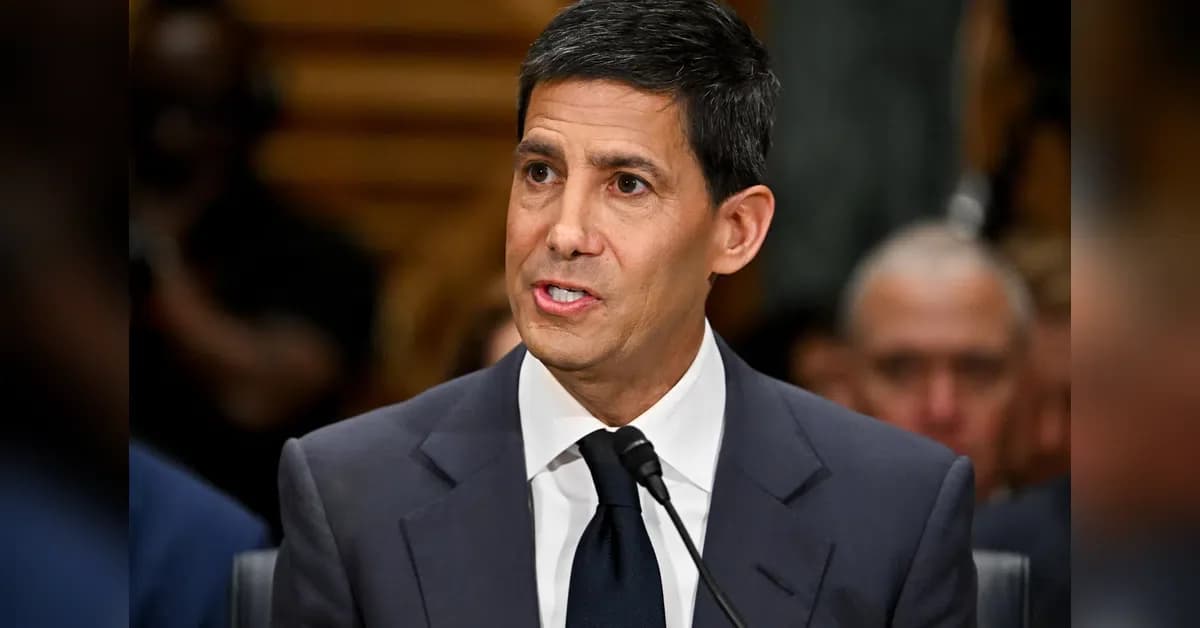
Federal Reserve chair nominee Kevin Warsh reinforced the Fed's independence during his Senate Banking Committee hearing, telling senators that President Trump never asked him to cut interest rates if he were to lead the central bank. Warsh emphasized that 'I never said to the president where I think rates should be… and I wouldn't have even thought about doing so.' This stance has been widely interpreted as a rejection of political pressure on monetary policy decisions. Bitcoin traded just under $77,000 before sliding to roughly $75,500 during Warsh's hearing, down about 0.6% over the past 24 hours. The crypto market decline tracked a broader risk-off tone in equities, with the Nasdaq and S&P 500 each falling around 0.5% as investors weighed the policy signals.
Warsh reinforced cryptocurrency as a crucial component of the U.S. financial system during his Senate Banking Committee hearing on April 21, 2026. When Senator Cynthia Lummis asked whether digital assets should be incorporated into the financial industry, Warsh responded 'Yes. Digital assets are already part of the fabric of our financial services industry in the United States.' The nominee's conviction in the sector was evident by his $100 million crypto portfolio with stakes in Solana, dYdX, Bitwise, Flashnet, and 20 other crypto projects, as revealed in his financial disclosures. During the nearly 3-hour public session, Warsh's statement has been widely interpreted as crypto-advocacy rather than a hostile stance.
Crypto-linked stocks experienced steeper declines than Bitcoin, with Coinbase (COIN) dropping 5%, Robinhood (HOOD) falling 3.5%, Galaxy (GLXY) sliding 4.5%, and stablecoin issuer Circle (CRCL) nearly 6% lower. According to 21shares senior crypto research strategist Matt Mena, Warsh's testimony suggested less urgency to cut rates, though he would still likely lean dovish if confirmed. Mena noted that while Warsh maintains a reputation for fiscal discipline, he has spent years arguing that the central bank's reliance on lagging data has kept rates unnecessarily high. Looking to the second half of 2026, Mena suggested a more proactive easing stance could create a 'high-liquidity environment' that has historically supported risk assets like bitcoin, potentially lifting prices back toward $100,000.

Senators raised significant concerns about potential conflicts of interest in crypto policy formation given Warsh's substantial crypto holdings. As reported by TradingView News, Warsh responded by committing to divest the majority of his financial assets before being sworn in as Fed Chair. This divestment commitment addresses the primary concern about his ability to maintain Fed independence while holding such a large crypto portfolio. The nominee's financial disclosures have revealed his extensive crypto exposure across multiple projects, raising questions about potential conflicts in monetary policy decisions.
U.S. President Donald Trump nominated Warsh in January 2026 to become the next Fed chair, with the current chair Jerome Powell's term ending on May 15, 2026. As reported by TradingView News, Warsh now awaits written follow-up questions from senators, with his response due April 23. Afterward, there will be a committee vote on advancing the nomination, followed by a full Senate vote. The timing of these final events remains uncertain due to the prevailing Department of Justice probe into the Fed's $2.5 billion headquarters renovation. However, they may take place before the end of Powell's 8-year term.
Bitcoin dropped 1% over the last 24 hours to trade at $75,451, showing minimal downward pressure despite the hearing. According to TradingView News, crypto markets experienced little overall decline, with the overall market cap down only 0.25% to $2.54 trillion. Warsh emphasized during the hearing that he would not be Trump's 'sock puppet,' despite receiving the President's public endorsement for the position. His commitment to maintaining Fed independence and his divestment plans have helped address Democratic concerns about potential conflicts of interest in crypto policy formation.