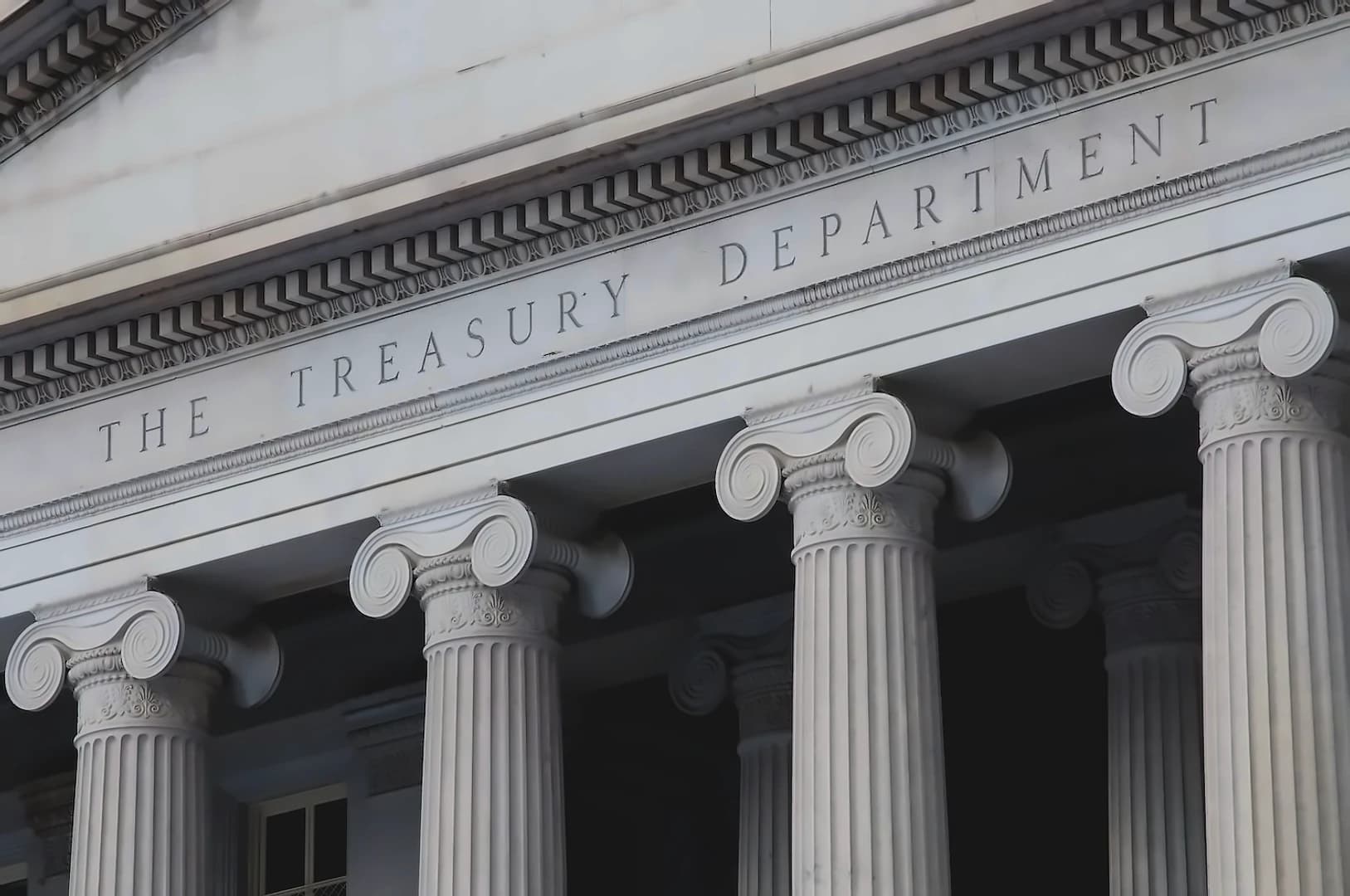
The U.S. Treasury's Office of Foreign Assets Control (OFAC) sanctioned Iranian crypto exchange BitBank on Thursday, alleging that a network linked to financier Babak Zanjani used the platform to transfer hundreds of millions of dollars in Bitcoin to Iran's Islamic Revolutionary Guard Corps (IRGC) between June and July. According to the latest Treasury release, OFAC designated BitBank, software developer Pishtaz Simorgh Electronic Trade Company, and three associates under Executive Order 13902 for Iran digital asset activities as part of Operation Economic Outcast. The designations are administrative sanctions actions, not criminal convictions, and apply to U.S. persons who must block designated property and interests. The Treasury Department announced the action under Operation Economic Outcast, Washington's broader campaign to isolate Iran's financial, commercial and logistical networks. Treasury Secretary Scott Bessent stated that the action demonstrated that efforts to finance the Iranian regime using cryptocurrencies are not beyond OFAC's reach, emphasizing that "If you support the Iranian regime, the Department of the Treasury will sanction you."
As reported by the Treasury Department, the sanctioned entities include BitBank and BitBank3, along with bitbank3.com and bitbank.com, which OFAC identifies as an Iran-based financial and insurance business established in 2024. Pishtaz Simorgh Electronic Trade Company was added as the developer of BitBank's digital asset software, described as a subsidiary of Dot One Value Creation Group. The three individuals designated are Hossein Ali Zaker Hossein, Mohammad Mahdi Zaker Hossein, and Seyed Adel Heidari, all identified as executives connected with Zanjani's Dot One business network. OFAC is designating Hossein Ali Zaker Hossein pursuant to E.O. 13902 for having acted or purported to act for or on behalf of, directly or indirectly, Zanjani, while Mohammad Mahdi Zaker Hossein is designated for having acted or purported to act for or on behalf of, directly or indirectly, Pishtaz Simorgh, and Seyed Adel Heidari for having acted or purported to act for or on behalf of, directly or indirectly, Dot One. According to Anadolu, Treasury further claimed that Zanjani has promoted BitBank on his social media accounts since at least 2024 and that the exchange has been listed as a partner by companies within his sanctions evasion network.

According to the Treasury Department, Treasury alleges that Zanjani used BitBank to transfer hundreds of millions of dollars worth of Bitcoin to the IRGC between June and July, though the agency did not identify specific wallet addresses or transaction details. The September 17 release does not provide Bitcoin wallet addresses, transaction hashes, or a precise total supporting the alleged transfers, leaving the cited figure attributed to the U.S. government. The action directly strikes at the architecture Zanjani built to launder funds and transfer hundreds of millions of dollars in Bitcoin to the IRGC, including digital asset platforms and their supporting developers. Since June of this year, OFAC-designated Hormuz Safe Marine Services Authority has used BitBank to transfer payments it received to the Iranian regime, with OFAC having sanctioned Hormuz Safe on July 29. Treasury has previously tied Zanjani to digital asset businesses, sanctioning him alongside Zedcex Exchange and Zedxion Exchange on January 30, alleging that addresses associated with the exchanges had handled funds connected with IRGC-linked counterparties. As reported by Reuters, Treasury described BitBank as a key component in Iran's digital assets-based sanctions-evasion infrastructure.
As reported by the Treasury Department, the agency alleged that Hormuz Safe Marine Services Authority has used BitBank to transfer payments to the Iranian regime since June, with OFAC having sanctioned Hormuz Safe on July 29. Hormuz Safe appears to be the formal entity behind a bitcoin-settled platform first reported by Iranian media in May, which was promoted as offering coverage for ships traveling on the Strait of Hormuz. At the time, Iran said it was targeting more than $10 billion in revenue for the platform. The allegations come as the Strait of Hormuz remains a major flashpoint in the U.S.-Iran conflict, with Tehran seeking to regulate, restrict or impose conditions on commercial transit through the waterway while Washington maintains maritime pressure on Iran. U.S. officials described this program as part of an IRGC-linked revenue system, with some risks covered by the maritime insurance arrangement including vessel seizures and threats associated with Iranian activity in the waterway. Hormuz Safe was developed by Iran's economy ministry and advertises insurance, traffic control and emergency response to vessels that pay, with shipping lawyers calling the arrangement a violation of transit rights under the Law of the Sea, according to OFAC.
The latest sanctions represent the latest phase in Treasury's comprehensive campaign against Zanjani's financial network. In July, the U.S. imposed sanctions against nine other firms that Zanjani is involved in, including his Iran-based "Dot One" conglomerate and other firms based in Turkey and the United Arab Emirates, as well as top executives at those firms. As reported by Reuters, Treasury announced sanctions against Zanjani and his two largest digital asset projects, Zedcex Exchange Limited and Zedxion Exchange Limited in January, accusing them of laundering money for the IRGC. "Through this combined infrastructure, Zanjani's enterprises have served as both public-facing commercial ventures and covert financial platforms enabling sanctions evasion and support to Iranian state-linked entities," Treasury stated. Zanjani has long been a key figure in Iran's sanctions-evasion networks, having been sentenced to death by Iranian authorities in 2016 for embezzlement, though his sentence was commuted in 2024. The following year he re-emerged as a backer of Iranian government economic projects.