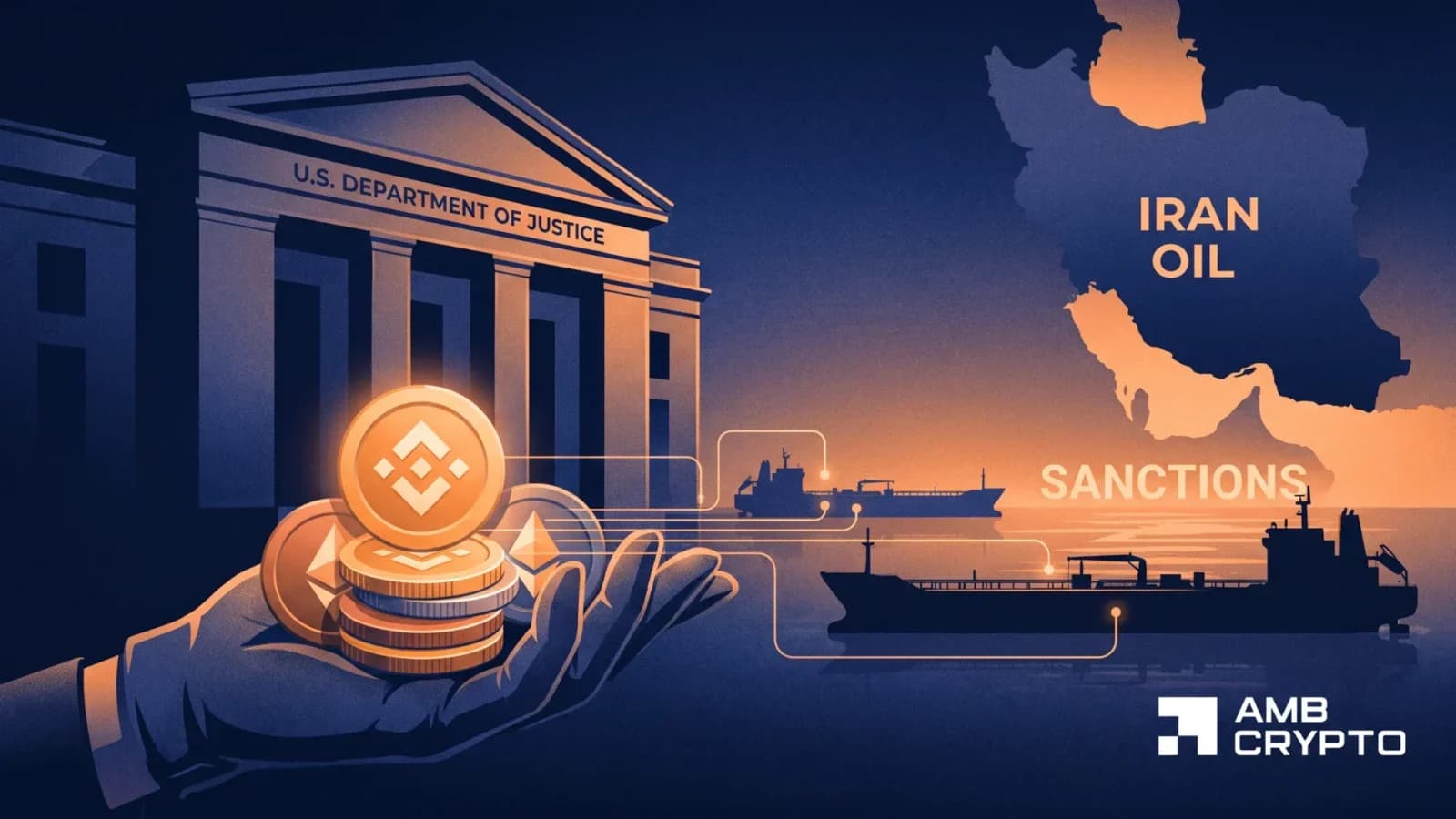
The U.S. Justice Department is conducting a compliance review of Binance less than three years after the world's largest cryptocurrency exchange settled a $4.3 billion criminal case in 2023. According to Bloomberg, Tysen Duva, head of the Justice Department's Criminal Division, confirmed on October 9 that federal prosecutors are reviewing whether Binance broke the terms of its settlement agreement. The review comes amid three developments that have raised compliance concerns, including suspected Iranian payment networks, a $61 million forfeiture case filed in September, and broader investigations into Binance's response to suspected sanctions violations.

The U.S. Justice Department has filed a $61 million civil forfeiture complaint against cryptocurrency allegedly derived from sanctioned Iranian oil sales, marking a significant escalation in enforcement actions. According to Reuters, federal prosecutors in Manhattan filed the complaint on September 14 against roughly $61 million in cryptocurrency connected to black-market sales of Iranian crude oil and petroleum products. The Justice Department identified Chinese businesses Blessed Trust and Hexa Whale as alleged intermediaries, stating they helped convert oil proceeds into digital assets and transfer funds through cryptocurrency infrastructure. Prosecutors allege that a collection of addresses described as 'Entity A' received and distributed more than $1.5 billion in proceeds from Iranian oil sales, including transfers to businesses and wallets associated with the Islamic Revolutionary Guard Corps, though the government is seeking approximately $61 million in the case.
The DOJ's compliance review centers on three key developments that have raised questions about Binance's adherence to its 2023 settlement terms. According to The Wall Street Journal, accounts tied to financier Babak Zanjani processed around $850 million through Binance, with the exchange describing a VIP customer whose suspicious trades drew inquiries from U.S. and Swiss authorities. Additionally, the $61 million forfeiture case filed in September alleges that two Chinese firms, Blessed Trust and Hexa Whale, used Binance accounts to launder proceeds from Iranian oil sales. Binance has stated it investigated and removed both companies, though the DOJ has not identified which specific incidents are part of its settlement review.
Previous cases involving companies that breached U.S. deferred-prosecution agreements provide context for potential outcomes in the Binance review. In 2023, Ericsson admitted breaching a deferred-prosecution agreement and pleaded guilty, paying an additional $206.7 million and extending its compliance monitor's term. Standard Chartered faced further penalties in 2019, agreeing to more than $1 billion in global penalties over historical Iran sanctions violations alongside an extended prosecution agreement. However, Boeing secured a new non-prosecution deal in 2024 after the DOJ found it breached its agreement, with its criminal charge being dismissed in 2025. The comparison limits apply as Binance already pleaded guilty in 2023, and these cases involved deferred-prosecution agreements rather than criminal settlements.
Blockchain research firm Chainalysis estimated Iran's cryptocurrency ecosystem handled more than $7.78 billion in activity during 2025. The firm reported that IRGC-associated addresses accounted for over half of the value received during the fourth quarter, with those addresses receiving more than $3 billion across 2025, up from over $2 billion in 2024. Separately, TRM Labs reported more than $3.84 billion in blockchain flows between CoinEx and Iranian entities over more than seven years, identifying approximately 6.2 million transfers worth $2.7 billion between CoinEx and Nobitex. The latest enforcement actions demonstrate how Washington has increasingly moved from tracing individual wallets to targeting the infrastructure through which Iranian digital assets circulate, with the campaign now extending beyond conventional wallet freezes to include exchanges, developers and foreign intermediaries that provide access to global crypto liquidity.