According to CNBC's review of prediction-market data published September 16, 2026, Polymarket prices Democratic Senate control at 59%, while Kalshi assigns roughly 55% probability to the same outcome. These market-implied probabilities represent the going rate for contracts that pay out only if Democrats actually win the chamber in November. The 59% price sounds like a lean edge but remains close to a coin flip, as reported by CNBC.
Republicans currently hold 22 of the 35 Senate seats up for election this cycle, including special elections in Ohio and Florida. As reported by CNBC, Democrats cannot take the majority without flipping several states that Donald Trump won by 10 percentage points or more in 2024, including Alaska, Texas, and Ohio. This electoral map presents significant challenges for Democratic hopes of Senate control.
According to the latest Fox News poll conducted September 11-14, 2026, Trump's job approval has fallen to 39%, with 61% disapproving - the lowest rating since April when it stood at 42%. This represents a significant decline from his 43% approval rating at this point in 2022 and aligns with former President Obama's 38% approval before the 2014 midterms. Trump's approval has not exceeded 39% since April, with his current rating trailing former President Biden's 43% at the same time in 2022. The president holds a 24-point net negative favorability rating (38-62%), unchanged since July, and lags his party in popularity. The poll reveals that only 8% are enthusiastic about how the government is working, with another 23% satisfied, while a 68% majority is unhappy, including a high of 33% who are "angry" - driven by 56% of Democrats and 36% of independents versus just 9% of Republicans.
The latest Fox News survey reveals that roughly three-quarters of voters have rated economic conditions negatively for the past year, with more than three times as many saying they are falling behind financially as getting ahead. According to CNBC reports, U.S. oil prices exceeded $100 per barrel by mid-September, with national gasoline averaging over $4 per gallon and diesel hitting a record high. These rising energy prices are linked to a decline in Trump's approval ratings, as shown by the September 15 New York Times/Siena College poll that found likely voters favoring Democratic congressional candidates by nearly 9 percentage points nationally. The surge in gas prices has been a key driver of the shift in Senate prediction market odds. Sixty-one percent say gas prices are a major problem, up from 48% two years ago, while 52% say the same for healthcare costs, up from 44%. Majorities also view housing costs (54%) and grocery prices (62%) as major problems. Views on tariffs have grown more negative since last summer, with 64% saying tariffs hurt the U.S. economy, up from 57%.
Despite economic headwinds, the latest Fox News poll shows that 51% of voters would back the Democratic candidate in their House district, while 44% would support the Republican. The Democrats' 7-point edge is just outside the survey's margin of sampling error, with women, those under age 35, Hispanic voters and White college graduates giving Democrats their advantage. Independents favor the Democratic candidate 53-31%, with 14% undecided. Higher engagement boosts Democrats: 64% are extremely interested in the election compared to 53% of Republicans (+11 D margin), and more Democrats (71%) than Republicans (65%) rate their likelihood of voting as a 10 on a 10-point scale. Among those certain to vote, the Democrats' lead in the generic ballot grew to 11 points (54-43%). The edge holds among those in "close" counties, where the 2024 presidential vote between President Trump and former Vice President Harris was within 10 points; the Democratic candidate is favored by 9 points, 52-43%.
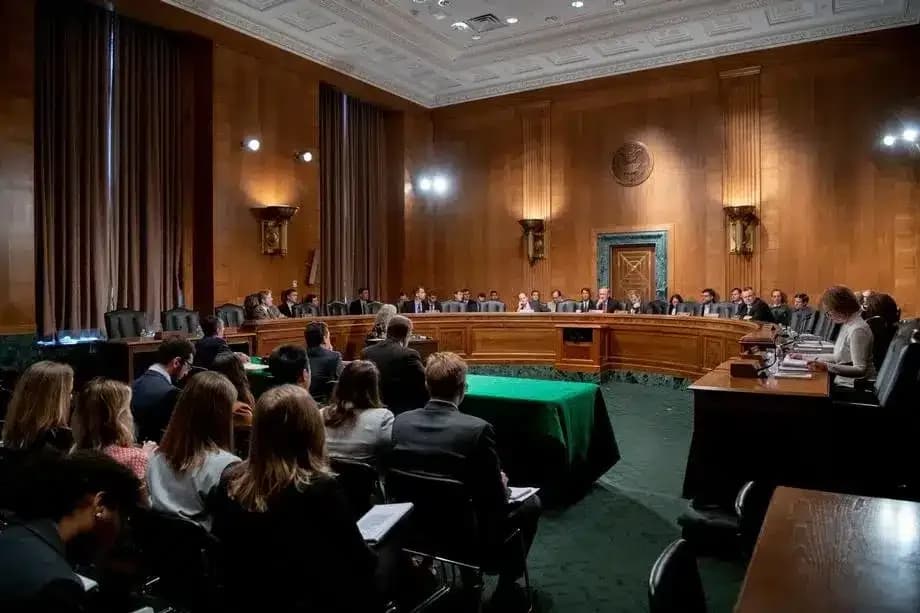
As reported by CNBC, the current 59% and 55% readings reflect a volatile nine months rather than a straight line. Before the Iran war began on February 28, 2026, Republicans were the clear favorites on both platforms, priced at roughly 60% to hold the Senate. Rising gas prices helped drive down Trump's approval rating as Democratic odds climbed through March and briefly overtook Republican odds in April. The recovery has reversed in recent weeks as energy costs spiked, with Polymarket's Senate-control market showing approximately $5 million in trading volume tied to the 59% Democratic price. According to CNBC's analysis, Polymarket and Kalshi do not agree exactly on Senate control odds, with Polymarket at 59% and Kalshi at approximately 55%, highlighting how prediction markets can produce different outcomes even for the same political event.