Decentralized exchange Uniswap is facing significant resistance from liquidity providers following its recent fee switch implementation on July 27, 2026. According to AMBCrypto, the new fee structure requires liquidity providers to pay 10-25% of fee revenues to the protocol, with V4 users seeing up to 33% cuts primarily for UNI buyback and burn operations. As reported by liquidity provider Guil Lambert, the new fees "structurally can't work," prompting him to urge colleagues to explore better yield opportunities. Aerodrome Finance's Alexander Cutler has already capitalized on the discontent, actively wooing disgruntled Uniswap LPs back to their DEX on Base. The fee switch has been implemented across all UniV4 pools, fundamentally altering the economics for liquidity providers who previously collected all generated trading fees.
Uniswap founder Hayden Adams has publicly defended the v4 protocol fees, arguing that claims the change reduces liquidity provider earnings rest on flawed assumptions. As reported by crypto.news, Adams used a pool charging traders 30 basis points as his example, where LPs continue earning 30 basis points while the protocol adds 5 basis points. However, the controversy deepens when critics point to Uniswap's own v4 documentation, which describes protocol and LP fees as applied sequentially - protocol fee first, then LP fee on the remaining input. Under this sequential structure, any positive protocol fee mathematically narrows the base on which LP fees are calculated, even if swap volume holds constant. Adams' central argument is that protocol fees are additive to the existing fee structure rather than deducted from LP allocations, though his arithmetic of 5 basis points out of 30 basis points representing 14% has not been independently verified.
The fee switch was activated after Proposal 100 received 46.6 million UNI in support and 1.27 million UNI against, clearing the 40 million UNI quorum requirement. As reported by crypto.news, the vote activated the fee-controller system on Ethereum, Arbitrum, Base, BNB Chain, Polygon, OP Mainnet and Robinhood Chain. The executed proposal covers the first group of v4 deployments, with Celo, Soneium, World Chain, X Layer and Zora requiring separate proposals due to governance contract limitations. Fees collected through the new system move into TokenJar contracts, with searchers able to claim assets by providing and burning UNI through the protocol's Firepit mechanism. Governance votes to extend v4 protocol fees to additional deployments are expected to continue, meaning this dispute is unlikely to resolve on founder messaging alone; it will resolve on LP performance data as it accumulates.
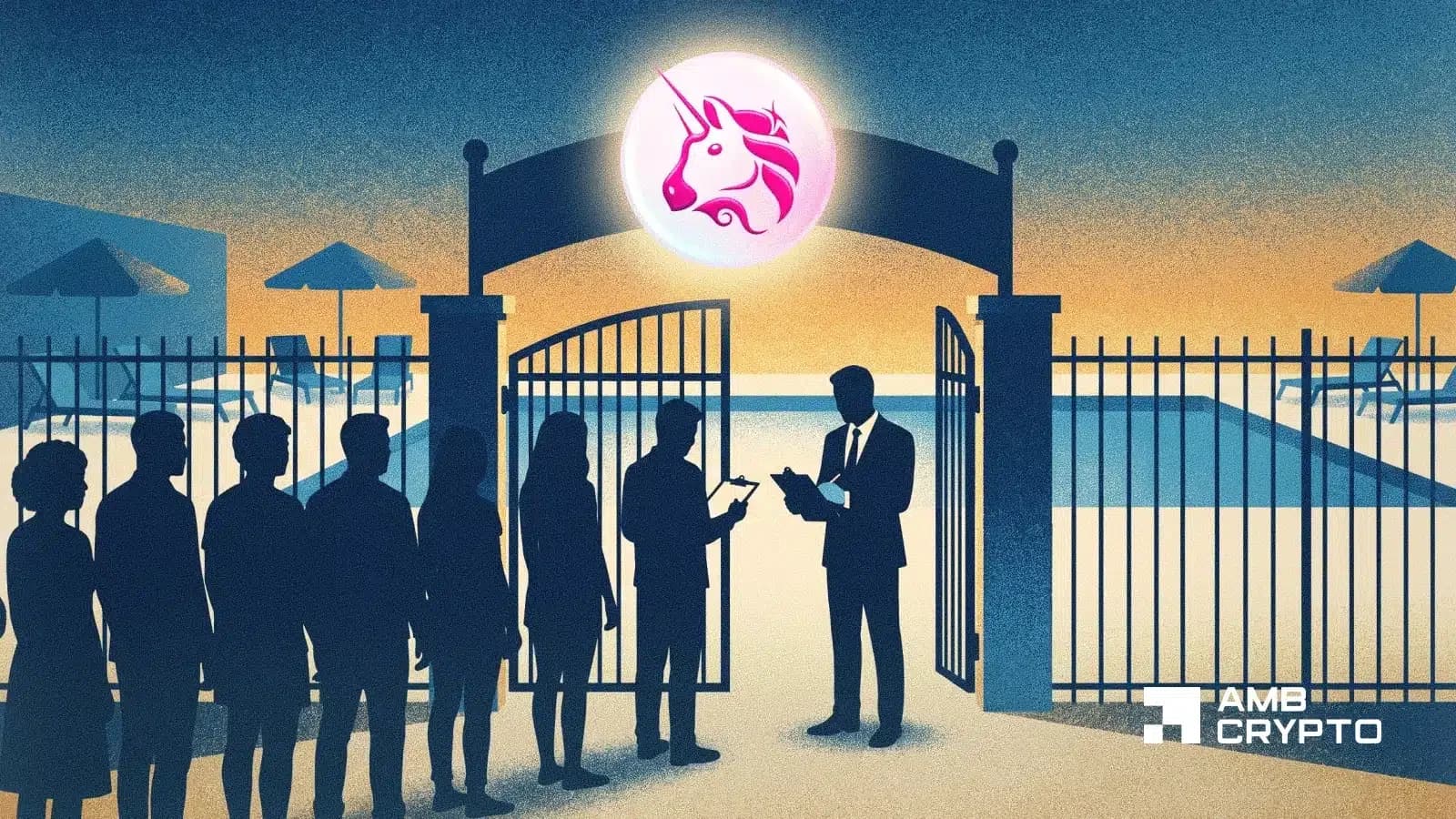
The latest fee switch represents a significant shift in Uniswap's revenue model, as reported by AMBCrypto. Since the protocol's debut, liquidity providers have collected ₹48,000 crore in generated fees since 2020, but the protocol itself has only generated ₹220 crore in revenue. The new fee structure will redirect a substantial portion of these profits to the protocol for UNI buybacks and burn operations. However, critics argue that Uniswap LPs were not profitable even before the fee switch, with analyst KoolKrypto projecting that the new cuts will worsen the situation. The stakes are meaningful as Uniswap holds approximately $3.06 billion in total value locked, making it the largest decentralized exchange by TVL according to DefiLlama. The broader tension sits between UNI tokenholders who benefit from protocol revenue capture and LPs who supply the liquidity that generates those fees.
According to DefiLlama, Uniswap's combined total value locked reached approximately $3.06 billion on July 29, with $88.4 million in gross fees over 30 days and about $3.36 million in protocol revenue. Uniswap Labs stated that previous fee activations on v2 and v3 had not produced broad liquidity exits, with Ethereum's 25 largest fee-enabled v3 pools retaining 98.5% of their pre-activation liquidity in token terms. The project has burned about 6-8 million UNI in 2026, translating to an average of 1 million UNI burned per month. Adams noted that governance can submit another proposal to adjust rates if the new charges are not well tolerated, with the next measurable test being whether affected pools retain liquidity and trading volume after charges begin accumulating.