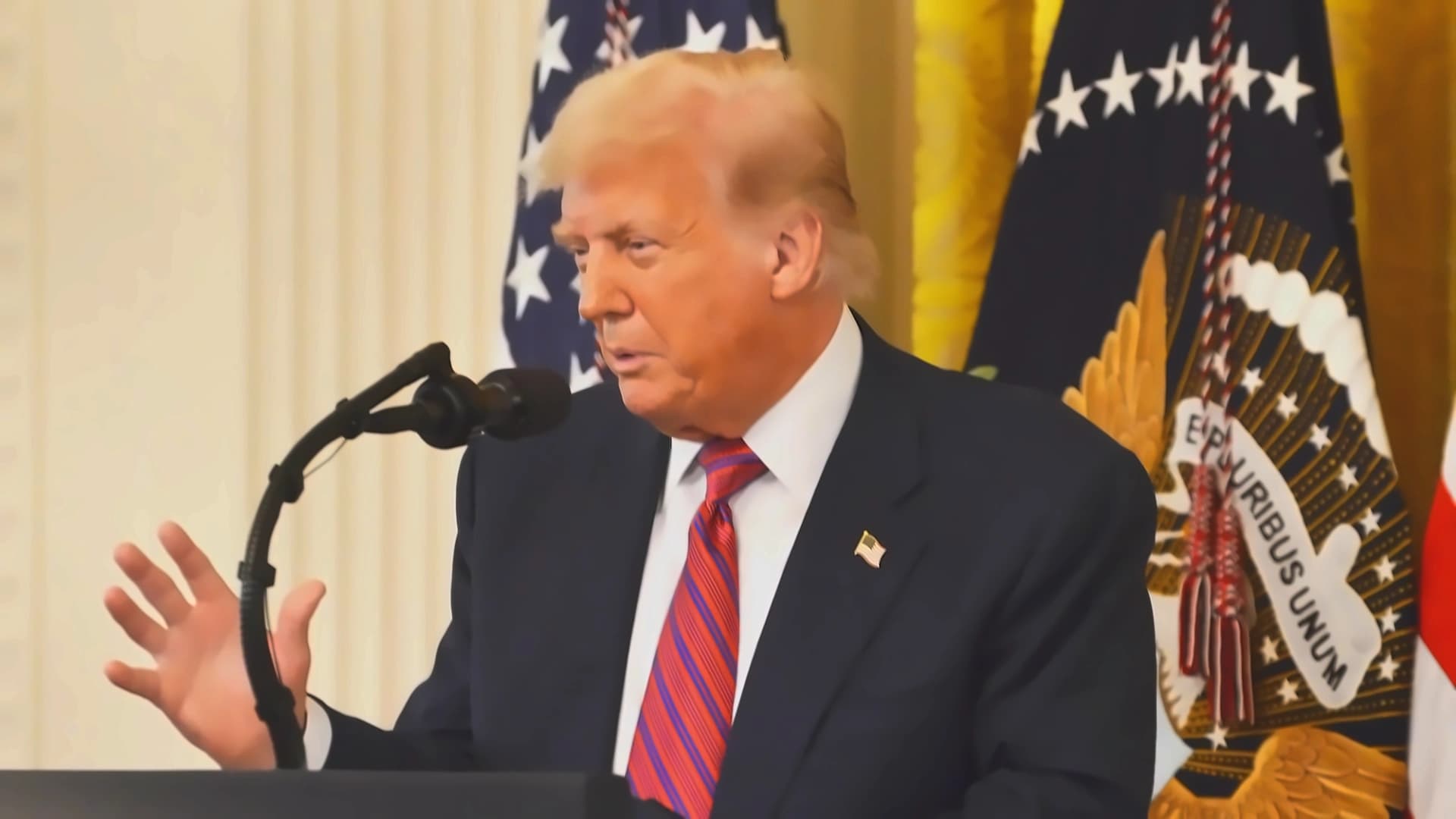
U.S. President Donald Trump ordered the federal government to update its regulatory frameworks to integrate 'digital assets and innovative technology into traditional financial services and payment systems' in an executive order signed Tuesday. According to the document, the U.S. should foster financial technology services into its existing payment and financial services rails. As reported by the order, 'It is therefore the policy of the United States to streamline regulatory processes, reduce unnecessary barriers to entry, and encourage collaboration between fintech firms, federally regulated financial institutions, and Federal financial regulators.'
The order directed the Federal Reserve Board of Governors to review how it allows uninsured depository institutions and non-bank financial firms access to payment accounts and services. This review also asks the 12 Federal Reserve banks if they can act independently of the board to grant payment accounts. According to the order, this provision may specifically benefit Wyoming special purpose depository institutions and entities operating under a similar framework. The Federal Reserve Bank of Kansas already granted Kraken, a Wyoming SPDI, access to a limited version of its so-called master account earlier this year, with other companies seeking similar access. The governors have also been asked to assess the Federal Reserve's legal authority to grant direct access to fintech and crypto firms and explore 'options for expanding such access to the extent permitted by law, subject to appropriate risk management requirements.'
The order directed the heads of financial regulators to review their existing rules over the next 90 days and identify any rules or documents 'that unduly impede fintech firms from entering into partnerships with federally regulated institutions.' Within 120 days, Trump directed regulators to 'take steps to encourage innovation as a result of the review.' These steps include asking the Federal Reserve Board of Governors to review how it allows uninsured depository institutions and non-bank financial firms access to payment accounts and services. The heads of federal financial regulators are also required to review regulations, guidance documents, orders, and no-action letters that could be amended to streamline applications for eligible fintech firms seeking bank charters, credit union charters, deposit or share insurance, and other federal licenses.
In a statement, Rebecca Romero Rainey, the CEO and president of the Independent Community Bankers of America, a banking trade association, said there were still 'significant gaps in regulation' between banks and non-bank entities. She stated that like activities should be subject to like regulation. 'Federal Reserve officials conducting their review of access to Reserve Bank payment accounts must recognize that the Reserve Banks retain discretion under federal law to deny or grant master account access to special-purpose depository institutions, stablecoin issuers and other crypto-related entities,' she said in a statement. 'As ICBA laid out in a recent issue brief, policymakers should pause new policies on stablecoins, Federal Reserve master accounts, and OCC national trust charters and holistically assess their combined impact on local communities and the broader economy,' she added. The Cato Institute found in January that most debanking cases in the US resulted from government pressure rather than individual banks' policies, highlighting the systematic nature of regulatory challenges facing fintech firms.