The Office of the Comptroller of the Currency (OCC) has granted preliminary conditional approval to World Liberty Trust Co. for a federal bank charter, as announced on August 14. According to the OCC's 19-page approval decision, the company can now organize the bank but cannot begin operations until it completes preopening requirements and obtains final authorization under federal banking law. The regulator emphasized that World Liberty Trust must satisfy all conditions and receive written confirmation from the OCC before conducting business. Comptroller Jonathan Gould, appointed by Trump last year, approved the application, with the OCC stating that career staff handled the review and nonpolitical examiners will supervise the bank once it opens. The approval is based on a thorough evaluation of all available information, including representations and commitments made in the application and by the bank's representatives.
As reported by the OCC, World Liberty Trust Company will focus on services tied to World Liberty Financial's $4 billion USD1 stablecoin. The bank plans to issue USD1, a fiat currency-backed stablecoin, to institutional clients on a nationwide basis, assuming this role from BitGo Bank & Trust, National Association (BitGo), the current exclusive issuer and custodian for USD1. The charter pulls both issuance and custody functions in-house, with World Liberty Trust issuing and redeeming USD1, custodying the dollars and Treasury money market funds behind it, and settling payments for institutional clients under one federal license. World Liberty Trust would acquire USD1's reserve assets and assume liabilities tied to them once authorized to open, with BitGo remaining responsible until the proposed bank completes OCC conditions. The stablecoin currently trades near $1 with a market capitalization of about $4.02 billion, ranking 23rd across all crypto assets. World Liberty Trust would not operate as a standard commercial bank, with its proposed charter limited to trust, custody, reserve, and related payment services, excluding ordinary retail deposits or conventional lending.
Following the approval, Senator Elizabeth Warren and nine senators introduced the Ending Presidential Corruption in Banking Act, which would prevent presidents, vice presidents, their spouses or children from owning or controlling a bank. The legislation requires federal agencies to review banking applications approved after January 20, 2025, within 60 days of enactment, with regulators required to terminate approvals issued while covered individuals owned or controlled the applicant. Senate Banking Committee Democrats said the measure would require federal agencies to review banking applications approved after January 20, 2025, with Warren arguing that "this is the most brazen act of self-dealing our financial system has ever seen." The bill is backed by Senators Chris Van Hollen, Angela Alsobrooks, Chris Murphy, Bernie Sanders, Richard Blumenthal, Jack Reed, Andy Kim, Tammy Duckworth, and Ruben Gallego. Before the decision, Warren asked the OCC to delay its review until Trump gave up his financial interest in the company, warning that approval could leave a presidential appointee regulating a business financially connected to the president.
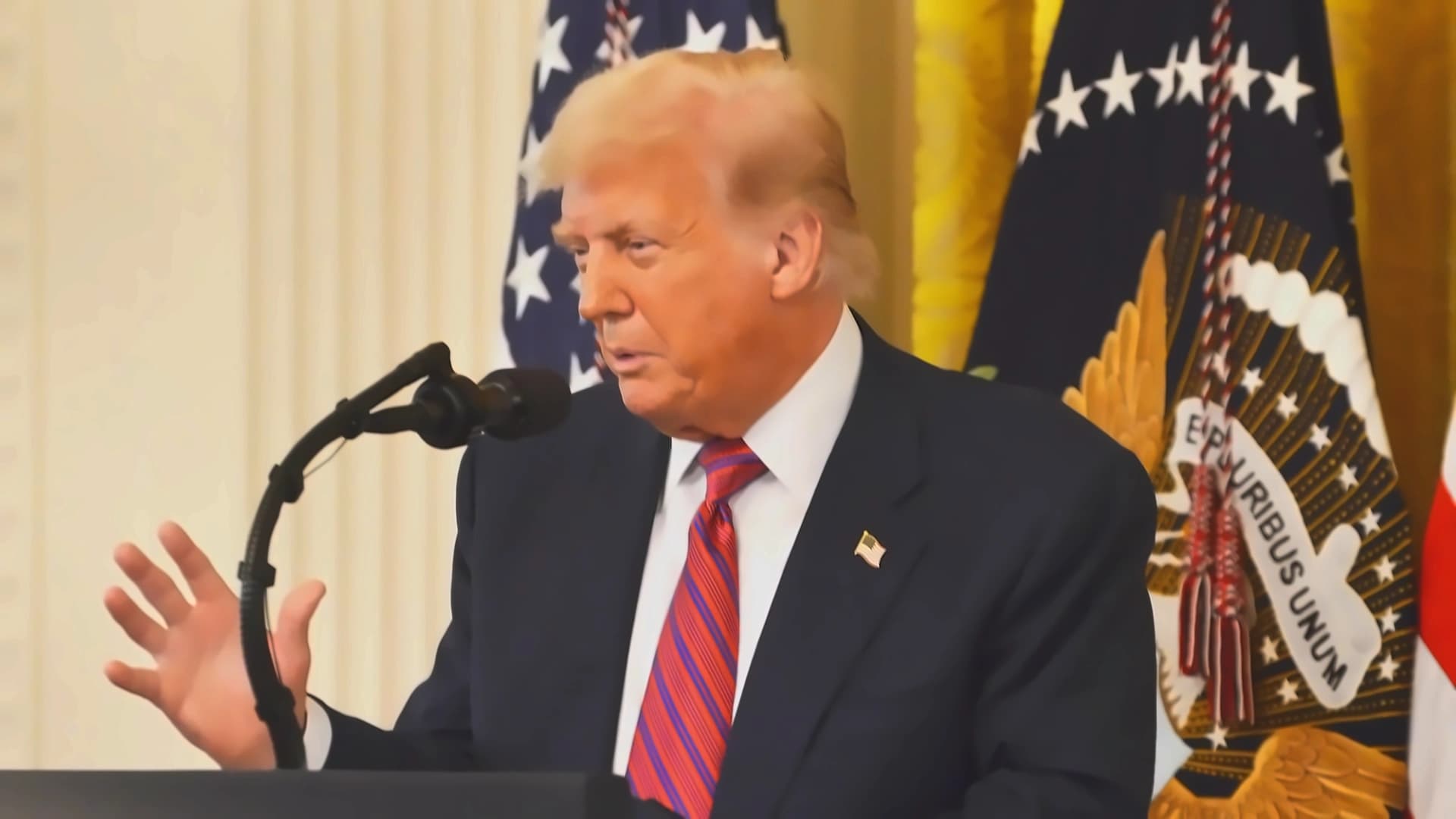
Congressional scrutiny continues over World Liberty's foreign investors, particularly an Abu Dhabi company backed by UAE National Security Adviser Sheikh Tahnoon bin Zayed Al Nahyan, which reportedly purchased a 49% interest in World Liberty for $500 million through an agreement signed in January 2025. In June, five Democratic senators requested congressional hearings into the transaction, asking whether the investment affected subsequent Trump administration decisions involving UAE arms sales and access to advanced artificial intelligence chips. The OCC's decision found that foreign investors were not principal shareholders of the proposed bank, while StringZ Holdings, DT Marks SC, and AMGUS made commitments in July promising not to control or influence operations. Eric Trump signed the commitment for DT Marks in his role as president of the Trump family-linked entity, with any voting interest of 10% or more remaining an investment and voting power above 9.9% exercised through proxy using the same proportion as other shareholders.
World Liberty Financial's business relationship with Hong Kong-based AI venture WorldClaw is drawing significant scrutiny over its alleged links to Chinese artificial intelligence companies facing US national security restrictions. According to Reuters, 43 of the 90 AI models available on WorldClaw were developed by Chinese companies, including Alibaba, Baidu and Z.ai, while the platform also offers models from US companies such as OpenAI and Anthropic. WorldClaw accepts World Liberty's USD1 stablecoin for AI services, creating a potential commercial link between the platform and the president's family business interests. The arrangement is legally permissible, but technology, trade and ethics experts have questioned whether it sits comfortably with the Trump administration's increasingly tough position on Chinese technology. WorldClaw says its platform has more than 10,000 users and handles over 50 million requested tasks a day, highlighting the scale of the potential exposure.
Following the announcement, World Liberty Financial initially rose more than 2% to about $0.0597 before giving back part of the advance, with TradingView data later placing the token near $0.0558, up about 8% over seven days but more than 65% below its level one year earlier. World Liberty Trust would operate as a wholly owned subsidiary of Delaware-registered WLTC Holdings LLC and maintain its main office in Bay Harbor Islands, Florida. The approval places World Liberty among several digital asset companies pursuing OCC charters, with Ripple, Paxos, BitGo, and Fidelity Digital Assets receiving conditional approvals in December 2025, while Circle completed its preopening requirements and obtained final authorization for its national trust bank in July. However, the move has drawn significant criticism, with Sen. Elizabeth Warren arguing that "President Trump is now the first President in history to approve, operate, and supervise his own bank," calling it "the most brazen act of self-dealing our financial system has ever seen."