TronBid, a peer-to-peer marketplace for TRON network resources, has expanded its platform into a full two-sided trading venue where both buyers and sellers can create orders for TRON Energy and Bandwidth. The Berlin-based project announced this expansion on August 26, 2026, introducing a suite of tools aimed at users who need to rent TRON Energy for USDT TRC-20 transfers and at TRX holders looking to monetize the network resources generated by their staked assets. Under the new marketplace structure, buyers can post BUY orders specifying the amount of Energy required, the rental duration, and the price they are willing to pay, while sellers can browse those orders and choose which ones to fulfill. Conversely, resource owners can create SELL offers with their own amount, price, and rental period, which buyers can purchase in full or in part, such as renting 350,000 Energy from a seller offering 600,000 total. The platform now offers Quick Rent for rapid leasing and Flash Recharge for instant energy delivery to designated addresses, supporting cross-wallet payments and seamless transaction management.
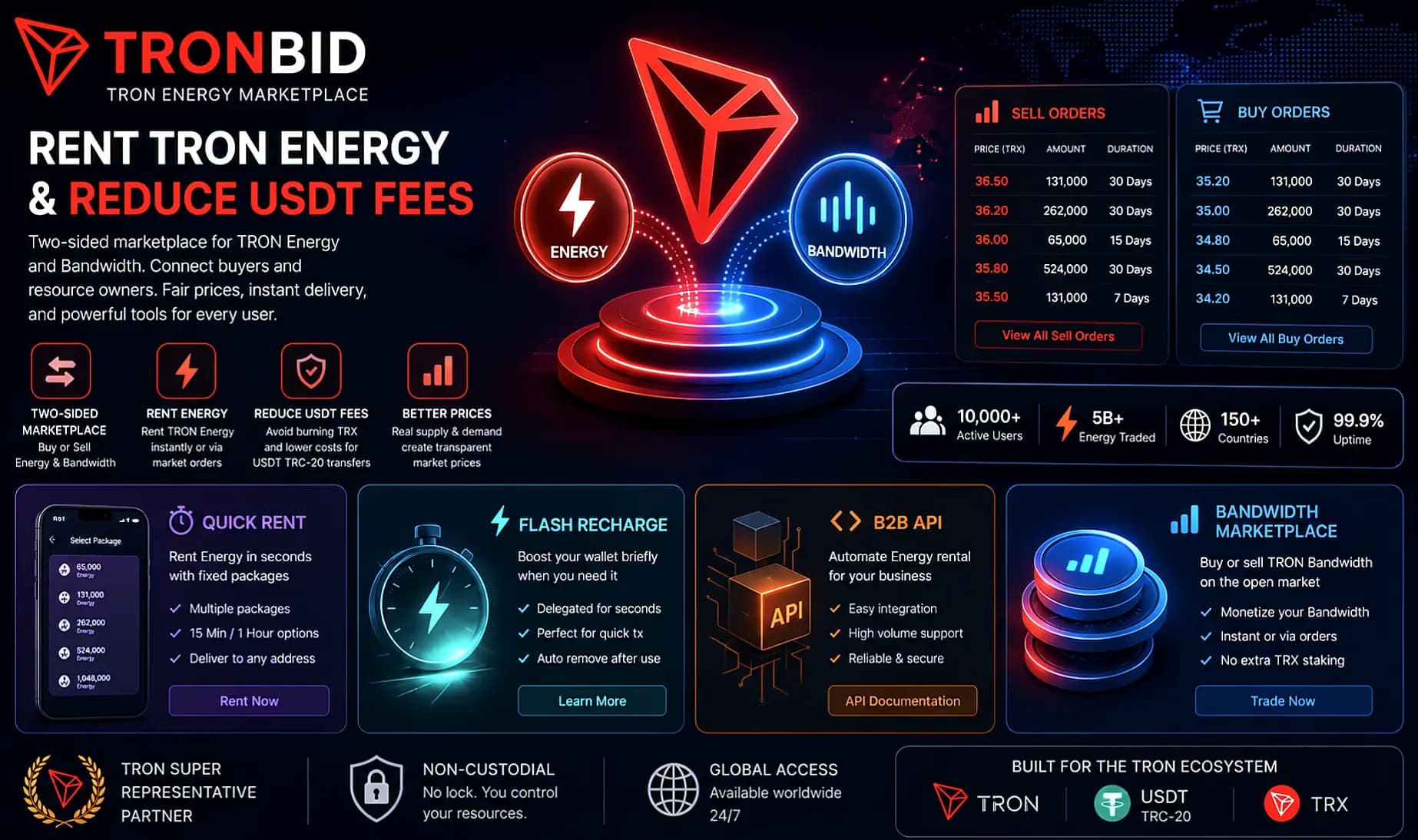
For businesses handling large numbers of USDT TRC-20 transfers, TronBid's platform can make it easier to rent Energy automatically and manage the network-resource component of transaction costs. As reported by TronBid, companies can maintain a prepaid balance and programmatically request Energy for specified addresses before executing transfers, integrating resource rental directly into their transaction infrastructure rather than treating it as a manual step. This integration allows businesses to reduce USDT fees for TRC-20 transactions while maintaining automatic Energy management for frequent transfers. The platform's flexible approach allows sellers to participate in the marketplace while continuing to manage their resources elsewhere, with recurring offers automatically pausing and becoming active again when sufficient Energy returns. For high-volume operators, TronBid provides B2B Quick Rent API integration, enabling enterprises to pre-deposit balances and automatically lease energy for transaction addresses via API, suitable for high-frequency TRC-20 trading scenarios such as exchanges and payment processors. The growth of TRON's stablecoin economy has created two different groups of network participants - businesses and individuals requiring Energy for smart-contract transactions, and TRX holders whose staked assets continuously generate network resources.
TRON operates on a resource model where Energy powers smart-contract computation, including the transfers of USDT and other TRC-20 tokens, while Bandwidth is consumed by transaction data. As reported by TronBid, when a wallet does not have sufficient Energy, TRX may be consumed to cover the resources required by the transaction. This creates persistent demand for temporary resource delegation, as businesses and individuals regularly require Energy for smart-contract interactions while TRX holders accumulate unused network resources. The network has become a major corridor for USDT transfers, with the stablecoin economy continuing to expand and creating ongoing demand for Energy resources. By receiving temporary Energy delegated from another account, users can perform eligible TRON transactions without staking enough TRX to cover their maximum resource requirements, making the platform particularly valuable for operations handling large volumes of USDT TRC-20 transfers. Instead of treating Energy solely as an internal wallet resource, holders can now offer unused capacity to the market, while buyers gain an alternative to maintaining enough staked TRX for their maximum transaction requirements.
TronBid provides a B2B Quick Rent API for exchanges, payment processors, OTC services, wallets, and other businesses that regularly send USDT TRC-20 transactions. As reported by TronBid, companies can maintain a prepaid balance and programmatically request Energy for specified addresses before executing transfers, integrating resource rental directly into their transaction infrastructure rather than treating it as a manual step. For high-volume operators, this integration allows businesses to maintain automatic Energy management for frequent transfers. The platform's flexible supply model ensures sellers' orders do not lock resources in advance, with recurring orders automatically pausing when Energy is occupied, ensuring flexible allocation of resources across multiple scenarios. Sellers can receive proceeds from completed marketplace transactions in either TRX or USDT, depending on available terms, creating additional flexibility for resource owners. The marketplace covers both Energy and Bandwidth trading, allowing holders of staked TRX to monetize the network resources their stake generates, creating two sides of a healthy ecosystem. TronBid also allows businesses to use the API as part of their own downstream Energy services, expanding the platform's reach beyond direct users.
Alongside the marketplace expansion, TronBid has officially become a TRON Super Representative Partner, marking the project's formal entry into TRON's Delegated Proof of Stake (DPoS) governance ecosystem. As reported by TronBid, Super Representatives and SR Partners participate in governance through TRON Power voting, and this role represents an additional connection between TronBid's marketplace and the underlying resource economy on which it operates. The project plans to continue developing tools around Energy, Bandwidth and resource-market infrastructure while expanding participation from both resource buyers and TRX holders. The broader goal behind the two-sided marketplace is price discovery, as when only one side of a market determines available offers, users have limited visibility into actual supply and demand. An open order book allows buyers to signal what they are willing to pay while sellers independently indicate acceptable terms, with TronBid also publishing market statistics covering resource prices, liquidity, and historical activity to enhance market transparency. This development further deepens TronBid's connection to the underlying TRON ecosystem while the platform continues to advance infrastructure development around Energy and Bandwidth.