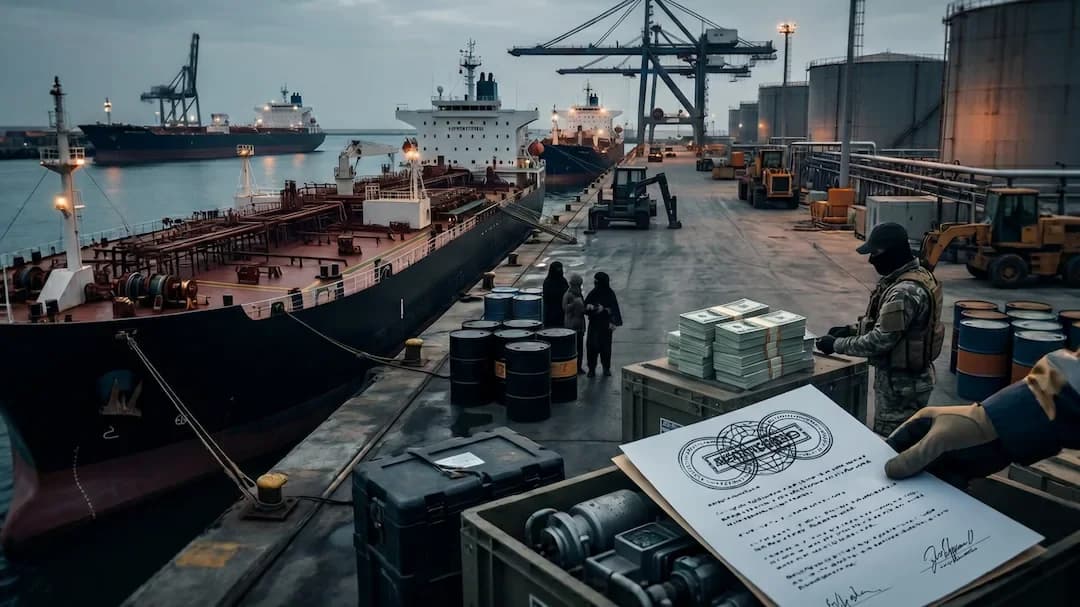
The US Treasury sanctioned 12 individuals, 29 entities, and 19 vessels linked to Iran's shadow banking and oil networks this week, escalating the Trump administration's Economic Fury campaign against Tehran's financial workarounds. According to the latest Treasury Department announcement, the measures target Iranian exchange house Amin Exchange and block 19 oil and petrochemical tankers, while Secretary Scott Bessent warned global banks to monitor how Tehran continues moving funds through the international financial system. The sanctions freeze any US-based assets belonging to the targeted individuals and entities and prohibit American citizens and companies from conducting transactions with them.
OFAC designated Iran-based Ebrahimi and Associates Partnership Company, known as Amin Exchange, for operating a network of shell companies across multiple jurisdictions to facilitate transactions for Iranian banks. As reported by the Treasury Department, US authorities accuse the firm of moving hundreds of millions of dollars on behalf of sanctioned Iranian banks, with shell companies linked to the network handling these transactions on behalf of Iranian financial institutions. The firm runs front companies across the UAE, Türkiye, Hong Kong, and China, with eight entities added to the Specially Designated Nationals list. Counterparties named in the action included the National Iranian Oil Company and Triliance Petrochemical, both already under US sanctions.
The 19 tankers blocked by OFAC have transported millions of barrels of Iranian oil, naphtha, methanol, and liquefied petroleum gas since 2023. According to the Treasury Department, Washington blacklisted vessels including the Barbados-flagged liquefied petroleum gas tanker Great Sail, the Palau-flagged tanker Ocean Wave, and the Panama-flagged chemical and oil tanker Swift Falcon. Secretary Bessent announced that Economic Fury has frozen nearly $500 million in regime-linked cryptocurrency, building on earlier actions including a $344 million Tether (USDT) freeze on the Tron blockchain. Treasury has also pressured Binance over Iran-linked flows.
Iran-based exchange houses move billions in foreign currency each year, allowing Tehran to convert oil revenue and channel funds to its armed forces, as reported by the Treasury Department. Bessent stated that "Iran's shadow banking system facilitates the illicit transfer of funding for terrorist purposes." Treasury Secretary Scott Bessent accused Iran's "shadow banking system" of facilitating illicit financial transfers linked to terrorism, warning financial institutions to remain alert to what he described as Tehran's manipulation of the international financial system. Treasury signaled that more secondary sanctions could follow against foreign banks, refineries, and airlines that help process Iranian flows, as crypto has become a lifeline as traditional oil revenue collapses.