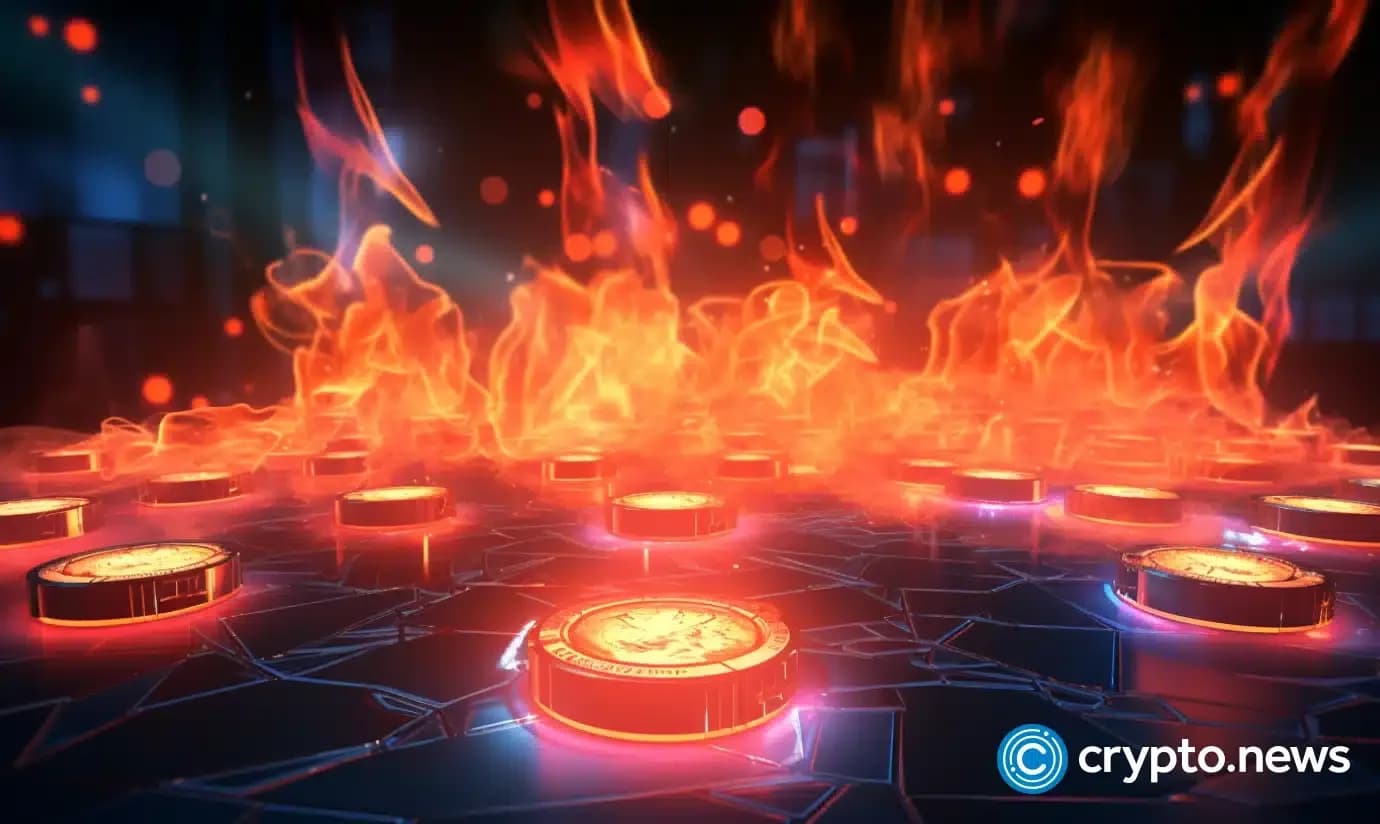
A token burn permanently removes coins from circulation by sending them to a burn address, a wallet with no private key that can receive tokens but never send them. According to the report, this creates an irreversible and verifiable on-chain reduction in supply that anyone can verify through blockchain records. Common examples include addresses ending in long strings of zeros or the recognizable 'dead' address on Ethereum-style chains, and the so-called blackhole address on the BNB Chain. The permanence is crucial - once tokens arrive at the burn address, they can never return to circulation, making it different from simply moving tokens to storage. Recent developments in stablecoin technology showcase similar verification principles, with Circle's Cross-Chain Transfer Protocol (CCTP) implementing clean burn-and-mint mechanisms that destroy tokens on source chains while minting fresh native tokens on destination networks, ensuring complete transparency and elimination of wrapped token risks.
When paired with a buyback, this mechanism becomes a recurring engine that converts revenue into permanent supply cuts. As reported, the process involves the project using revenue or reserves to buy its own token on the open market, then sending what it bought to the burn address. This creates real buy-side demand as the project competes with other buyers, while tying supply reduction to actual protocol performance. The funding source determines sustainability - revenue-funded and fee-funded burns draw on money the network earns and scale with adoption, while treasury-funded and externally funded burns rely on finite reserves that can run dry. This strategy mirrors the operational principles of stablecoin issuers, where arbitrage mechanisms maintain price stability through large traders who buy tokens below $1 and redeem them for full value, creating upward price pressure when tokens trade below parity and downward pressure when they trade above. However, crypto buybacks differ fundamentally from stock buybacks - while stock buybacks absorb shares into treasury where they can be reissued later, crypto buybacks permanently destroy tokens at burn addresses, creating absolute supply reduction with no path back into circulation.
The 2026 World Cup has introduced a unique application of token burns through Fan Tokens™, where match results directly trigger supply reductions. According to the latest reports, Argentina ($ARG) experienced its first burn on June 16 following their 3-0 win over Algeria, with 1% of the total token supply removed from treasury holdings, amounting to 13,426 tokens. The World Cup deflationary structure varies by tournament stage, with group stage wins removing 1%, round of 32 wins removing 2%, round of 16 wins removing 2.5%, quarter-finals removing 5%, semi-finals removing 7.5%, and final wins removing 10% of total supply. A team winning every game from group stage through final could trigger a compounding burn of 24.01% of total supply, creating a permanent reduction to future circulating ceiling. The burn percentage will naturally be higher for newer tokens with larger treasuries, as this is where the burn percentage is calculated from. This mechanism shares similarities with stablecoin redemption processes, where direct redemption is mostly available to verified institutions rather than retail holders, who typically rely on arbitrageurs to maintain market price stability. The key distinction is that World Cup burns come from treasury holdings rather than user wallets, maintaining transparency while reducing the risk of fake burns.
The combination of supply reduction and demand creation can support token prices, though it requires real demand to hold. According to the analysis, a project with 1 billion tokens trading at $0.10 could use quarterly revenue to buy 100 million tokens and send them to burn address, reducing circulating supply from 1 billion to 900 million tokens. If demand and market cap held steady at $100 million, the price would rise from $0.10 to approximately $0.111 per token. However, as the report notes, a burn improves the supply side but cannot rescue a token whose demand is collapsing - if confidence falls and demand drops, the price can still decline despite supply cuts. The World Cup example demonstrates this principle in action, with Argentina ($ARG) maintaining the highest daily trade volume among national team tokens at $2-4 million due to Messi's global appeal, even though bookmakers ranked Argentina fourth-favorites to win the tournament. The tokenomics structure means that no tokens were removed from users' wallets - the burn came from treasury holdings, meaning existing holders kept their balances while the future supply ceiling was reduced. This mirrors stablecoin market dynamics, where arbitrage mechanisms maintain price stability through large traders who ensure tokens trade near their peg regardless of underlying supply changes.
The report warns that burns can be easily faked if not properly verified, with teams announcing burns while sending tokens to wallets they secretly control rather than true burn addresses. This creates the appearance of destruction while nothing is actually destroyed, allowing tokens to be sold later. Additionally, burns can be used to mask holder concentration or serve purely as marketing to generate price pops without sustainable funding behind them. The key verification requirement is checking that tokens went to a genuine keyless burn address on-chain, not just accepting announcements without independent verification. The World Cup implementation addresses this by ensuring burns come from treasury holdings rather than user wallets, maintaining transparency while reducing the risk of fake burns. For BingX users and wider crypto market participants, the key takeaway is that Fan Tokens™ are developing a different kind of event-driven structure where fixtures can become tokenomics moments and football narratives can interact directly with digital asset mechanics. Recent stablecoin developments highlight similar verification challenges, with bridged versions carrying wrapped-token risks that can lead to frustrating and sometimes expensive surprises when users receive tokens on unsupported networks.