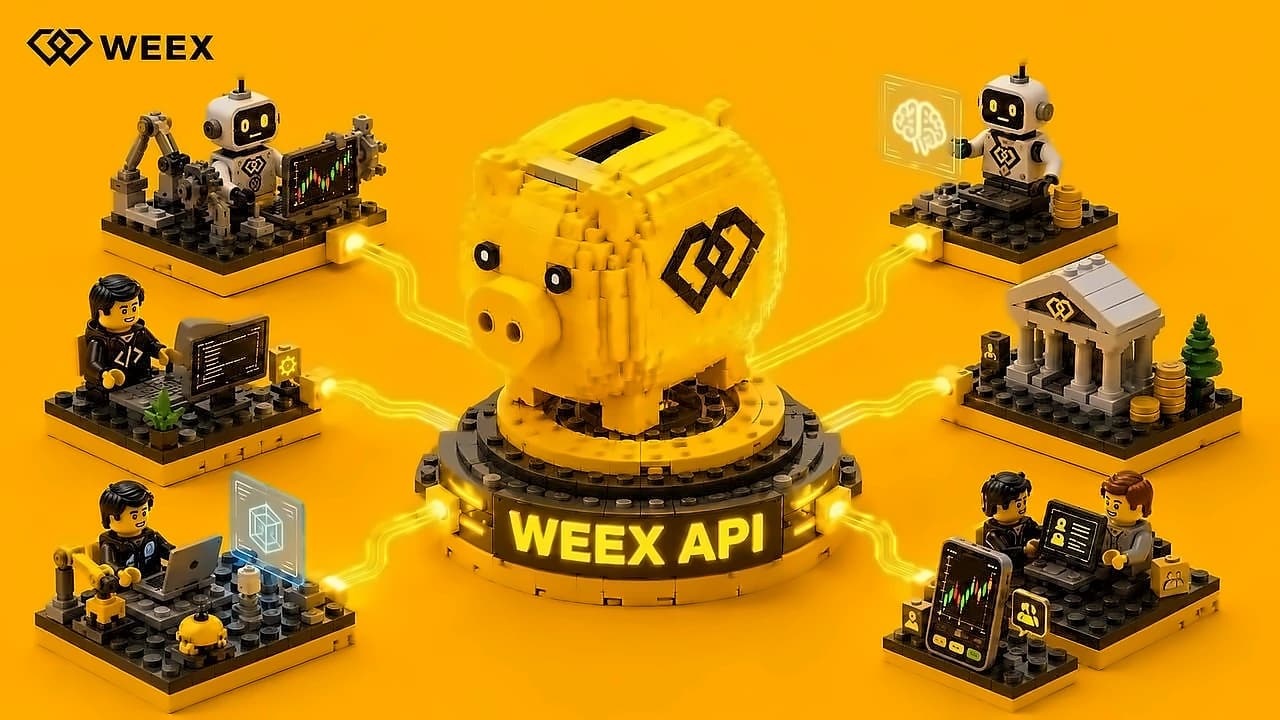
Binance has introduced Agent OS, a comprehensive developer platform that connects AI applications to the exchange's trading, market data, wallet, payment, and on-chain capabilities across both crypto and traditional markets. As announced on August 20, 2026, the platform is built as part of Binance Intelligence, the exchange's strategic initiative for AI-powered products and experiences. Agent OS provides AI builders, fintech developers, and quantitative trading teams with a controlled foundation for creating applications and agents that interact with Binance's financial infrastructure, supporting both ready-made integrations and users' own AI agents. The platform supports integration with major AI tools including ChatGPT, Claude Code, Codex, and VS Code, allowing users to authorize agents to access market data, view account information, and perform supported trading activities subject to configured permissions and limits.
The Model Context Protocol (MCP) Server serves as the connection layer between supported AI clients and the exchange, supporting spot, margin, Convert, and two categories of Binance futures trading products. According to the latest announcement, the MCP Server provides a standardized method for compatible AI clients to discover and call Binance functions, reducing the need for developers to build separate connections for each crypto function. Public market information does not require authentication, with AI clients able to retrieve tickers, order books, candlestick data, and funding rates without Binance account access. Authorized account functions include balance checks and internal transfers, with users able to grant access to supported spot, margin, and Convert products. However, agents cannot withdraw crypto to external addresses or move assets from main Binance accounts into dedicated Agentic subaccounts, as these must be funded separately by users. The MCP Server is an open standard created by Anthropic that gives AI applications a uniform interface for connecting to external tools, allowing agents to discover capabilities and interact with services through a standardized format.
The platform addresses identity challenges through ERC-8004, described as the Trustless Agents standard, which creates three onchain registries covering identity, reputation, and validation. As reported by The Graph, this system allows agents to establish recognizable identities without requiring pre-existing trust between participants. Account abstraction combined with ERC-8004 can create tightly defined permissions, such as authorizing agents to trade only certain amounts daily without receiving unrestricted control over user funds. The Graph supports this layer through Agent0 Subgraphs, which index agent registrations, metadata, reputation information, and validation activity across multiple networks, enabling agents to search for other agents by characteristics without independently scanning blockchain histories.
Agent OS combines five developer components into a unified platform: Binance APIs for trading, market, wallet, and blockchain functions; Wallet Agentic Hub for wallet interactions controlled through user permissions; Binance x402 for payment and settlement tools; Skill Hub providing a directory of modular functions covering trading, wallets, market information, and blockchain activity; and the MCP Server for standardized AI client connections. Binance lists Claude, Claude Code, Codex, ChatGPT, and VS Code as compatible client applications, meaning these clients can connect when they support the required MCP setup. The platform ensures agents cannot access non-trading personal account information, including email addresses or KYC data, while Binance monitors and applies applicable controls to trading activity. Users must fund Agentic subaccounts separately and review permissions before making funds available.
The launch demonstrates exchanges competing to become the execution layer for AI applications, with Coinbase also giving AI agents the ability to spend and trade crypto through wallets equipped with programmable controls. According to The Graph, the company has integrated x402 into its Subgraph Gateways, allowing agents to pay for individual queries in USDC without maintaining traditional API accounts or keys. The Graph currently provides blockchain data infrastructure across more than 60 networks and reported serving more than 1.27 trillion queries to over 75,000 projects as of early 2026. Binance has not announced a deadline for adding more applications or functions, with the platform providing a foundation for expanding wallet capabilities and developer tools over time. Five competitors launched similar systems in the past 30 days, each using different custody architectures ranging from exchange-hosted sub-accounts to self-custodial AI wallets to hardware-wallet spending caps. This includes Coinbase with its Base Layer 2 network integration, Gemini with its conservative approach restricting agents to read operations and spot trading only, MetaMask with self-custodial AI wallets, MoonPay with Telegram integration, and Ledger with hardware wallet spending cap enforcement.