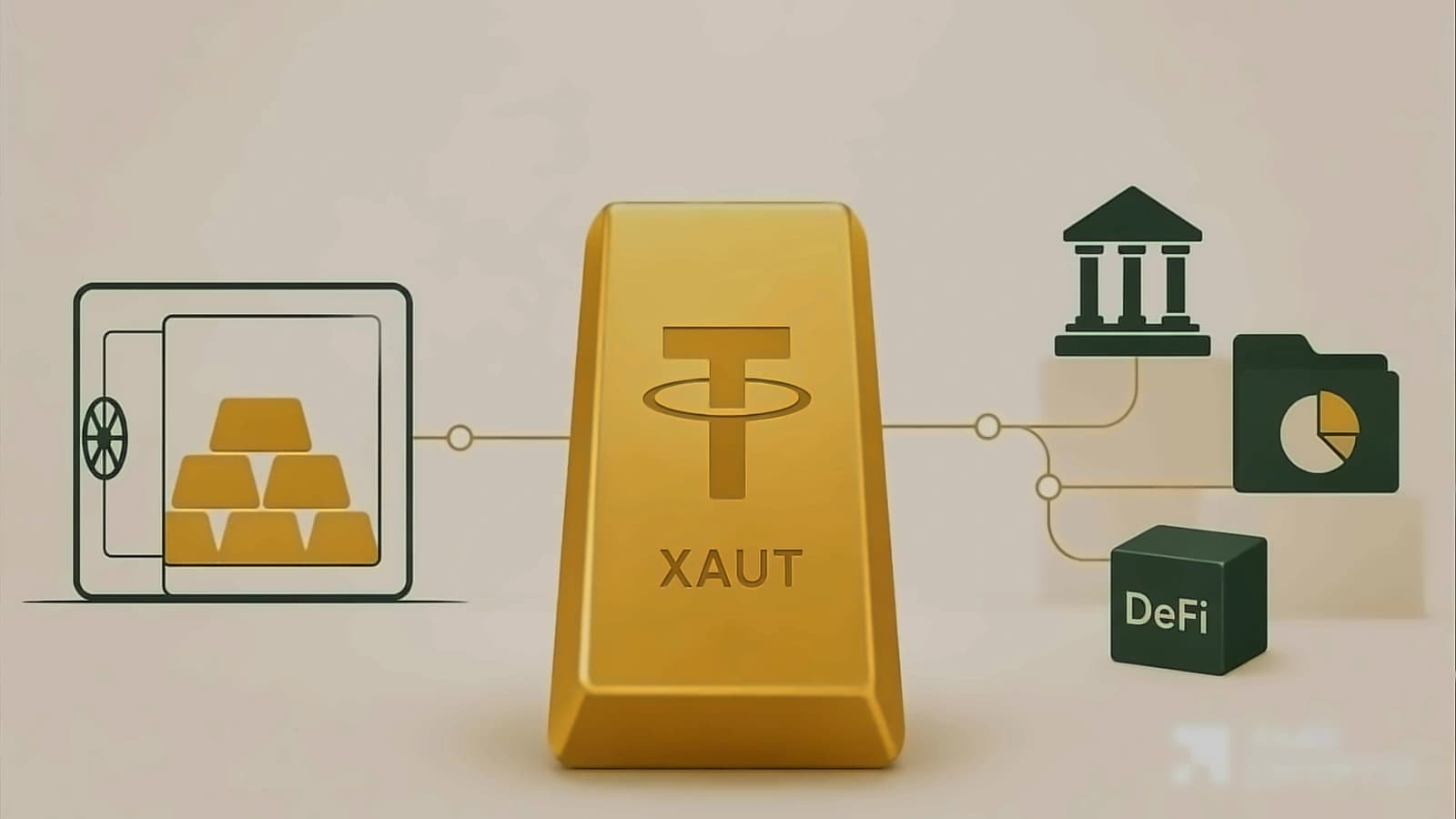
Tether has filed eight trademark applications in South Korea covering its logo, USDT stablecoin, and gold-backed XAUT token, signaling deeper market entry into one of the world's most active cryptocurrency trading regions. According to Etoday citing data from the Korea Intellectual Property Rights Information Service (KIPRIS), the filings were submitted in early May 2025 and cover a broad range of services including digital wallets, virtual asset trading, exchange platforms, lending services, currency exchange, and token issuance and redemption. The XAUT application is notably comprehensive, extending to digital wallet services, virtual asset trading, exchange platforms, lending services, currency exchange, and token issuance and redemption. This comprehensive approach suggests Tether is not merely protecting its brand but laying the groundwork for offering a wider suite of financial services in the South Korean market.
Tether and Gnosis have co-led a $4.4 million seed funding round for Sorted Wallet, a non-custodial crypto wallet designed for mobile devices in emerging markets. According to reports from The Block, the round comprises $3.4 million in equity funding led by Tether and Gnosis, with participation from Movement, Angel Invest Group and individual angel investors including founders of RWA.io. Additionally, $1 million in strategic support is provided by Vox Solutions. The funding round represents a strategic bet on crypto adoption in emerging markets, with both Tether and Gnosis bringing technical expertise to support the wallet's product-market fit and potential for real-world crypto adoption in underserved regions.
Launched in 2022, Sorted is described as the lightest crypto wallet on app stores at just 10MB, making it suitable for mobile devices including stripped-down feature phones. As reported by The Block, the wallet has achieved 500,000 downloads and has its fastest-growing markets in Nigeria, Kenya, Tanzania, Bangladesh and Madagascar. The wallet also maintains market penetration in Central America, including Mexico. Sorted Wallet distinguishes itself from mainstream crypto wallets by focusing on usability on basic mobile devices, with many users in emerging markets relying on feature phones or older Android devices with limited storage and processing power. The wallet currently supports Bitcoin, USDT (Tether), and a handful of other digital assets without requiring high-end smartphones or reliable internet connectivity.
With the additional funding, Sorted intends to expand geographically, particularly targeting South Africa and South Asia, two regions with high mobile money usage but limited access to traditional banking and high-end smartphones. According to the announcement, the team is also releasing a new payment mechanism in May. Tether CEO Paolo Ardoino noted the firm has "reinvested" in Sorted Wallet, which provides a solution for "everyone, regardless of device, economic status, or location." The company must navigate evolving regulatory frameworks in both target regions, where cryptocurrency restrictions have been tightening. The funding will support scaling operations in these underserved markets, addressing the World Bank's estimate that roughly 1.4 billion adults globally remain unbanked, with a significant portion living in South Asia and sub-Saharan Africa.
In the release, Tether's USDT has seen wide adoption outside the U.S., particularly as a low-fee transaction method in emerging markets. Gnosis, a crypto R&D studio that has spun out projects like the non-custodial Safe wallet, also pursues global adoption. As reported by The Block, Daniele Pinna, an investment partner at Gnosis, stated that "Gnosis views Sorted as a key distribution layer for bringing stablecoin-based payments into real-world use, extending accessible financial infrastructure to users beyond the reach of traditional fintech." The diversity of backers in the round, including Movement (a blockchain-focused venture firm) and Angel Invest (a European early-stage investor), suggests broad interest in mobile-first crypto solutions that do not rely on expensive hardware or complex user interfaces.