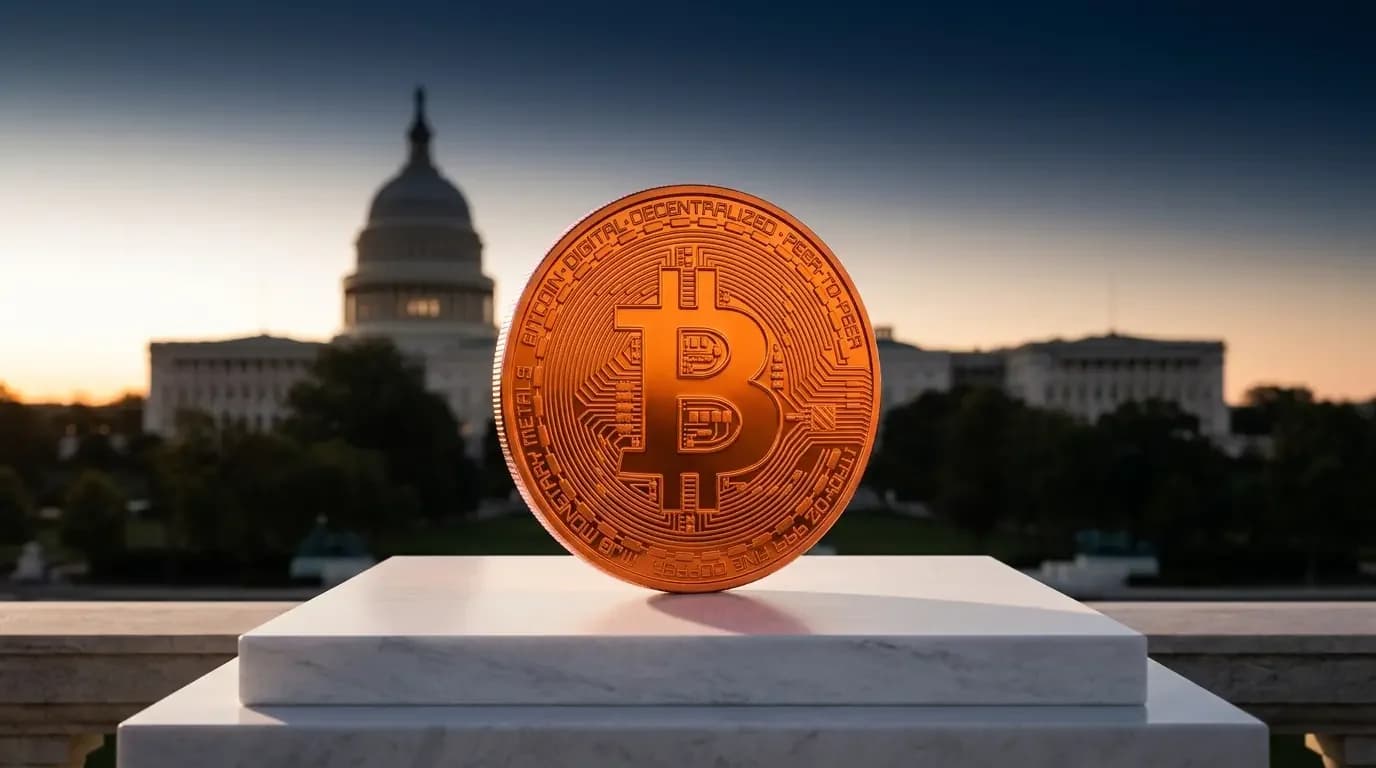
Taiwanese legislator Dr. Ko Ju-chun has outlined a comprehensive five-step roadmap for establishing a strategic Bitcoin reserve, giving the island approximately 80% probability of implementation within five years. According to reports from Bitcoin.com News, this forecast rises to near-certainty within ten years, contingent on favorable political shifts. The roadmap includes serious government research, legal foundation establishment, small digital-asset reserve framework, national vault for existing Bitcoin holdings, and formal reserve legislation. Two critical milestones have already been achieved, with the legislature passing the Virtual Asset Service Act on June 30, 2026, and Dr. Ko formally delivering a Bitcoin Policy Institute report to Premier Cho Jung-tai and central bank Governor Yang Chin-long in April 2026.

The Bitcoin news has generated significant market interest, with BTC USD surging +3.5% overnight and briefly reclaiming $65,000 before settling just below that level. As reported by Bitcoin.com News, daily trading volume has spiked to $31.5 billion since the previous day. Technical analysis suggests Bitcoin is forming a complex inverse head-and-shoulders breakout pattern with a target north of $70,000. The shakeout into CPI formed a second right shoulder with a perfect retest of the diagonal, followed by a clean break above the horizontal neckline. Recent onchain data from Glassnode reveals that leveraged traders on the decentralized exchange Hyperliquid are holding the highest sustained Bitcoin long positioning on record, exceeding exposure seen during the previous run to $83,000. This aggressive positioning raises squeeze risk if Bitcoin fails to hold the $65,000 level.
Dr. Ko emphasizes this strategy as a Bitcoin geopolitical hedge rather than a portfolio diversification move. According to Bitcoin.com News, he argues that with over 80% of Taiwan's FX reserves concentrated in USD-denominated assets, a sovereign Bitcoin position offers digital transferability and verifiability that remains functional under blockade scenarios. He points to cases including Ukraine, Iran, and Bhutan as examples where Bitcoin has begun playing a role in extreme scenarios. Unlike traditional assets, Bitcoin does not belong to any single sovereign state, providing censorship resistance and border-crossing capability that serves as insurance against financial disruption.
The 80% probability carries an explicit condition tied to electoral politics, specifically requiring a center-right party such as the Kuomintang to win the 2028 or 2032 presidential election. As reported by Bitcoin.com News, Dr. Ko notes that the current ruling party is more cautious toward Bitcoin but more open to RWA and stablecoins. The central bank has maintained cautious engagement, with no Bitcoin allocation approved to date. However, with the Virtual Asset Service Act now in force and the Bitcoin Policy Institute research phase formally underway, Dr. Ko's roadmap has progressed to two completed steps out of five.