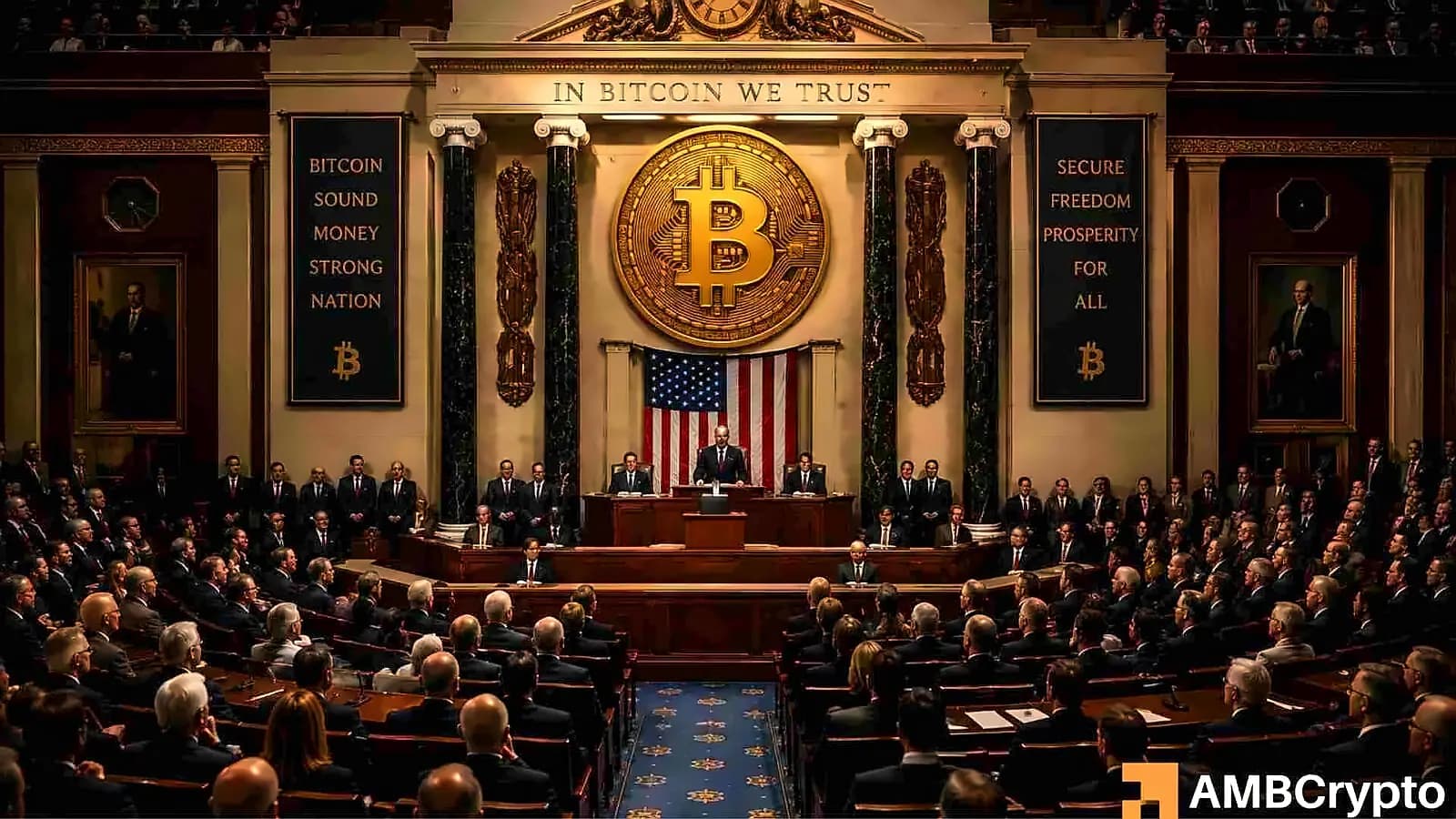
The White House has confirmed a breakthrough update on President Trump's U.S. Bitcoin Reserve initiative, with Patrick Witt, executive director of the president's council of advisors for digital assets, telling podcaster Scott Melker that "We'll have an announcement." Witt emphasized the significance of the development, stating "I wish I could say more. It's a breakthrough as far as getting everything in place, legally sound, properly safeguarding the assets." This confirmation comes after White House crypto adviser Patrick Witt teased the announcement during a panel discussion at the Bitcoin 2026 conference in Las Vegas, telling attendees that Trump's executive order "needs to be followed up with legislation" but that the White House was working on "a big step forward from the executive branch side." The announcement has been met with enthusiasm from crypto market participants, with David Bailey, CEO of struggling bitcoin treasury company Nakamoto, posting "Buckle up" on X, while a crypto fan account called the news "huge."
The United States is moving forward with plans to establish a Strategic Bitcoin Reserve, marking a historic shift in federal monetary policy. According to reports from Bitcoin Magazine, the Mined in America Act, introduced on March 30, 2026, would direct the US Treasury to accumulate up to one million Bitcoin over 20 years. This initiative has been dubbed the Orange Standard, borrowing from the nation's monetary history and relationship with Gold. The legislation aims to acquire approximately 5% of Bitcoin's total supply by reducing Federal Reserve surplus balances without resorting to new money printing. The reserve is already operational, with the US government having locked up over 200,000 Bitcoin as part of the Strategic Bitcoin Reserve and implemented a no-sell pledge by President Trump's 2025 executive order. Coinbase CEO Brian Armstrong has projected that the United States government's Bitcoin holdings could expand into a strategic asset exceeding $1 trillion in value, accounting for both existing stockpiles and prospective growth under proposed policies.
The initiative builds upon Senator Cynthia Lummis's (R-WY) earlier efforts, who introduced the BITCOIN Act (S.4912) in 2024, proposing the Treasury purchase 1 million BTC over 5 years and hold it for at least 20 years. As reported by Bitcoin Magazine, Senator Bill Cassidy (R-LA) later joined the effort with the Mined in America Act, which extends the acquisition timeline and incorporates a domestic energy infrastructure component. The BITCOIN Act (S.954) was introduced on March 11, 2025, aiming to codify the reserve and authorize purchases of up to 1 million BTC over five years. The plan calls for financing through adjustments to existing federal resources, without raising overall spending. The legislation still requires Senate committee approval, reconciliation with a House counterpart introduced by Representative Nick Begich, and final votes to become law. Legal analysts view this reserve structure as a significant shift in treating Bitcoin similarly to gold in the federal portfolio. U.S. lawmaker Nick Begich, a Republican from Alaska, has announced plans to reintroduce legislation to Congress, rebranding it as the American Reserves Modernization Act (ARMA), emphasizing the importance of treating Bitcoin "like the reserve asset that it is."

The US government has already seized approximately 200,000 BTC through criminal and civil asset forfeiture proceedings, which were deposited into the Strategic Bitcoin Reserve under a no-sell rule by President Trump's 2025 executive order. According to Bitcoin Magazine, a separate 2025 executive order established a United States Digital Asset Stockpile for non-Bitcoin cryptocurrencies, with Bitcoin alone being treated as a permanent reserve, marking a deliberate distinction in federal policy. These coins were primarily obtained through law enforcement seizures linked to criminal activities, such as dark web operations and ransomware cases. In the past, agencies typically sold these assets via auctions, but a key policy shift took place in March 2025 when an executive order established the Strategic Bitcoin Reserve, directing officials to retain and consolidate seized Bitcoin rather than dispose of it. The legislation also creates Bitcoin green zones, incentivizing miners to operate near renewable energy sources and stabilizing the grid by using excess power during low-demand periods.
The Strategic Bitcoin Reserve initiative comes as the broader crypto market continues to face challenges, with Bitcoin trading around $60,000 as of recent lows in February, down roughly 40% from its all-time high in October 2025 and plunging the crypto market into what analysts describe as a brutal winter crisis. As reported by Bitcoin Magazine, proponents argue three main points for Bitcoin's suitability as a reserve asset: its fixed supply of 21 million coins with issuance halving every 4 years, making it less susceptible to manipulation than gold's 1.5-2% annual supply growth. Bitcoin's easily verifiable and portable nature through public blockchains contrasts with gold's opaque auditing processes, while rising geopolitical interest from nations like El Salvador adopting Bitcoin as legal tender supports the initiative. Peter Brandt's cycle model projects Bitcoin could reach $300,000 to $500,000 by September-October 2029 conditional on the four-year halving rhythm holding, with a possible dip to test the February 2026 swing low near $63,000. For cryptocurrency markets, moving from occasional government sales to sustained holding or accumulation would diminish supply pressure from prior auctions, which have sometimes affected price stability, and promote greater predictability and draw in more institutional interest.
Coinbase CEO Brian Armstrong highlighted potential international repercussions, indicating that strong US leadership in Bitcoin reserves could inspire other G20 nations to develop analogous approaches. He suggested that such developments might accelerate the acceptance of digital assets as sovereign holdings, offering benefits like enhanced transparency and ease of transfer compared to traditional reserves such as gold. For the broader cryptocurrency ecosystem, this shift could prove supportive by moving from occasional government sales to sustained holding or accumulation, which would diminish supply pressure from prior auctions and promote greater predictability. However, industry professionals point out notable hurdles, including that the BITCOIN Act requires approval through the full legislative process and could encounter changes, delays, or rejection. Executive directives, effective in the short term, may not endure across administrations, and there remains a clear distinction between maintaining current assets and pursuing large-scale new purchases involving substantial fiscal and political considerations. Attaining the trillion-dollar milestone would require ongoing bipartisan backing and favorable global economic dynamics, illustrating Bitcoin's evolution toward recognition as a durable macroeconomic and strategic tool.