SUI has declined to $1.04 despite introducing gasless stablecoin transfers for seven tokens including USDC, as reported by AMBCrypto and TradingView. The token is down nearly 2% in the past 24 hours, with broader cryptocurrency market weakness continuing to temper enthusiasm for the protocol's utility expansion. However, volume has increased by approximately 15% following the announcement, suggesting fresh demand for the fee-free transfer capability. The price action reflects market uncertainty about whether the gasless feature will translate into sustained token demand, with traders closely watching whether stablecoin volumes translate into durable SUI usage and fee generation. After the gasless stablecoin announcement, SUI rose modestly from $1.08 to $1.16 on May 21, but gains were quickly capped amid a broader market pullback. The token has largely stabilized after a pronounced correction from highs above $4.30 in July 2025 and is currently testing an important support zone around $1.10.
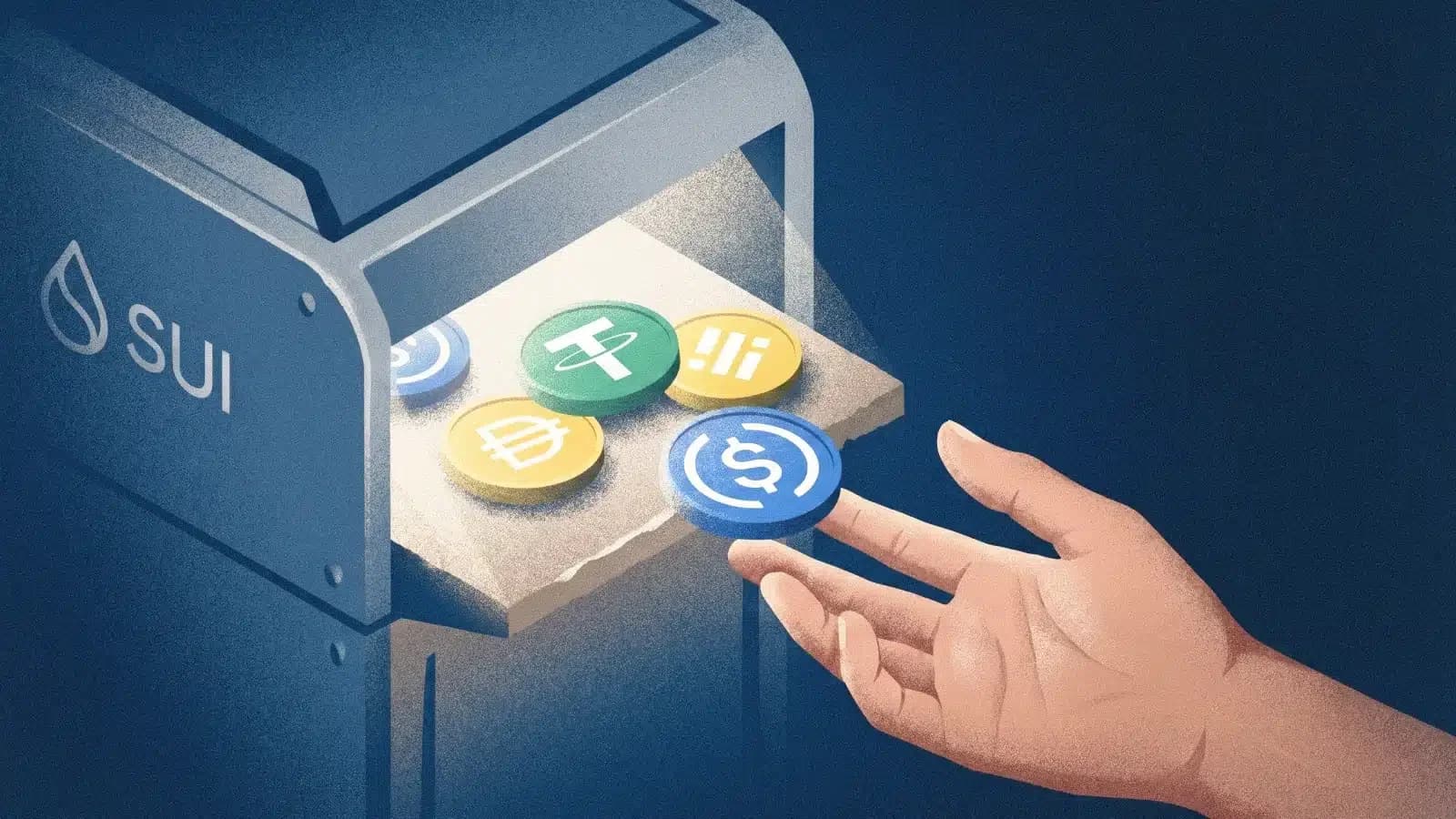
SUI has introduced gasless stablecoin transfers as a protocol-level upgrade that enables users and businesses to send supported stablecoins peer-to-peer without paying gas fees or requiring separate SUI token balances. According to reports from AMBCrypto and BitcoinEthereumNews.com, the feature supports seven stablecoins including USDsui, SUIUSDe, AUSD, FDUSD, USDB, USDC, and USDY, allowing institutional users to move across these stablecoins with zero gas fees on supported transfers. This represents a significant shift toward zero-fee stablecoin settlement on the network, solving one of the biggest user experience problems that still plagues most blockchains. Under the new configuration, users no longer need to hold SUI to send USDC and other supported stablecoins, which should materially change user behavior and potentially lift payment/transfer activity. Fireblocks has integrated this solution prior to the full rollout, enhancing institutional accessibility by allowing enterprises to manage stablecoin activity through trusted infrastructure. The protocol's gasless feature may materially change user behavior, with no per-transfer SUI requirement potentially accelerating stablecoin volume growth on Sui, potentially eroding some market share from entrenched rails such as Tron and Ethereum.
The broader Sui ecosystem has seen significant institutional infrastructure expansion alongside the gasless transfer feature. CME Group launched SUI futures on May 4, offering both micro-sized (5,000 SUI) and larger contracts (50,000 SUI) pending regulatory review. Grayscale's GSUI and Canary Capital's SUIS ETFs now provide regulated exposure to the Sui blockchain, integrating staking rewards directly into fund net asset value through a dual-return structure. This allows investors to benefit from both SUI price appreciation and proof-of-stake yields through traditional brokerage accounts, eliminating the need for direct token custody or validator management. Additionally, SUI Group Holdings increased its treasury to 108.8 million tokens as of May 19, 2026, with the stock trading at approximately 0.91 times its market net asset value. The company's substantially staked holdings generate an estimated annual yield of 1.8%, positioning it beyond simple accumulation through strategic ecosystem investments.
SUI's total value locked (TVL) has decreased significantly from approximately $4.3 billion in October to less than $600 million today, reflecting both withdrawals and the reallocation of liquidity across DeFi ecosystems, as reported by TradingView. The gasless stablecoin capability is an attempt to reinvigorate on-chain activity and attract payment-focused use cases that historically favour lower-cost chains. While Sui's stablecoin market cap remains modest at $500 million compared to $90 billion on TRON and $163 billion on Ethereum, the removal of transaction fees lowers the barrier for institutional and retail flows to the network. The network has demonstrated 9% growth in Q2, adding roughly ₹400 crore ($50 million) in net inflows. However, SUI's native stablecoin has just recently passed the $75 million in market cap, while USDC has issued less than $400 million on top of Sui, less than 1% of its total market capitalization. This growth trajectory supports the network's positioning in the global payments infrastructure market, though the token's recent decline suggests investors are waiting for concrete evidence of the gasless feature's impact on SUI demand.
SUI's transaction count has totaled around 1.6 billion since Q2 2025, according to AMBCrypto data. While quarter-over-quarter activity has declined, SUI processed 215 million transactions in Q2 2026, significantly outpacing Ethereum's 117 million transactions during the same period. The network has facilitated transactions for over a trillion dollars in stablecoins since August 2025, even before implementing this new gasless transfer service. This performance demonstrates SUI's sustained real on-chain usage and positions it as a leader in altcoin transaction volumes, though the protocol's low stablecoin barrier versus much larger TRON/ETH stablecoin bases represents competitive pressure points that traders are closely monitoring. Looking at intraday metrics, trading volume has increased over the past 24 hours with CoinMarketCap data showing this market activity gauge is up about 15%, indicating renewed participation. If buying pressure continues and broader sentiment turns constructive, SUI could test resistance in the $1.20–$1.40 range as traders re-price the token for improved utility and the potential for higher stablecoin throughput on the network.