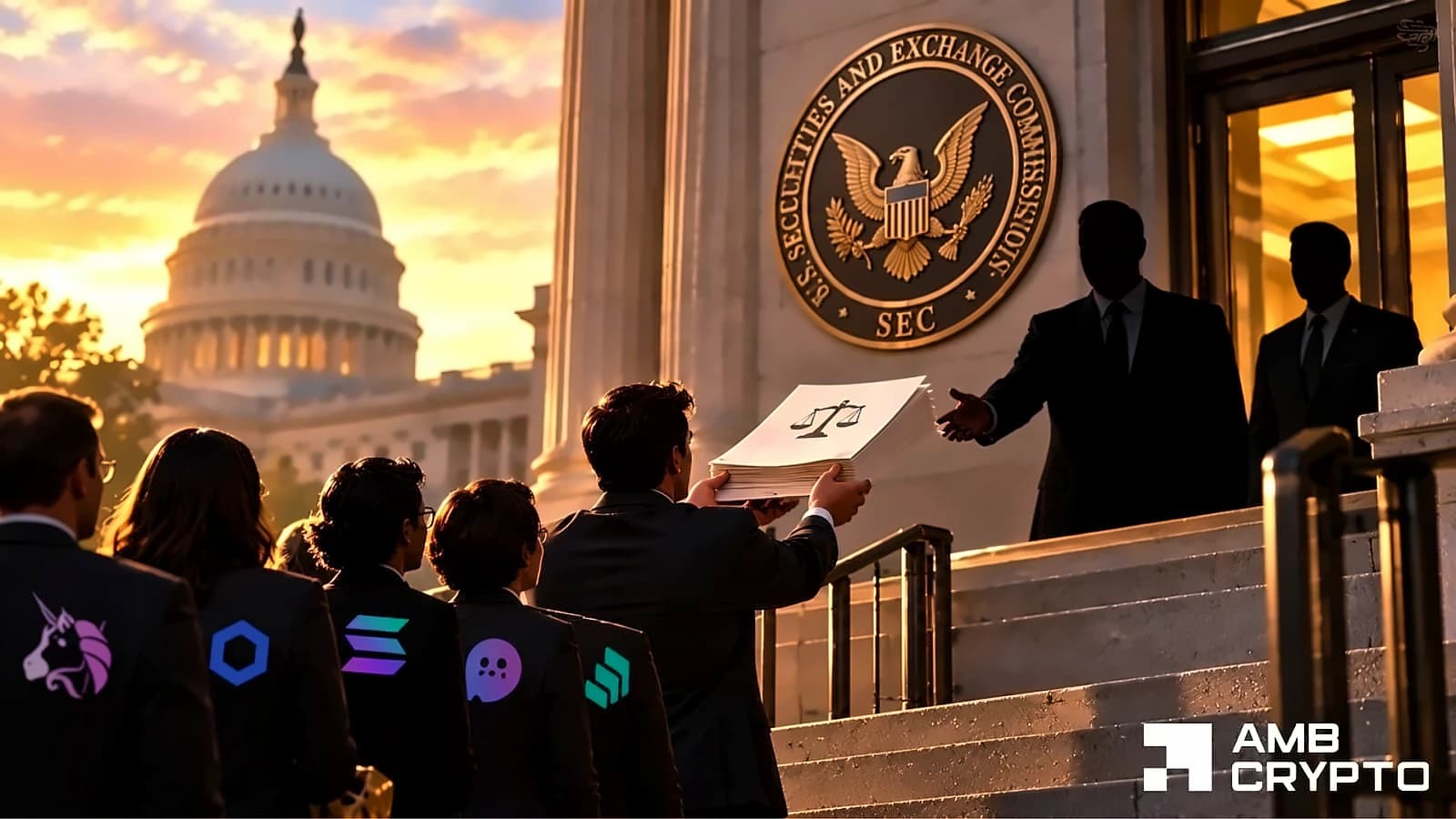
The Securities and Exchange Commission (SEC) has submitted a proposal on June 11 to rescind Rule 611 of Regulation NMS, marking a significant regulatory milestone for tokenized equity trading. This two-decade-old rule, adopted in 2005 to protect investors from inferior pricing, has been identified as one of the largest structural barriers to DeFi-based trading of tokenized equities. According to Galaxy Digital's Alex Thorn, the rule was designed to prevent stock trades from executing at prices worse than protected quotes displayed elsewhere, but AMMs cannot comply with 611 by construction due to their bonding curve pricing mechanisms and block-time execution. The proposal would also eliminate Rule 610(e), which restricts locked and crossed quotations, along with related definitions, creating a clearer pathway for blockchain-based stock trading.
Solana is emerging as a leading destination for tokenized assets despite SOL's technical weakness. According to reports from AMBCrypto, the network has attracted significant institutional interest with Exodus Markets launching access to over 200 tokenized stocks, ETFs, and RWAs. The momentum extends beyond equities, as Securitize is expanding its tokenized AAA CLO fund to Solana in partnership with BNY, with Ethena planning to allocate $250 million to this fund. CLOs represent a substantial market, accounting for more than $1.3 trillion in global issuance, making them one of the largest fixed-income markets globally. This positioning places Solana at the center of the institutional capital settlement layer, with the global equity market worth $100 trillion creating substantial opportunities for tokenized asset adoption.
Liquidity on Solana continues to trend sharply higher, with Ethena's USDe supply surging more than 260% over the past month to exceed $500 million. As reported by AMBCrypto, this growth demonstrates the network's expanding institutional appeal. The $250 million allocation to Securitize's AAA CLO fund connects one of crypto's fastest-growing stablecoin protocols with tokenized products, further expanding the range of institutional assets on Solana. This activity occurs while SOL remains under technical pressure, creating a notable disconnect between the network's improving fundamentals and the token's price action. The network's strong performance in stablecoin and tokenization adoption contrasts with other major blockchains, positioning Solana as a preferred destination for institutional capital settlement.
The SEC's proposal represents a fundamental shift in US equity market structure, with Rule 611 governing trading centers to prevent stock trades from executing at prices worse than protected quotes. According to Galaxy Digital's analysis, this framework is harder to apply to automated market makers (AMMs), which price trades through liquidity pools, bonding curves, slippage, and block-time execution rather than traditional exchange mechanisms. The proposal would shift focus more heavily toward best execution, the broker-dealer obligation to use reasonable diligence to obtain favorable terms for customers under prevailing market conditions. As Max Resnick, lead economist at Anza, notes, the framework is more compatible with blockchain trading than the per-trade NBBO protection requirement, allowing brokers to review execution quality over time and compare venues. This regulatory change could unlock tokenized equity trading, with Christopher Perkins of 250 Digital Asset Management describing it as 'a whole new ballgame' for DeFi-based trading.
The SEC's proposal follows what industry experts describe as the 'Project Crypto' playbook, with Chairman Paul Atkins framing it as an overdue review of a rule that created unintended consequences. The agency stated the change is intended to simplify market structure, reduce costs, and allow competition and innovation to shape equity trading. SIFMA, representing broker-dealers, investment banks, and asset managers, welcomed the review while warning that the US market structure is made up of many interconnected pieces requiring careful study of effects on investors, execution quality, transparency, and overnight trading development. Anthony Bassilli of Coinbase Asset Management described the proposal as a 'clearing hurdle for tokenizing stocks' in the US, while Christopher Perkins noted that Regulation NMS and the NBBO have been among the biggest obstacles to unlocking tokenized equities. The proposal has drawn attention from tokenization advocates, with Atkins and Commissioner Hester Peirce previously discussing an innovation exemption that could allow limited experimentation with tokenized securities trading through automated market makers.