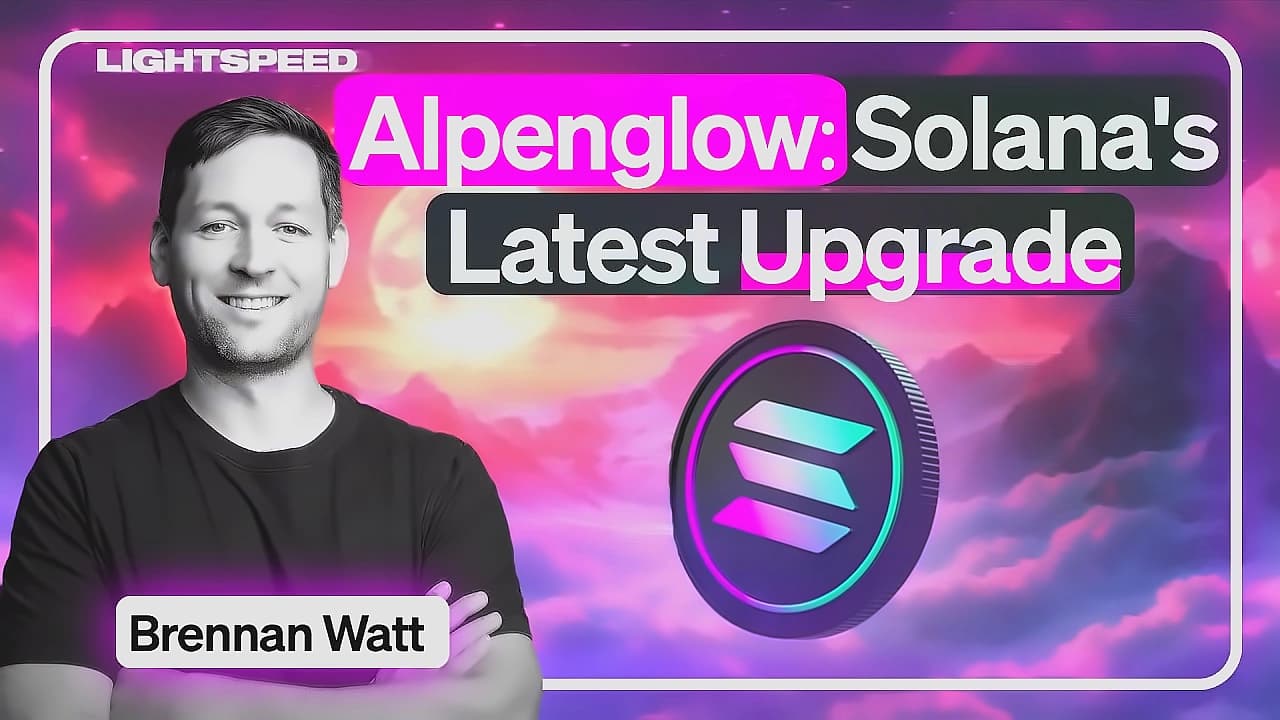
Solana has achieved a major milestone with Alpenglow, the biggest consensus overhaul in Solana's history, now live for testing on community testnet since May 11. The upgrade replaces both Proof of History and TowerBFT with a new consensus protocol targeting 150-millisecond finality, representing an 80-100x improvement over the current system. As per Anza, the Solana Labs spinout leading the upgrade's development, 98.27% of participating validators approved the proposal under SIMD-0236, with only 1.05% voting against and 0.36% abstaining. Roughly 52% of the network's total stake participated in the vote, demonstrating overwhelming community support. The upgrade introduces Votor, a new voting protocol that collapses consensus into one or two rounds instead of the current 32-round process, achieving finality in 100 milliseconds at 80% stake participation and 150 milliseconds at 60% participation. The Rotor data relay protocol also replaces Turbine, using stake-weighted relays and erasure coding for more efficient transaction broadcasting.
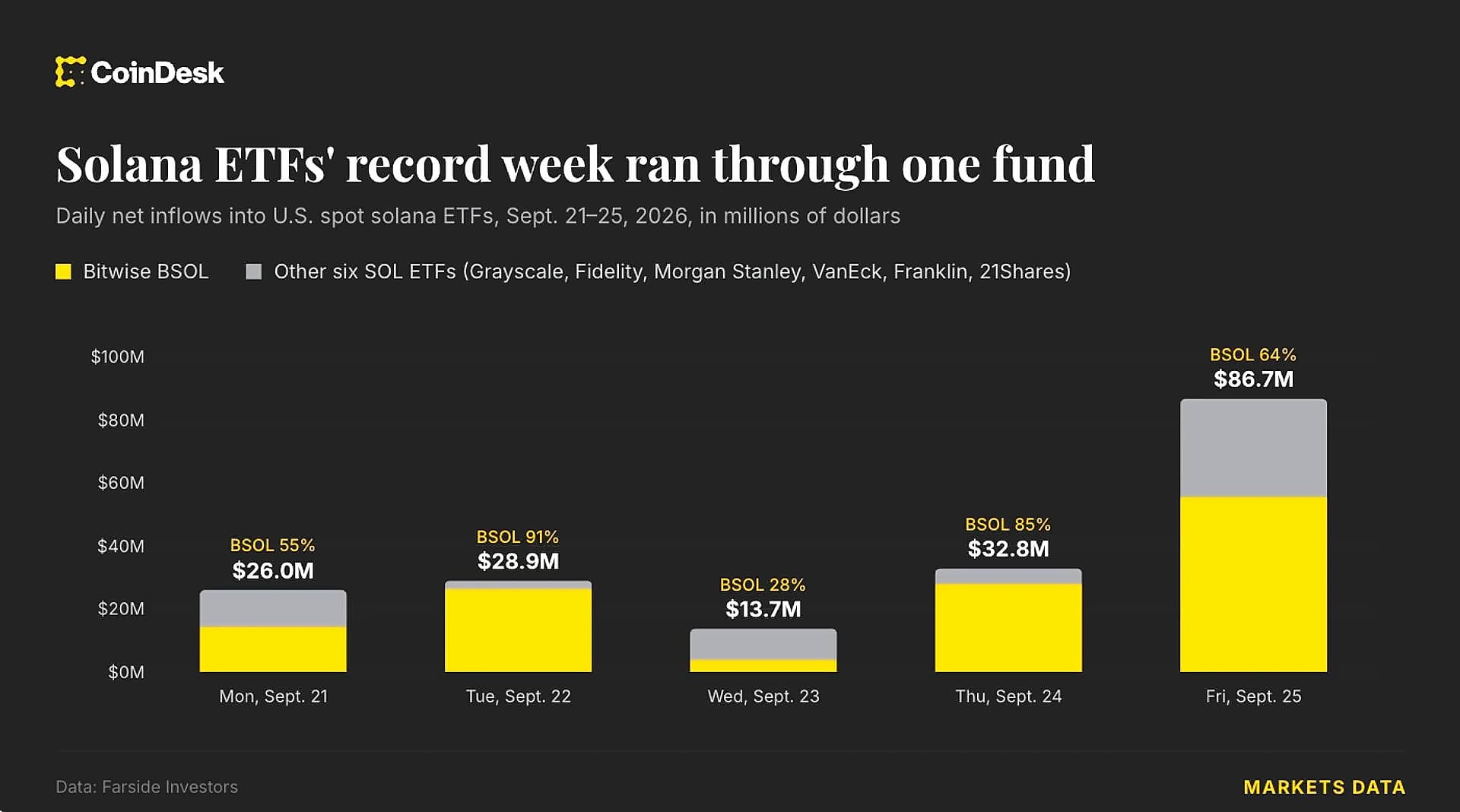
Solana has experienced a remarkable surge in institutional confidence, with Solana ETFs attracting nearly $1.12 billion in cumulative inflows and maintaining 11 consecutive trading sessions of inflows through May 14. The biggest single-day haul came on May 11 when SOL ETFs pulled $26.57 million, coinciding with the Alpenglow upgrade going live on community testnet. The institutional signal became even stronger on May 14 when Dartmouth College's $9 billion endowment disclosed a $3.3 million position in the Bitwise Solana Staking ETF, marking a significant shift from holding over $10 million in BlackRock's iShares Bitcoin Trust in January. However, Solana is currently trading near the $92 area after facing rejection from the $98 resistance zone, with the altcoin recently testing the channel ceiling near $98 but facing a quick rejection and pulling back toward the $91 area.
According to MCO Global Español analysis, Solana is currently trading near the $92 area after bouncing from the 50% retracement zone on the 4-hour chart. The price pulled back after moving toward the $97 area and dropped into the orange Fibonacci retracement box, where the 38.20% level sits near $91.97 and the 50% level sits near $90.25. If Solana stays above the recent intraday low near the lower part of the orange box, the white Elliott Wave scenario remains active, with potential for another move toward the $97 resistance area. A stronger continuation would put the next upside zone near $110 to $112, while the wider upper target area sits near $121.96 based on horizontal resistance lines. However, if Solana loses the intraday low and breaks below the $90.25 area, the short-term bullish setup weakens, with potential moves toward $77.95 and $75.40 support levels. The Alpenglow upgrade's Q3 mainnet activation could turn the current $100 million monthly run-rate into something much bigger, while staking yields through the Bitwise SOL fund give institutions yield on top of price exposure.
Alpenglow's 150-millisecond finality target positions Solana to compete with traditional payment networks, with finality approaching the physical limits of information travel speed. As per Anatoly Yakovenko at Consensus Miami 2026, Alpenglow could reach mainnet as soon as next quarter if testing continues smoothly, potentially launching in Q3 2026. The upgrade's performance is near the speed of light around the globe, making Solana faster than most centralized payment rails - a typical Visa authorization takes between 1-3 seconds compared to Solana's current 12.8 seconds. This speed transformation opens applications previously unviable on public blockchains, including real-time order books with sub-second settlement, on-chain gaming with no perceptible lag, and tokenized financial products that settle as fast as they trade. The upgrade also introduces a fixed 400-millisecond block time with local timeouts tolerating up to 5% clock drift, while fundamentally changing MEV economics by shrinking the window for profitable transaction reordering when blocks finalize in milliseconds rather than seconds.
According to Kaiko Research, Bitcoin's dominance in the crypto market is strengthening in 2026, with large-cap altcoins like Ethereum, Solana, XRP, and Cardano showing higher volatility and tighter correlation to Bitcoin's price movements. This trend suggests that while Solana continues to outperform Bitcoin with its 10x rally in early May, the broader market dynamics favor Bitcoin dominance. The correlation data indicates that altcoins are increasingly moving in tandem with Bitcoin's price action, potentially limiting Solana's ability to maintain independent momentum. Despite this headwind, Solana's strong institutional backing through ETF inflows and growing corporate adoption continues to provide fundamental support for the network's long-term prospects. The Alpenglow upgrade's Q3 mainnet activation could turn the current $100 million monthly run-rate into something much bigger, while staking yields through the Bitwise SOL fund give institutions yield on top of price exposure.