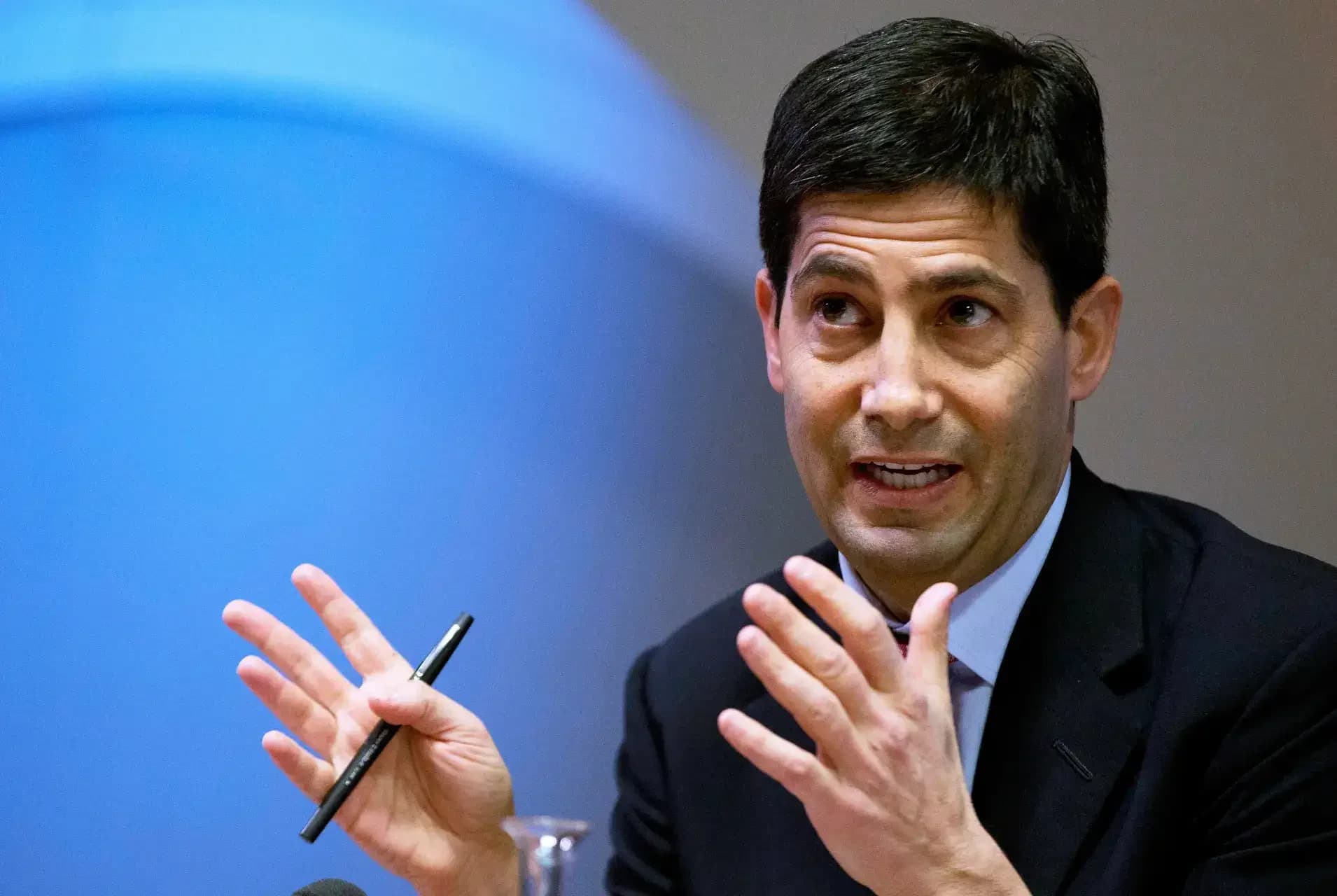
The Senate voted 54-45 to confirm President Donald Trump's pick Kevin Warsh as Federal Reserve Chair, ushering in a crypto-friendly leader to the central bank. Warsh previously served on the Federal Reserve's Board of Governors from 2006 to 2011 under Presidents George W. Bush and Barack Obama, and also worked as a banker at Morgan Stanley. Financial disclosures revealed that Warsh holds investments tied to several crypto companies and projects, including decentralized derivatives exchange dYdX, decentralized exchange protocol Lighter, venture capital firm Polychain Capital, NFT company Dapper Labs, and direct exposure to native tokens for Solana and Optimism. During an initial Senate Banking Committee hearing last month, Warsh faced extensive questioning about interest rates and called bitcoin an "important asset that can help inform policymakers."
The Senate Banking Committee markup is scheduled for today, May 14, with committee members having already filed over 100 amendments to the crypto legislation. Bitcoin is currently holding just below a key resistance level as traders await the Senate CLARITY Act vote. According to journalist Sander Lutz, one banking leader noted that "Thursday is Thursday, and there are 24 members who will opine, and we still have 76 members left to go before this thing is finished." Bitcoin has climbed back above $81,000 following hotter-than-expected inflation data, with traders now focusing on the producer price index (PPI) report due today and the Senate CLARITY Act markup. MN Fund chief investment officer Michael van de Poppe stated on X that Bitcoin's price could rally to $90,000 after the expected CLARITY Act markup, noting that "this can literally go both ways." If macro pressure continues easing, Bitcoin could retest resistance around $82,000 before making a push toward $85,000, with the upcoming Senate vote serving as a potential catalyst for a move toward $90,000 in a matter of days.
The Blockchain Regulatory Certainty Act (BRCA) has emerged as the most critical provision in the Senate CLARITY Act, with advocates warning that without robust BRCA protections, the entire bill risks becoming worthless. According to Bitcoin Magazine, Section 604 of the current Senate draft addresses developer protections and whether software developers can be held liable as money transmitters under federal law. The BRCA, co-introduced by Senators Cynthia Lummis (R-Wyoming) and Ron Wyden (D-Oregon), clarifies that software developers and infrastructure providers who do not custody or control user funds are not money transmitters under federal law. Without this protection, developers face potential criminal prosecution under Section 1960 of the federal criminal code for simply publishing software code, as demonstrated by the criminal convictions of Tornado Cash and Samourai Wallet developers in 2025.
The American Bankers Association (ABA) has launched an aggressive lobbying campaign against the CLARITY Act, with members reportedly sending over 8,000 letters to Senate offices urging tighter stablecoin yield restrictions ahead of today's markup. According to journalist Eleanor Terrett, there was no separate phone call campaign by the banking industry, with the pressure focused on a single contested phrase. The banking lobby argues that permitting stablecoin issuers to offer yield could accelerate deposit outflows from banks, particularly smaller and community-based institutions. The ABA warns that allowing yield could raise the stablecoin market from around $300 billion today to as much as $2 trillion, creating significant competitive pressure for traditional financial institutions. Despite banking industry opposition, retail traders remain bullish on the CLARITY Act, with 49% of 3,500 participants in an ongoing Stocktwits poll predicting the bill passes both chambers in 2026.
The overall cryptocurrency market moved 1.5% lower today, dropping to nearly $2.68 trillion as traders faced another difficult trading session. According to CoinGlass data, more than $278 million in liquidations hit traders across major exchanges, with long bets accounting for over $165 million. Dogecoin (DOGE) and Binance Coin (BNB) led gains among the top 10 cryptocurrencies by market capitalization, with DOGE's price rising over 4% to around $0.114 and BNB's price gaining 3.5% to around $85. Ethereum (ETH) and Ripple's XRP (XRP) also outperformed Bitcoin, with ETH's price climbing back above $2,300, rising 1.3% in the last 24 hours and XRP's price edging 0.8% higher to around $1.47. However, nearly one-third of traders believe nothing meaningful will come out of the CLARITY Act, with some warning that hotter producer inflation data could reverse Bitcoin's gains in early morning trade.
The updated CLARITY Act establishes a multi-agency regulatory structure that provides clarity across the entire digital asset ecosystem. The U.S. Securities and Exchange Commission will oversee securities-like tokens, while the Commodity Futures Trading Commission gains jurisdiction over crypto commodity spot markets. The legislation includes dedicated frameworks for DeFi and provides legal protections for open-source developers. The 309-page manager's amendment issued by Chairman Tim Scott (R-SC), Senator Cynthia Lummis (R-WY.), and Thom Tillis (R-NC) represents a landmark shift from regulatory uncertainty to comprehensive digital asset framework, with the committee having until May 13 to submit amendments before the official markup session begins. The bill also includes rules around stablecoins and restrictions involving passive interest products connected to them.