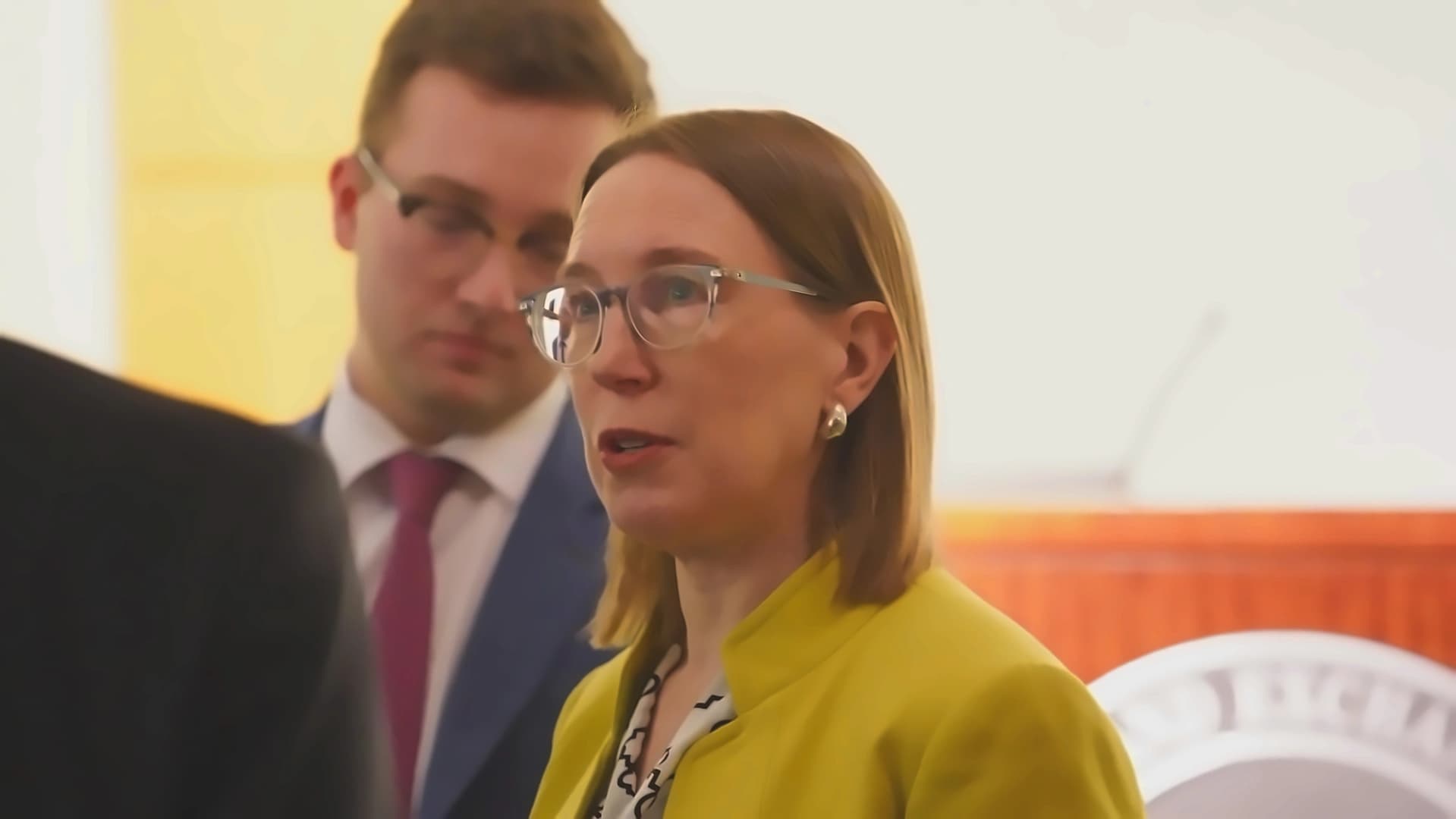
U.S. Securities and Exchange Commission (SEC) Commissioner Hester Peirce issued a significant warning about decentralized finance (DeFi) regulatory scope on Wednesday, July 22. In her official statement titled 'Headstands and Summervaults', Peirce stated that crypto vaults and onchain lending strategies may fall under federal securities laws depending on how they are structured and managed. She emphasized that moving crypto activities onto blockchain rails does not automatically change their legal status, stating that 'Tokenized securities are still securities' and that principle holds for vaults. Peirce directly warned that attempts to disguise the management of other people's money as 'smart' blockchain technology will no longer work, inviting developers to engage with the SEC rather than assuming blockchain technology provides regulatory exemption. According to Crypto.news, Peirce noted that the SEC has spent the past year and a half clarifying which crypto assets and activities fall under federal securities laws, and stressed that a more tailored approach to crypto does not mean every product sits outside the agency's reach.
Peirce's comments immediately impacted crypto markets, with Morpho's token falling about 5% following the statement, as reported by CoinDesk. The commissioner warned developers against assuming blockchain technology places them outside the SEC's regulatory remit, stating that 'If you do headstands, backflips and other gymnastics to read the law so that it does not apply to crypto assets and activities that are well within the scope of the federal securities laws, you will have a painful fall'. She specifically noted that like many other new technologies in crypto, the term 'vault' lacks a clear, widely accepted definition, and its functions and operating strategies are evolving quickly. Peirce welcomed inquiries from market participants that design or operate vaults or support on-chain lending services, and did not call for a ban on crypto vaults or onchain lending. Instead, she invited developers and operators to contact the SEC when they are unsure whether their products fall under federal securities laws.
According to data from Vaults.fyi reported by CoinDesk, vaults have become one of DeFi's fastest-growing products with over $8.6 billion in assets across 788 curated vaults, reaching 1.4 million users as of July. These vehicles allow users to deposit crypto into smart contracts that automatically allocate capital across lending markets and other yield-generating strategies. Users receive returns while vault rules or professional managers known as vault curators determine fund deployment locations. The sector has expanded beyond DeFi to include major exchanges and brokerages like Coinbase and Robinhood as a way to offer users yield on their stablecoin balances. As reported by Crypto.news, crypto vaults let users deposit assets into smart contracts that direct funds toward yield-generating activities such as staking and lending, with some following fixed rules written into code while others give managers or curators discretion over where to place funds. According to Peirce's latest statement, vaults that allocate assets by holding or investing in securities could also qualify as investment companies, with the distinction mattering significantly for regulatory compliance.
Onchain lending strategies raise separate regulatory concerns as platform operators often set interest rates, loan-to-value limits, and liquidation thresholds, creating securities-style notes regardless of the underlying asset backing. As reported by Crypto.news, Peirce noted that crypto lending services may intersect with federal securities laws in several ways, with on-chain loans having characteristics of notes that qualify as securities depending on the purpose of the parties to the transaction, how they are offered and distributed, and other relevant factors. The commissioner specifically warned that creators of individual vaults on platforms such as Hyperliquid could fall into the same trap when a trader launches a public vault and other users deposit funds to copy their derivatives trades, this may amount to the activity of an unregistered investment adviser. The main risk indicators include if a pool or strategy is managed by a specific team, trader, or group of people rather than by a fully autonomous and immutable algorithm, it may constitute an investment contract. Peirce added that active vault managers may trigger investment adviser obligations, a separate compliance layer beyond fund registration, with some vaults resembling mutual funds as actively managed vault curator strategies gain traction in DeFi.
Increasing regulatory scrutiny is pushing Bitcoin-backed lenders toward lending products and custodial services that offer increased safety and protection. Ledn reports approximately $714 million in outstanding BTC-backed loans backed by 19,685 BTC and has processed more than $10 billion in loans since 2018. The platform separates customers' collateral from its other operating activities, while Strike has removed price-triggered liquidation risks and allows borrower repayments at any time without missing payments. In contrast, Unchained provides borrowers verifiable on-chain control using multisig custodies, highlighting the growing specialization of crypto-backed lending markets. Centralized Bitcoin-backed lenders continue to attract long-term Bitcoin holders seeking fiat liquidity without selling their assets, while decentralized lending markets support a wider variety of collateral including Bitcoin, Ethereum, and stablecoins. As utilization rates and borrow APRs adjust to market conditions, capital moves more actively across DeFi, supporting higher trading activity while CeFi borrowers prioritize capital preservation.
Peirce's statement comes as the SEC continues reviewing tokenization and tokenized markets, with securities transfer groups urging the agency to favor issuer-backed tokenized stocks and draw clearer lines around third-party products. As reported by Crypto.news, Peirce plans to leave the SEC in November to join Regent University School of Law, having led the Crypto Task Force since January 2025. The warning also connects with the SEC's wider work on tokenized markets, with the agency continuing to work on token status, registration and market structure. Meanwhile, lawmakers are working on the CLARITY Act, which aims to define the roles of the SEC and Commodity Futures Trading Commission across digital asset markets, remaining part of the wider debate over how U.S. regulators should divide oversight of crypto activities. According to AMBCrypto, the SEC's approach suggests that future regulatory oversight will begin to evaluate the design and management of the protocol itself, in addition to evaluating the actual crypto asset, with each structure requiring a fact-specific assessment rather than blanket classification. Whether vault designers accept Peirce's invitation for compliant collaboration rather than risk enforcement may shape onchain yield products through the rest of 2026.