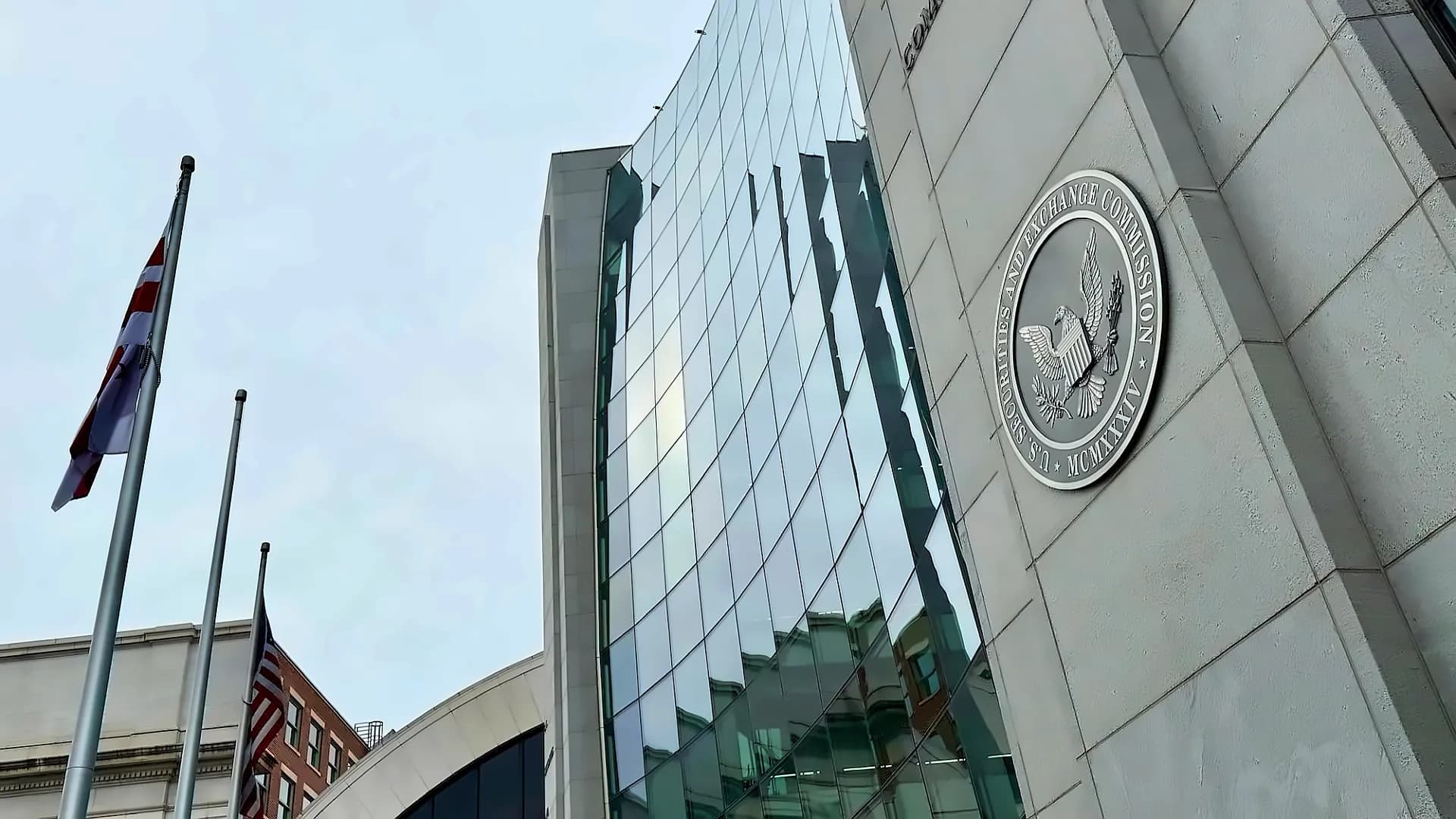
The U.S. Securities and Exchange Commission is set to launch a regulatory exemption for tokenized stocks as soon as this week, marking one of the strongest regulatory signals yet that US authorities are willing to test securities markets outside conventional financial systems. According to reports from Bloomberg, the framework would allow digital tokens linked to public-company shares to trade on decentralized platforms, including tokens issued by third parties without the consent of the companies involved. These third-party tokenized securities would effectively create parallel blockchain-based markets for publicly traded equities that mirror stock prices but may not necessarily include traditional shareholder rights unless platforms choose to provide them. As reported by Bloomberg, the SEC is leaning toward a decision to allow the trading of tokens that do not have the backing or consent of the public companies whose shares they track, representing a surprise move in the regulatory process. However, the proposal has drawn significant criticism from prominent financial figures, with Michael Burry, the investor who famously predicted the 2008 housing crash and is known as 'The Big Short', issuing a warning on Tuesday about the direction American financial markets are taking. Burry called tokenized stocks "a sign of a slide toward a 'Snow Crash'-style cyberpunk future," stating "This may be the point in time that needs to be stopped" and referencing Neal Stephenson's 1992 dystopian novel about fractured society.
Under the proposed rules, the SEC has discussed requirements that would mandate tokenized shares issued by third parties to provide the same rights attached to traditional common stock, including voting privileges and dividend access. As reported by Bloomberg, regulators are said to be considering restrictions on platforms that omit rights such as dividends or voting access, with the proposal covering tokens traded on decentralized finance platforms, or DeFi, a $130 billion corner of crypto where investors trade, borrow and lend digital assets over protocols that run on automated code with minimal human intervention. The SEC has categorized tokenized securities into two categories: those tokenized by or on behalf of issuers, and those tokenized by third parties that are not directly affiliated with the issuers. An SEC spokesperson confirmed the agency has met with hundreds of market participants and sought broad feedback on how to calibrate its rules for new types of trading. However, final details are still being negotiated and could change before any formal announcement.
The tokenized real-world asset market continues to gain significant traction, with on-chain distributed asset value climbing to $33.7 billion and total represented asset value reaching nearly $340 billion as of May 17. According to Bloomberg, growth has been steady over the past month amid rising institutional and retail interest in blockchain-based financial products. US Treasury debt continues to dominate the space at over $15 billion, reinforcing demand for tokenized yield-bearing assets, while commodities rank second at around $7 billion. The ecosystem's user base is expanding rapidly, with total asset holders rising more than 7% to 792,585 and stablecoins accounting for over $306 billion in value across 254 million holders. Backers of the technology say the near-instant settlement and 24/7 trading it supports can help make markets more efficient and provide new benefits to investors. The change brings US equity rules more in line with crypto markets, raising fears of fragmentation and weaker investor protections, particularly as Wall Street embarks on a tokenization boom, with much-anticipated IPOs like SpaceX preparing to launch.
Supporters of tokenized equities argue that blockchain-based shares could allow investors outside the United States, or users without access to traditional brokerage services, to gain exposure to public companies such as Nvidia, Google, and Tesla through crypto platforms. The proposal could improve market efficiency through faster settlement and 24/7 trading capabilities that traditional exchanges cannot provide. The NYSE is also building a venue using blockchain technology to allow for trading tokenized stocks and exchange-traded funds, while Nasdaq has said it is working on a token design that gives publicly traded companies more control over their shares in tokenized form. However, critics warn that allowing multiple tokenized versions of the same stock across crypto venues could create confusion around pricing and ownership, while concerns have grown around DeFi platforms that continue to face cybersecurity vulnerabilities and fragmented liquidity. The Securities Industry and Financial Markets Association said in a December post that the potential lack of standard requirements such as market interconnectivity and price transparency for tokenized markets could create the risk that markets 'will fragment and become disorderly'. The Trump administration plans to incorporate a stock market regulatory exemption policy into its overall deregulation framework, aiming to align U.S. stock market regulation with the fast-growing cryptocurrency market.
Despite the proposed exemption, some officials inside the SEC remain opposed to allowing tokenized stock trading without direct issuer participation. As reported by Bloomberg, Brett Redfearn, president of tokenization firm Securitize and former director of the SEC's trading and markets division, expressed concerns that 'If third parties can tokenize Apple or Amazon without the issuer at the table, there's no theoretical limit on how many wrappers of the same company exist at once'. This could create a whole new level of market fragmentation and could leave investors less certain what their shares are actually worth at any moment. Securities industry insiders such as Citadel Securities and SIFMA have pushed back, warning that broad exemptions for tokenized stocks could weaken know-your-customer, anti-money laundering and other investor protections. The exemption has been presented as a way to let companies experiment with tokenized securities without violating US securities laws, but industry players continue to express concerns about the potential risks. The regulatory move is described as a major regulatory test of whether stock trading can shift to crypto infrastructure without the investor protections of traditional equity markets.