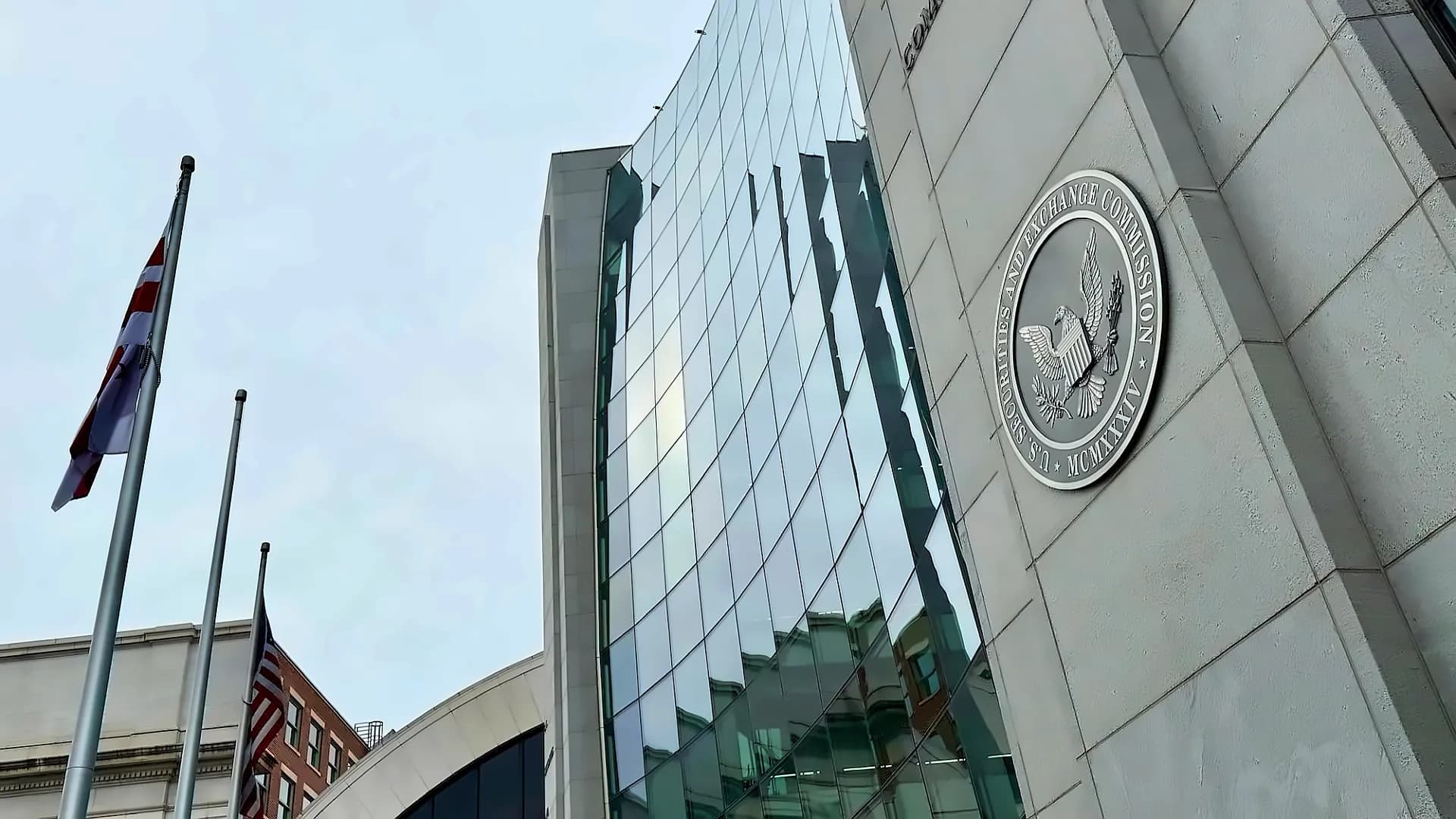
The SEC's tokenization boom faces a five-year expiration date that analysts warn could be eliminated by a future SEC chair with a single order. According to Bloomberg Intelligence senior government analyst Nathan Dean, the rule was written as guidance, not formal rulemaking, meaning it can be reversed without the lengthy public process required for formal rules. SEC Chairman Paul Atkins framed the order as a bridge while Congress remains stalled, but the explicit five-year sunset creates a blunt expiration date for infrastructure that banks, exchanges, and issuers are now building around. Jamie Cellway, the SEC's director for the Division of Trading and Markets, told Bloomberg that reversal would be 'really hard to remove' once trading gains traction, but the explicit timeframe remains a concern for market participants. As former New York Governor Andrew Cuomo notes, regulatory clarity is not simply a legal or political issue - it is an economic one, with jurisdictions that establish credible frameworks better positioned to attract investment and financial infrastructure.
The SEC has granted 'Innovation Exemption' for tokenized NMS stocks on distributed ledger trading venues (TSVs), marking a significant advancement in the regulatory framework for tokenized securities. According to the SEC, this exemption provides a live, time-limited environment for permissioned AMM trading of tokenized NMS stocks and targeted proprietary liquidity activity while preserving issuer objection rights. The order imposes low trading-volume caps and subjects venues and liquidity providers to substantial disclosure, transparency, recordkeeping, and oversight conditions. Importantly, this exemption does not authorize unrestricted migration of U.S. equity trading on chain, creating a controlled market-structure experiment whose practical use depends on operators' ability to build required compliance infrastructure and issuers' willingness to permit third-party tokenization. The exemptions run from September 17, 2026 through September 17, 2031, with Tier 1 tokenized stocks capped at 75 symbols and 0.25% of underlying stock volume, and Tier 2 securities capped at 250 symbols and 2.5%. As Cuomo observes, this represents regulation being used as a laboratory: permit innovation within defined guardrails, observe how the technology performs and use that experience to inform the rules that follow.
On August 18, 2026, the U.S. Securities and Exchange Commission proposed 'Regulation Crypto Assets', marking its first standalone crypto-specific notice-and-comment rulemaking. According to White & Case LLP, this represents a significant departure from previous efforts that were limited to staff statements and Commissioner comments. The proposal was published in the Federal Register on August 21, 2026, and includes more than 150 discrete requests for comment, with comments due by October 20, 2026. Given the breadth of the release, final rules may not be adopted before the first quarter of 2027, as reported by White & Case LLP.
The Senate's procedural vote to advance the CLARITY Act failed on Tuesday 49–50, representing a significant setback for crypto industry regulation. The bill would have provided the federal market-structure framework the industry has sought for years, but every voting Democrat and both independents voted no, with four Republicans also crossing over to vote no. The core sticking points were ethics enforcement and stablecoin yield rules opposed by community banks, neither of which moved enough between drafts to bring holdouts on either side over the line. As reported by CoinDesk, Lindman characterized this work as 'foundation laying', stating that some of the foundation building is 'boring' but necessary for establishing a comprehensive regulatory framework. The Senate failed to advance the Digital Asset Market Clarity Act on September 15, with the cloture motion receiving 49 votes, short of the three-fifths threshold required to proceed.
Without CLARITY legislation, banks, custodians, and broker-dealers are stuck with the status quo: no new federal registration path letting one subsidiary handle custody, trading, and settlement together. Existing state-licensed players can continue operating as before, just without the efficiencies CLARITY would have created. The March joint interpretive release from SEC and CFTC continues to govern practice, classifying 16 assets as digital commodities and superseding the SEC's 2019 staff framework. The CFTC is drafting a market-structure regime under existing authority, while the SEC's Regulation Crypto Assets proposal remains out for comment through October 20. Both remain subject to Loper Bright constraints, meaning they can be reversed by a court or future commission without Congressional vote. Circle's chief strategy officer, Dante Desparte, told Bloomberg that new rules could still land by year's end or sometime in 2027, depending on Congressional action. As Cuomo notes, financial institutions making long-term investments in infrastructure care about the substance of regulation, but they also care deeply about its predictability - firms deciding where to invest, build trading systems, develop products and deploy capital need to understand the rules under which they will operate.