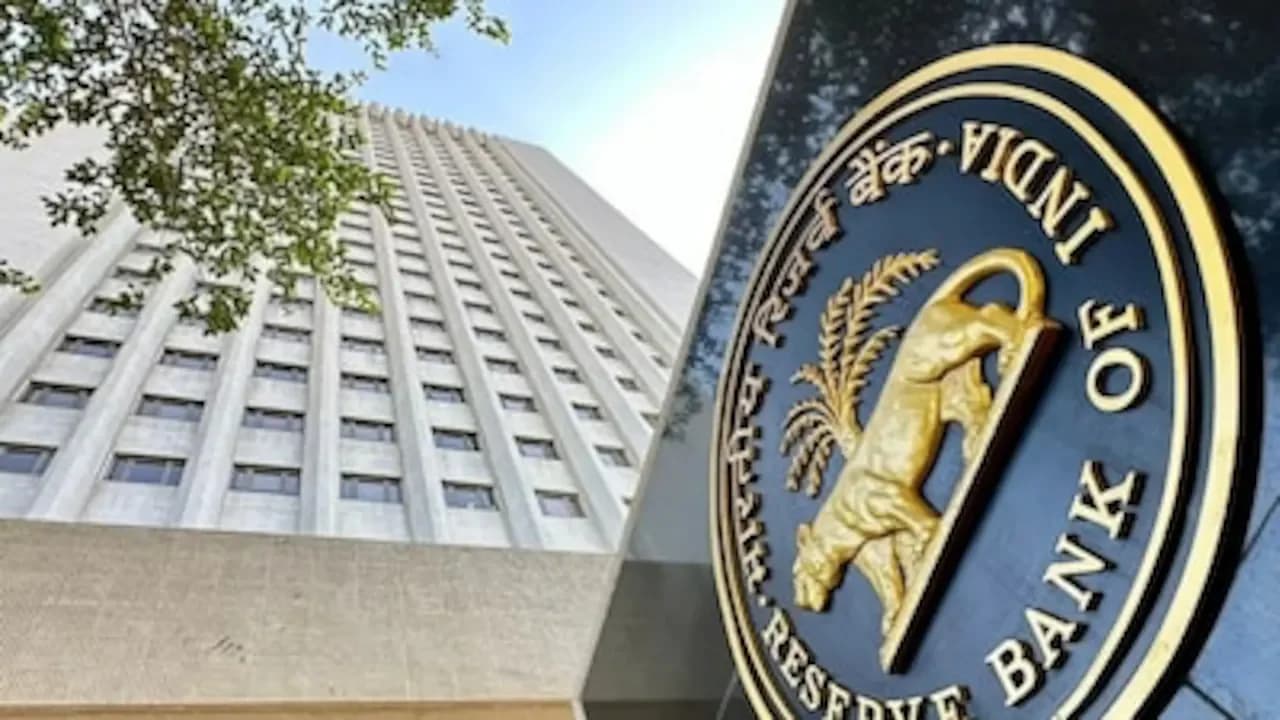
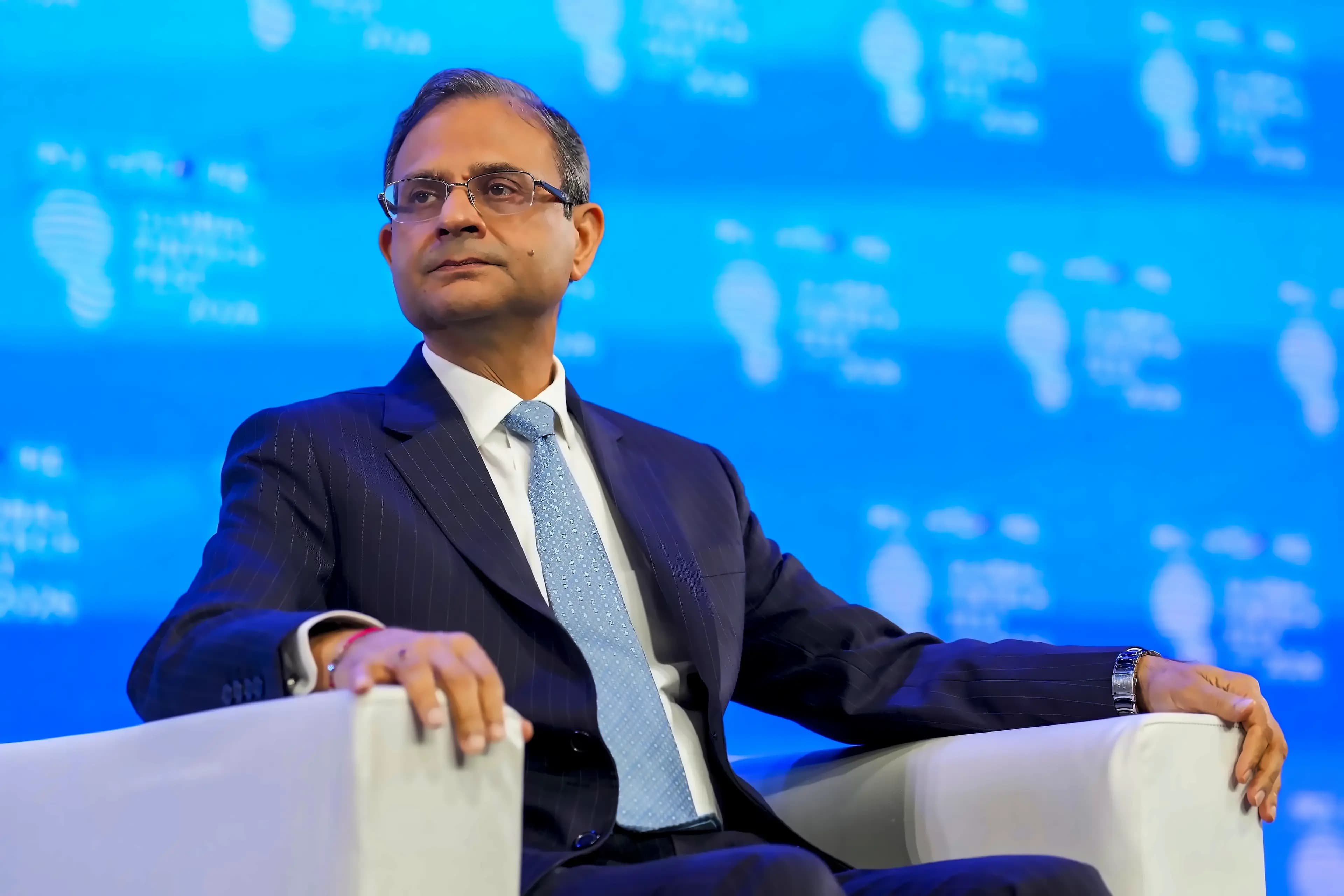
The Reserve Bank of India has renewed its call to keep banks and payment systems insulated from cryptocurrencies and privately issued stablecoins as India reviews its digital asset policy. According to The Economic Times, RBI Deputy Governor Rohit Jain and Executive Director P. Vasudevan presented the central bank's position before the Parliamentary Standing Committee on Finance on Thursday, accompanied by a background note outlining its recommendations. The central bank recommended preventing cryptocurrencies from being used in payments and settlements while limiting the banking sector's exposure to digital assets and privately issued stablecoins. The RBI argued that regulating cryptocurrencies under conventional financial rules could give speculative assets an appearance of legitimacy and create a misleading sense of safety for users. The proposal comes as India continues tightening crypto oversight through stricter AML rules and enhanced compliance checks.
The Reserve Bank of India has strongly opposed legalizing Virtual Digital Assets (VDAs) in India, telling a Parliamentary panel that 'not having a policy is also a policy'. According to sources aware of the deliberations, the central bank submitted that digital money could be used for illegal activities such as terror funding and narcotics smuggling. The RBI argued that it is very difficult to keep a tab on offshore entities involved in crypto trade, posing significant challenges for regulatory authorities. BJP MP Bhartruhari Mahtab, who heads the Parliamentary Standing Committee on Finance, confirmed after the meeting that the RBI is against legalising the VDAs in India. The committee held the meeting with RBI representatives on 'A Study on Virtual Digital Assets (VDAs) and Way Forward'. The central bank emphasized that VDAs are a threat to an emerging economy like India and should not be legalised in India at this stage, as reported by sources familiar with the deliberations. The RBI also cited European jurisdictions that only allow digital assets under stringent regulatory frameworks, and nations like China and Qatar that have completely banned crypto-related activities as examples of countries taking similar approaches.
While the government continues to tax crypto transactions, the RBI maintains its resistance to recognizing digital assets as legitimate financial instruments. The government taxes gains from virtual digital assets (VDAs) at 30 percent, imposes a 1 percent tax deducted at source (TDS) on transactions, requires crypto exchanges to register with the Financial Intelligence Unit (FIU-IND), and subjects the sector to anti-money laundering (AML) obligations. According to legal experts, taxation demonstrates government acknowledgment of taxable crypto income but does not constitute regulatory recognition. As Business Standard reports, Aditya Bharadwaj from NFPRC Foundation noted that policymakers view cryptocurrencies as 'speculative instruments' that contribute little to the real economy, explaining why authorities have opted for visibility through taxation and AML compliance rather than complete prohibition. The stance revives a fight the RBI lost in 2020, when the Supreme Court struck down its banking ban, this time wanting Parliament to write the separation into law. India's Union Budget 2026 established a more stringent compliance framework by recommending fines for organizations that neglect to notify tax authorities of crypto-asset transactions, adding to the regulatory pressure.
India's regulatory architecture currently centers on financial crime compliance through FIU registration requirements that mandate customer due diligence, transaction monitoring, and suspicious activity reporting. However, experts emphasize this framework does not provide full market regulation or investor protections. Edul Patel from Mudrex noted that FIU registration addresses financial integrity but lacks clarity around licensing, consumer protection, custody standards, and regulatory oversight. The absence of comprehensive legislation has left major gaps including standardized disclosure requirements, compensation mechanisms, uniform custody rules, and formal grievance redressal systems. Dr Kanishk Agrawal from Judge Group India highlighted that the current framework separates taxation and compliance from legal recognition, creating uncertainty for businesses and investors. With 54 FIU-registered VDA service providers and nearly 39.3 million KYC-verified crypto users holding assets worth around ₹20,437 crore, experts argue that visibility and consumer safeguards are becoming increasingly important before formal recognition discussions.
While public attention focuses on Bitcoin and other cryptocurrencies, stablecoins have become the RBI's deeper concern due to their monetary implications. As Business Standard reports, stablecoins are designed to function as money, maintaining stable value typically pegged to fiat currencies like the US dollar. Aditya Bharadwaj described stablecoins as a bigger challenge because they are designed to function as money, noting that 'a private, borderless, dollar-denominated form of money is exactly what a central bank cannot tolerate proliferating inside its economy'. Anuj Gaur from IBBM Pvt Ltd warned that dollar-backed stablecoins could facilitate cross-border transfers outside the traditional banking system, potentially affecting monetary policy transmission and increasing dependence on foreign currency-linked assets. Gautam Rege from Josh Software noted that central banks globally are more concerned about stablecoins than conventional cryptocurrencies because stablecoins are designed to function as money rather than speculative assets. While unlikely to replace payment infrastructure like UPI, stablecoins could become significant competitors in remittances, cross-border transfers, and programmable financial transactions.
The Institute of Chartered Accountants of India (ICAI) has adopted a different position, advocating for the implementation of a thorough legal framework for VDAs rather than prohibition. To increase transparency and regulatory oversight, the ICAI stated that it could assist in the development of accounting standards, financial reporting principles, and compliance guidelines. ICAI can undertake comprehensive research on the various forms of VDAs and analyse their economic characteristics, based on such research developing detailed guidance on their recognition, measurement, presentation, and disclosure in financial statements. This dual opinion comes as India's cryptocurrency market faces significant challenges, with TRM Labs data showing a two-quarter slowdown in retail cryptocurrency trading activity, dropping to $979 billion in Q1 2026, an 11% year-over-year decline from Q1 2025. The first half of 2026 saw a record 207 security breaches in the crypto industry, though total losses dropped to $972 million, less than half of the $2.3 billion stolen during the same period in 2025. Ari Redbord, Global Head of Policy at TRM Labs, noted that 'the underlying threat has not diminished. In fact, it has gotten more sophisticated and more dangerous', highlighting that 2026 has been one of the most challenging years for the cryptocurrency market due to security breaches, tighter liquidity, geopolitical tensions, regulatory uncertainty, and lower retail participation.