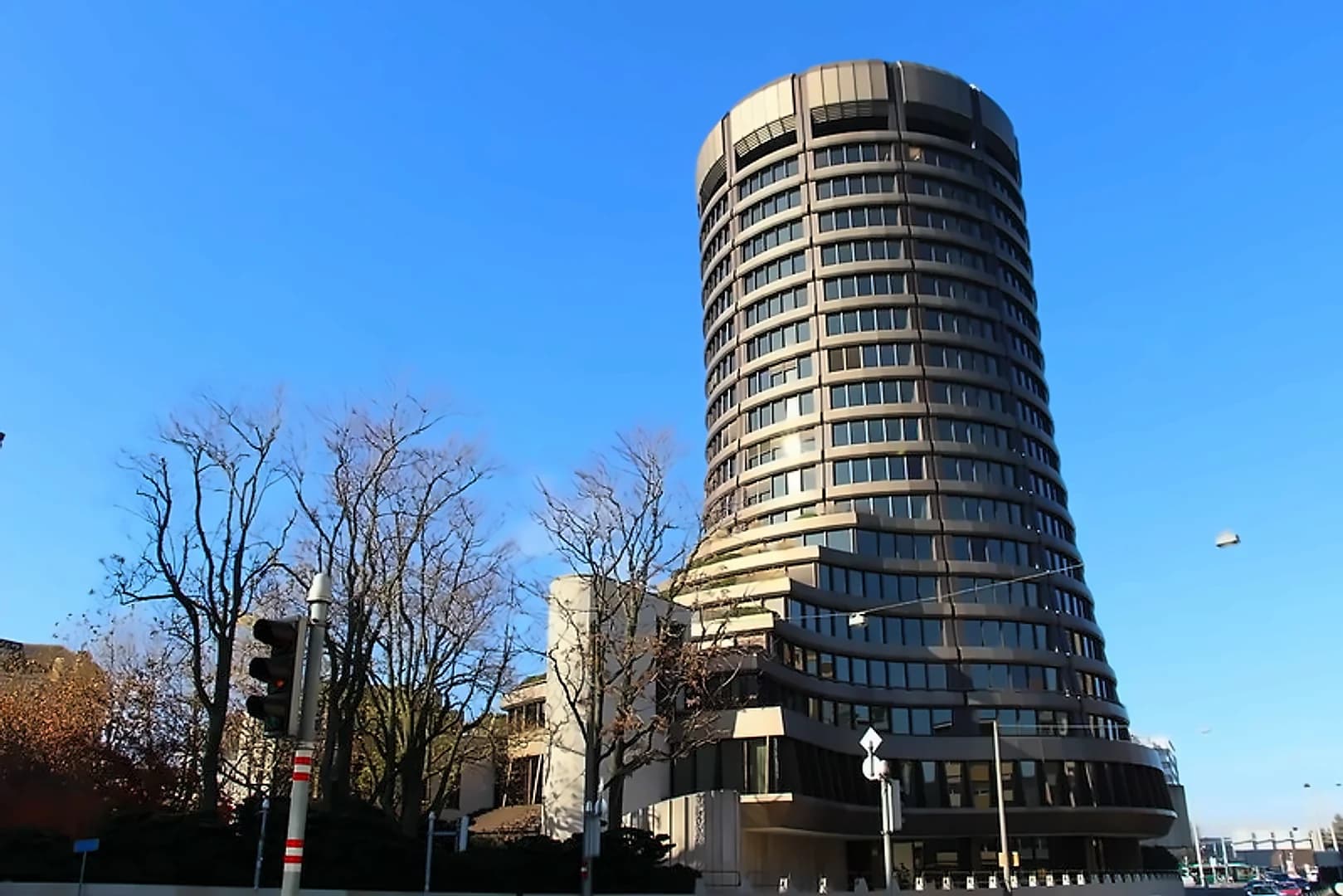
The Bank for International Settlements has achieved a historic milestone in cross-border payments with Project Agorá's real-value testing demonstrating atomic settlement capabilities. According to the latest BIS results, 28 financial institutions and central banks moved CHF 800,000 (approximately $993,000 USD) across six currencies in 30 transactions that settled, on average, in 80 seconds. This breakthrough represents the first successful demonstration of atomic settlement - where both legs of each payment complete simultaneously with no risk window in between. The prototype achieved this feat using tokenized bank money while remaining disconnected from live banking systems, with the BIS explicitly noting that "despite the prototype not being integrated with existing real-time gross settlement (RTGS) and core banking systems, the average time from payment initiation to settlement was approximately 80 seconds." The test covered 17 distinct transaction scenarios with individual transfer values ranging from CHF 9,000 to CHF 125,000, including corporate payments, dual-currency transactions, and payment-versus-payment exchanges.

Two experts argue that quantum money, not blockchain technology, may represent the final evolution of digital cash. According to reports from BeInCrypto, Stefano Gogioso and Daniela Herrmann made this case during the latest BeInCrypto Experts Council, building on an idea older than cryptocurrency itself. The foundation rests on the no-cloning theorem, a physical law proven by physicists William Wootters and Wojciech Zurek in 1984, which states that unknown quantum states cannot be perfectly copied. This principle forms the basis for what specialists call device-independent cryptography, where security holds even if the manufacturer is hostile. The experts frame consensus as 'the last middleman' in digital transactions, with quantum money providing physical unforgeability directly through the laws of physics, eliminating the need for any intermediary agreement.
Project Agorá's approach differs significantly from traditional stablecoins by tokenizing existing bank money rather than creating new instruments. The system tokenizes central bank reserves (funds commercial banks hold at central banks) and commercial bank deposits (funds customers hold at commercial banks) - both forms already subject to full central bank supervision and bank regulation. The prototype uses ISO 20022 messaging standards - the international financial messaging format that became the global standard in November 2025 - enabling compatibility with existing payment infrastructure. 250 public and private sector staff from participating banks and central banks participated in the testing, with SIX coordinating intraday transaction windows and Kaleido supplying the transaction execution technology. The five central banks that actively participated include the Bank of England, Bank of France, Bank of Japan, Bank of Korea, and Swiss National Bank, alongside major private institutions like JPMorgan Chase, Citigroup, UBS, Deutsche Bank, Standard Chartered, and Lloyds Banking Group. The project maintains layered privacy architecture where central banks can retain autonomy over national currencies while privacy is safeguarded at both balance and transaction levels.
The global cross-border payments market processed approximately $195 trillion in 2024, with fees representing trillions of dollars annually in friction costs. According to the BIS 2025 Triennial Survey, more than $1.4 trillion per day in foreign exchange obligations - roughly 10% of global FX settlement - is still settled on gross bilateral basis with no formal risk mitigation. The G20 has set targets to bring cross-border payment costs below one percent for retail transactions and three percent for remittances by 2027, though a BIS assessment published in December 2025 acknowledged these targets are unlikely to be met. Project Agorá's success builds on momentum from DTCC's first live production trades of tokenized stocks, ETFs, and US Treasuries on July 15, 2026, with a full commercial launch planned for October 2026. The Bank of England has committed to launching a synchronization service for atomic settlement of tokenized securities by 2028, while the BIS supports parallel initiatives including mBridge involving central banks from China and other economies. The current system suffers from Herstatt risk - where correspondent bank fees can erode transaction margins by 2-7% and settlement can take 1-5 business days despite appearing instant from sender interfaces.
The BIS has confirmed no production timeline exists for Project Agorá, with the next phase of testing through Q4 2026 focusing on volume and resilience testing rather than RTGS integration. Technical specifications are targeted for publication in Q1 2027. The most significant challenge remains connecting 28 banks' RTGS and core banking systems to the shared tokenized ledger in real time - a substantial engineering, legal, and governance undertaking across multiple currency jurisdictions. The prototype's most important engineering constraint is that "the tokenized platform settled transactions in 80 seconds, but the banks' actual live payment infrastructure was not connected to it." Tokenized reserves were issued based on payments made to dedicated RTGS escrow accounts outside the test environment, with redemptions processed through the underlying RTGS systems after on-chain settlement completed. Real-value testing at this stage is designed to prove the mechanism, not replicate production volumes, requiring the RTGS integration plus regulatory frameworks in each of the six currency jurisdictions plus governance arrangements among participating institutions.