According to reports from Bloomberg, OKX has filed with the US Securities and Exchange Commission (SEC) notice of plans to launch a 24/7 tokenized stock trading venue through OKXICE LLC, a joint venture with Intercontinental Exchange (ICE). The filing represents a significant move into the tokenized securities market, with ICE's investment in OKX previously valuing the exchange at $25 billion. The venture plans to start with 63 tokenized U.S. stocks, positioning itself as a major player in the emerging tokenized securities market. The 50-50 venture was formed in June after OKX and ICE deepened their partnership that began with ICE's strategic investment in the crypto exchange in March. As former New York governor and OKXICE co-chair Andrew Cuomo told CoinDesk, "This is a landmark step toward a more efficient, accessible and global financial system. By enabling 24/7, onchain markets, we can make trading and settlement more efficient, accessible and global." The platform will enable round-the-clock trading and faster settlement while preserving dividend and voting rights for tokenized shareholders.
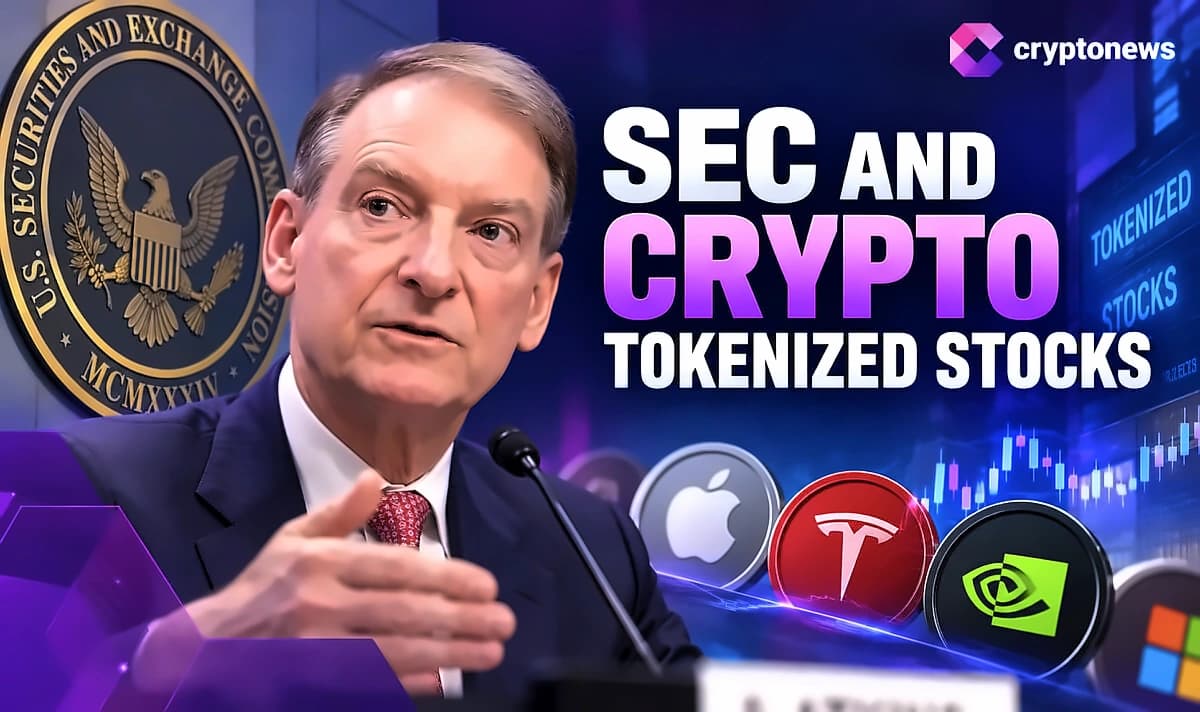
According to TradingView News, the OKXICE platform will operate 24 hours a day, seven days a week using permissioned Uniswap v4 liquidity pools deployed on XLayer. Each tokenized stock will be paired with USDC (USDC), Global Dollar (USDG) or USDt (USDT) for settlement. The platform's 63 proposed stock symbols include major technology companies such as Nvidia, Apple, Microsoft and Tesla, alongside crypto companies including Strategy, Coinbase, Circle and Bitgo. As reported by Bloomberg, the SEC's Innovation Exemption for Tokenized Securities Venues issued on September 17 provides a temporary framework for on-chain trading, with venues capped at 75 top-tier stocks (typically S&P 500 and Russell 1000 members) and each token's trading not exceeding 0.25% of the stock's prior-month volume. For third-party tokenized shares, venues must first send written notice to the underlying issuer, with 30 calendar days required before trading can begin. However, inclusion in the filing doesn't guarantee that every stock will trade on the platform, as companies can object to having their shares included during a 30-day window. Cerebras, for example, objected to the inclusion of its stock, according to the filing.

The OKXICE platform will operate using automated market makers (AMMs), similar to decentralized crypto exchanges but applied to traditional stocks. According to TD Securities analysis, these AMMs could take several forms, with conventional versions setting prices using mathematical formulas based on pool assets, while more sophisticated models allow professional trading firms to actively adjust prices and inventory. The system operates on XLayer blockchain with Uniswap's liquidity pool infrastructure, enabling 24/7 trading without traditional order book matching. Investors buy and sell tokenized stocks using digital dollars, with USDC, USDT and USDG supported as stablecoins designed to maintain $1 value. Unlike traditional markets, prices are determined by buying and selling in the platform's own pools rather than Nasdaq prices, allowing trading even when U.S. exchanges are closed. The platform will not be open to anonymous users, requiring identity and anti-money-laundering checks before trading access. As TD Securities notes, "We see Prop AMMs and managed Multi-Pool Venues as much more consequential than conventional AMM models," arguing that active liquidity providers are "less likely to be picked off by stale prices."
Unlike OKX's existing Unified Tokenized Stocks product, which operates outside the United States and doesn't provide real shareholder rights, the SEC's new framework mandates that qualifying tokenized shares must give holders the same rights and privileges as conventional shares of the equivalent class. The agency specifically requires preservation of underlying interest in the company, dividends, voting rights, and claims on residual assets during liquidation. Investor communications and proxy materials must be made available when unaffiliated third parties tokenize shares. Primary offerings are not permitted on Tokenized Securities Venues under the exemption. OKX's current offshore product, launched with more than 40 tokenized stocks and ETFs in July, provides price exposure and supports deposits/withdrawals on Solana and X Layer, but explicitly states it doesn't represent ownership or give customers shareholder voting rights. The new OKXICE venue will bring tokenized trading onshore to a regulated US venue, allowing tokenized versions of stocks to carry the same dividend and voting rights as regular shares.
According to RWA.xyz, the tokenized stocks market has grown significantly, now worth about $3.2 billion, up 15% in the past month. Coinbase launched tokenized US stocks for eligible non-US customers in August, and NYSE has struck an early-stage agreement with Blockchain.com covering its own digital venue. Blockchain.com claims 44 million accounts, potentially providing significant user reach for tokenized securities trading. The NYSE owner's involvement shows tokenization is moving into the mainstream, as crypto exchanges have offered tokenized US stocks for some time but only to customers outside the country. OKX itself lists more than 70 such tickers issued under offshore rules, so U.S. investors can't buy them, but the market has grown fast. The SEC's five-year exemption created a route for eligible venues to test on-chain stock trading while remaining subject to limits on volume, symbols, smart contracts and trading halts. However, TD Securities sees "limited near-term relevance for institutional investors" in part because U.S. investors already have efficient access to listed stocks, pointing to weak interest from companies in having their shares tokenized and uncertainty around the regulatory framework.
As reported by Bloomberg, the exemption expires in September 2031 and remains an agency order, not legislation. The Senate failed to advance the Clarity Act, a bill that would set federal crypto market rules, last month. OKXICE co-chair Andrew Cuomo has warned that agency rules are fragile and expects a new Congress to scrutinize such rules. However, the SEC has asked whether to make the exemptions permanent, providing some regulatory stability for the emerging market. OKXICE must still meet several operational conditions before trading begins, including smart contracts that must be public and auditable on a public, permissionless distributed ledger, and transaction data maintenance requirements. The launch remains subject to the 30-day objection period and other regulatory steps, with Cuomo sounding confident about the venture's prospects: "And we're just getting started." The bigger test will be whether enough investors and trading firms participate to keep prices closely aligned with traditional stocks, particularly overnight and on weekends when U.S. exchanges are closed. As Harvey Li, founder of Tokenization Insight, noted: "The biggest takeaway is NOT that OKXICE is launching another tokenized-stock venue. It is that OKXICE could become one of the first real-world tests of which tokenization model can scale U.S. equities onchain the fastest, and ultimately become the dominant market structure."